-highlights potential for employment boost, transformed communities
THE Pomeroon’s coconut farms and Essequibo’s natural assets are being positioned as key pillars of an ambitious agro-tourism vision for Region Two, with President, Dr Irfaan Ali highlighting their potential to drive jobs, community transformation and sustainable rural development.
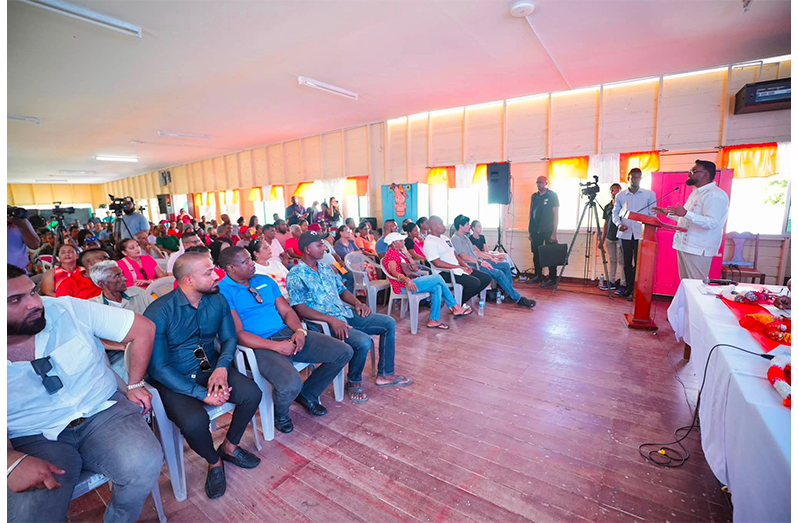
Addressing residents during a recent community engagement, the President said the government was moving to create integrated development models that would spur economic buzz and employment within local communities.
“We want to set a comprehensive framework for development that would allow you not only to live in your community, but to enjoy your community,” President Ali said.
COCONUT FARMS AS TOURIST ATTRACTIONS
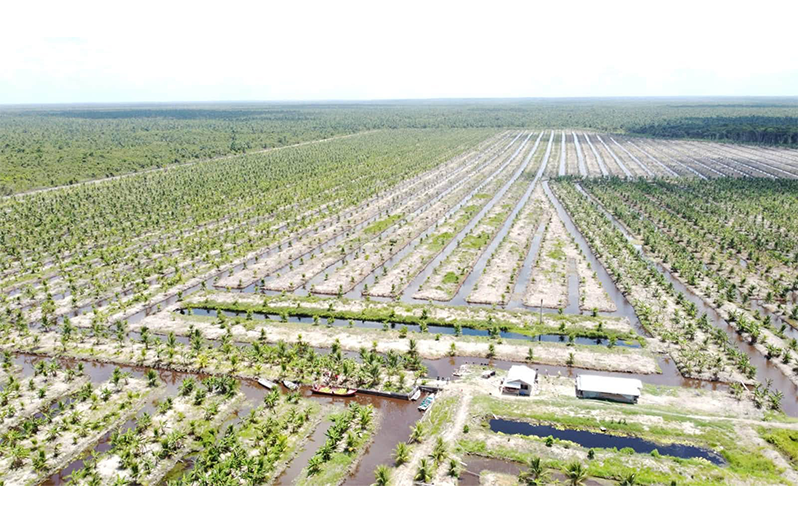
Central to the President’s pitch was transformation of the Pomeroon’s coconut farms into organised visitor experiences, allowing tourists to participate directly in farm life while generating new income streams for households.
Noting complaints from farmers about a labour shortage for harvesting, Dr Ali proposed recasting the coconut lands as part of a structured tourism product.
“Let us make the coconut farms part of the tourism product and invite people to come and pick coconut on the farms, just like people go to pick apples and pick strawberries,” he suggested.
“Whatever they pick, they buy. So, this could become a beautiful product.”
He painted a picture of visitors travelling down the Pomeroon River for a “coconut-picking experience,” floating coconuts along canals, participating in bush‑cooks on the farms and sampling a range of drinks and dishes made from coconut water and jelly.
“These things may seem strange, but these are important natural assets that we have that we can enjoy,” he added.
The Head of State linked the agro‑tourism push to broader efforts to expand Region Two’s tourism infrastructure and appeal.
He cited the recently commissioned Demerara River Bridge a as an example of how targetted investments can quickly create new economic activity.
“Before we built the New [Demerara] River Bridge, there was no activity at night. Now there are tourists every single night going under the bridge, dinner on the water, dinner under the bridge, sightseeing along the Demerara River,” he said.
Region Two, he argued, is already emerging as a major supplier of tourism products, with government’s plans to award a contract very soon for a road leading all the way into Mainstay to support tourism growth; work with private investors to complete new resorts along creeks and riverine corridors and invest in wider tourism infrastructure to support sustained visitor flows.
“We want to ensure that the region is built up in such a way that it creates economic opportunities, economic spin‑off[s] that will not only lead to job creation, but that would lead to sustainable job creation in Region Number Two,” the president said adding:
“We want to invest in agro-processing. We want to invest in value creation. The region is already becoming a major supplier of tourism product[s], and we have to continue to build the tourism potential and tourism infrastructure for this region.”
Dr Ali framed agro‑tourism as part of a wider push to create “liveable” communities that are attractive to both residents and visitors.
He said the administration was looking at how sports infrastructure could be integrated into a tourism offering, ensuring that hotels across the region are linked to nearby recreational activities.
“We also have to look at how do we ensure not only[that] we build sports facilities, but we build sports facilities that are integrated into a system that will allow sports tourism to take on,” he said.
The president envisioned visitors being able to stay at hotels such as those already operating in the region and access volleyball and football facilities, children’s play areas, and waterfront experiences showcasing the Essequibo.
“You can go and experience the beauty of Essequibo, sitting on the waterfront… enjoying the boardwalk,” he said, comparing the potential to the transformation of the Georgetown seawall from a “dump” into one of Guyana’s most iconic leisure spaces.