A four-day celebration in Georgetown spotlighted mentorship, performance and the next generation of Guyanese writers
By Andrea Hendricks
FROM August 6 to 9, the Guyana Prize Literary Festival 2026 unfolded across the capital as a brisk, four-day programme of readings, workshops, performances and public conversations about what it takes to build a sustained writing culture. Hosted by the Ministry of Culture, Youth and Sport, the free festival drew writers, poets, readers and literature enthusiasts from around Guyana and the wider Caribbean—an open invitation to listen closely, sharpen their craft and take part in the country’s storytelling life.
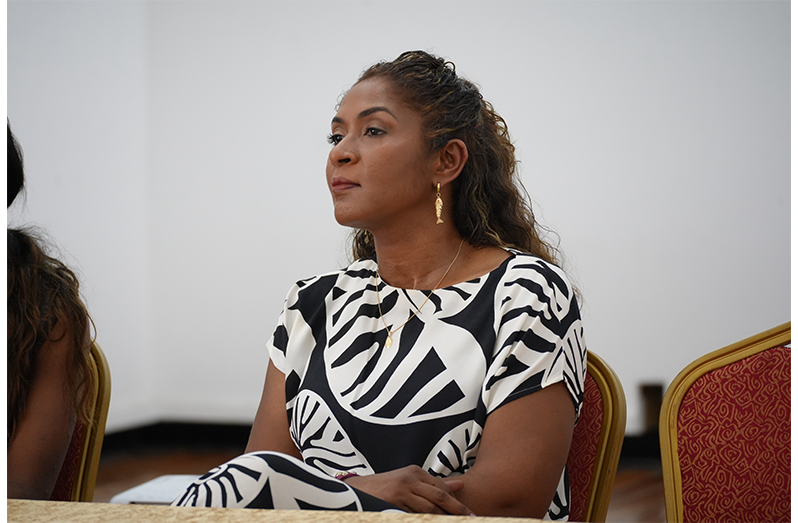
Events rotated between Castellani House, the Pegasus Hotel and the National Cultural Centre, giving the festival a citywide rhythm. Workshops and storytelling sessions focused on language, structure and voice allowing participants to practise their craft and think about their writing strategy and ambitions. Elsewhere, the National Poetry Slam brought a different energy: performance-forward work that demanded presence, timing and risk. A dramatic stage production reinforced the festival’s central proposition that stories do not live only in books; they also move through bodies, through sound and through the shared air of a room.
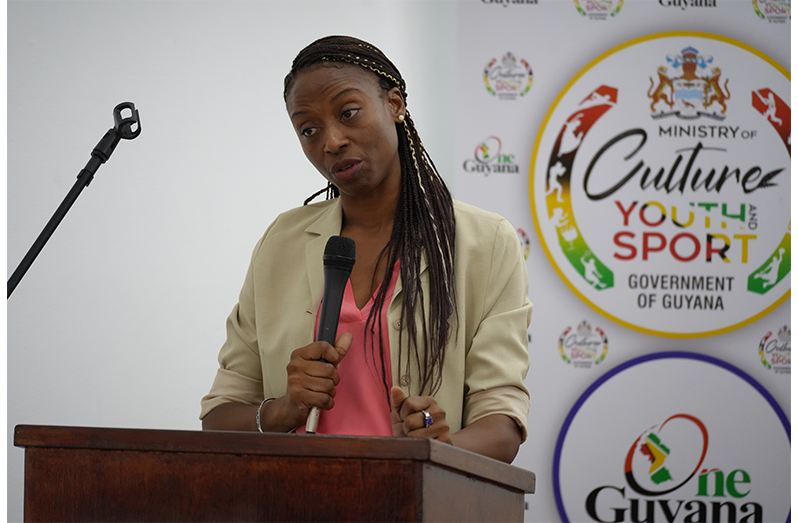
On Friday evening, the Guyana Prize Award Ceremony was held at the Pegasus Hotel. The ceremony honours outstanding works by Guyanese authors in fiction, drama, poetry and creative non-fiction. The awards remain one of the country’s clearest public measures of literary achievement, placing new voices alongside established names. Among the honours this year, the Guyana Prize for Literature Best First Book of Fiction went to Guyana Chronicle Pepperpot Editor Jasmaine Payne—recognition that underscored the festival’s dual mission: celebrating achievement while signalling that emerging work belongs in the national record of excellence.
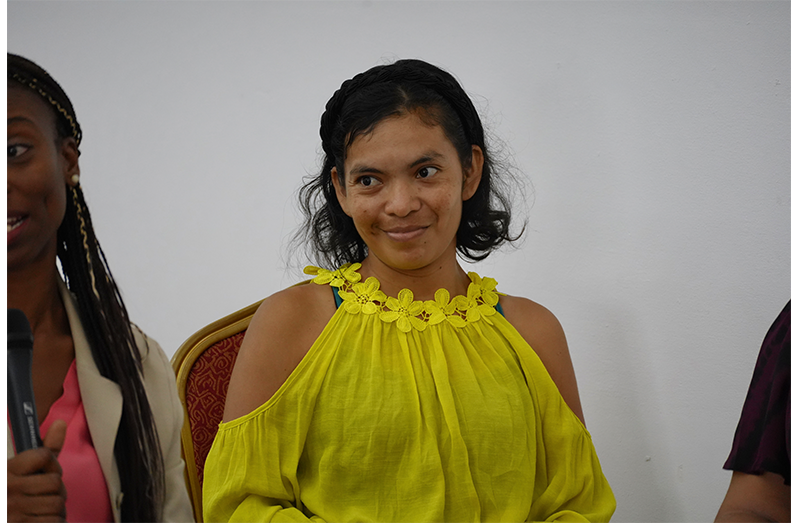
Yet the festival’s most urgent conversations were not only about who had already arrived, but about how writers get there. Again and again, panels and informal discussions returned to a practical question: What sustains a literary culture beyond a single week of applause?
Trinidadian author and lawyer Celeste Mohammed earned an MFA in Creative Writing from Lesley University. Her novel-in-stories, Pleasantview, won major Caribbean fiction awards, including the 2022 OCM Bocas Prize for Caribbean Literature and the 2022 CLMP Firecracker Award for Fiction. Her latest work includes A Different Energy: Women in Caribbean Oil & Gas (2024), Ever Since We Small (2025) and the 2026 Hope Prize-winning story “Plenty Time”.
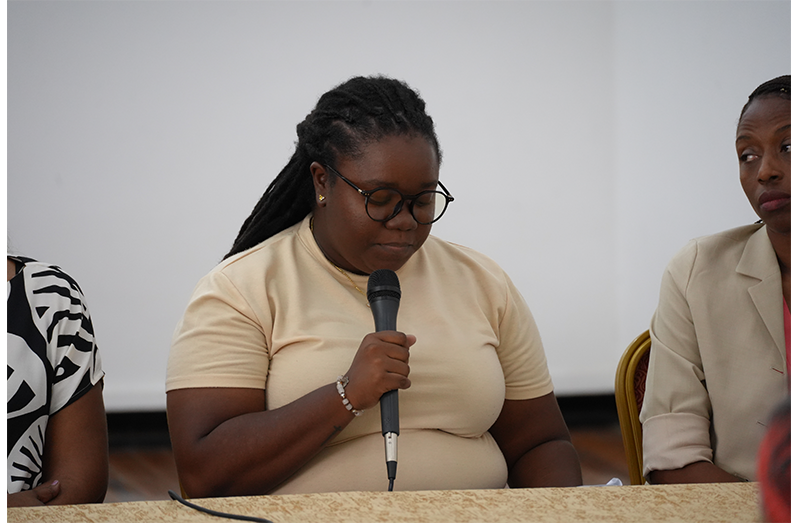
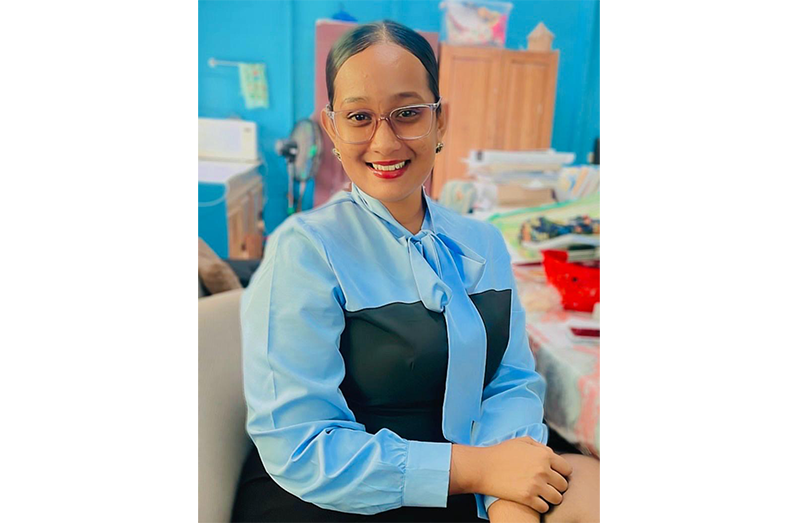
While in Guyana for the Literary Festival, Mohammed said, “The talent is present; what is needed is the training and mentorship to shape it.” That conviction took practical form earlier this year, when she spent over five weeks training local writers, including Natasha Williams, Rickeisha Perreira, Jonelle Gilbert, Makeda Braithwaite and Vanisha Ramnauth. The workshop, participants said the programme provided encouragement and introduced technique as a discipline—tools for shaping narratives, pacing scenes and making deliberate choices about dialogue, description and structure. It also required writers to move from private drafting to public sharing, a transition that can be as psychologically demanding as it is technically useful.
Williams described the vulnerability of that step with disarming honesty: “It was my first literary workshop and the nerves got the best of me.” The value, she suggested, was not only in learning what to change, but in learning how to hear feedback without losing confidence in the impulse that produced the work. After receiving practical guidance—such as slowing scenes and giving readers time to connect with characters—she said, “This is all I ever wanted and what I am getting now.” In that arc—from nerves to clarity—the workshop’s purpose came into focus: craft as something teachable, repeatable and strengthened through community rather than guarded in isolation.
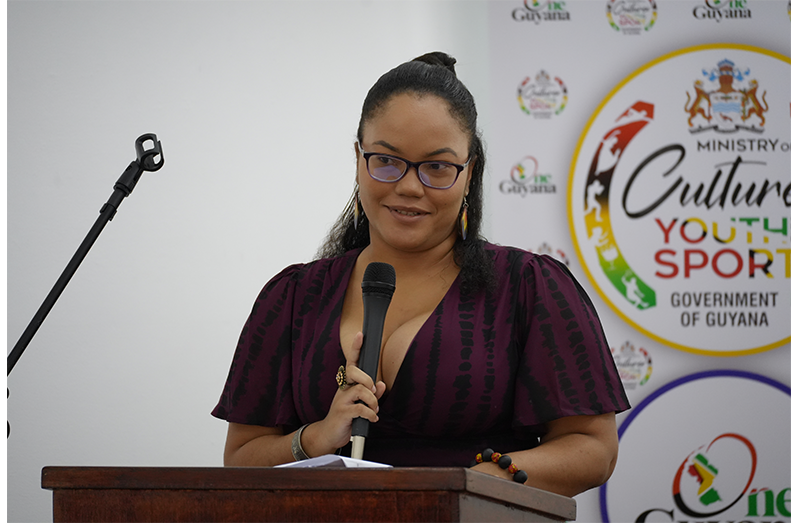
Gilbert credited the sessions with giving language to instincts she had not yet been able to name. “Before I learned about writing techniques, I was writing almost blindly,” she said. Feedback and presentation, she noted, forced her to think about readiness and revision, not just inspiration. “As a budding writer, my work will be published once I am satisfied the manuscript has reached maturity to share locally and internationally,” she added—an emphasis on patience that echoes a common lesson of serious training: publication is not merely an outcome, but a decision made after a manuscript has been tested, revised and brought to a state that the writer can stand behind.
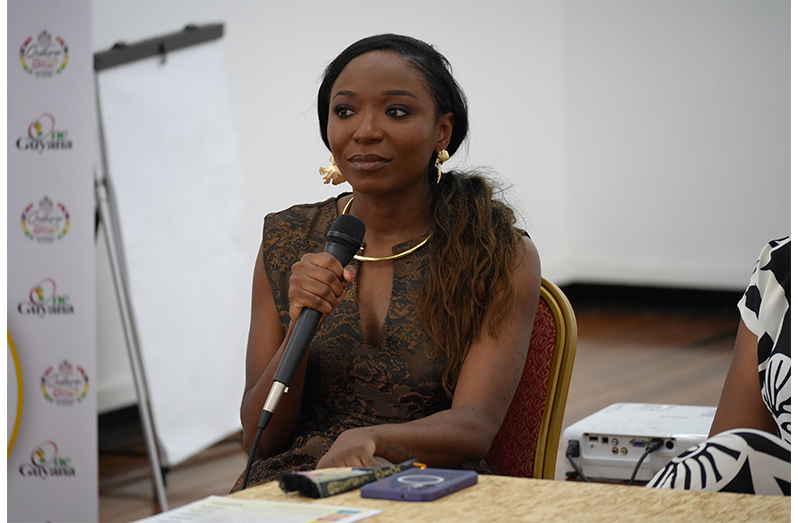
Mohammed, in an interview with Pepperpot Magazine, framed the festival as an essential bridge between instruction and audience. “This was their opportunity to present their piece and talk about what the experience was like for them, being a part of the writer’s workshop, getting feedback on their work and being mentored by a professional writer,” she said. The public platform mattered precisely because it raised the stakes. Writers were asked to articulate their processes, describe revision and speak about craft in a room that extended beyond the workshop circle—a rehearsal, in miniature, for the wider conversations that accompany literary work once it reaches readers.
She argued that the yearly literary festival matters because it celebrates “all the storytelling talent available in Guyana”, continuing “a history that goes back a long way”. Recognition, she suggested, should not be reserved only for finished books and formal awards. “It’s important to recognise the local writers who are taking risks and taking their time to tell their stories,” she said. The emphasis on time—on allowing work to develop—stood alongside a direct call for sustained infrastructure. She hopes more workshops and training can be organised by the Ministry of Culture, Youth and Sport, and she urged emerging writers to keep seeking guidance: “Reach out for help, follow other writers on social media, and reach out to the community for support.”
For participants, the workshop’s impact was measured in the practical language of the drafting desk: new approaches to structure, clearer goals for revision and a sense that the work could be improved through method rather than guesswork. Ramnauth, a feminist writer who writes on social issues locally and internationally, called the experience clarifying. “The session was informative and enlightening,” she told Pepperpot Magazine. She said the concepts shared—and the mentoring guidance—made the work easier to grasp and helped refine her writing pieces. She also pointed to the workshop’s usefulness beyond the immediate moment. “I’ll also construct a second edition of my book, A River of Endless Grace, using the concepts I learnt in the writer’s workshop,” she said—an indication that the training did not end with the festival, but would feed back into ongoing projects and future revisions.
Braithwaite described a similar shift in perspective, calling the process revelatory even as an experienced short-story writer. “The writer’s workshop was an eye-opener for me,” she said. She appreciated the technical concepts introduced and explained to enhance her storytelling skills—an acknowledgement that experience alone does not replace structured learning, and that even seasoned writers benefit from returning to fundamentals: how scenes are built, how tension is maintained and how language is made to carry the full weight of what a story intends.
Perreira, meanwhile, characterised her training as both demanding and exhilarating. She described the experience as “intense and exciting”, explaining that those feelings came from developing a short story from scratch under Mohammed’s guidance and applying specific tools and techniques: story plotting, the use of dialogue, creating scenes and summarising, and learning how to use each with intention. The pressure, she said, was not abstract. It was built into the schedule through daily and weekly assignments that were assessed by peers and the facilitator. For Perreira, the discipline of deadlines and critique was matched by the encouragement of belonging. “The exposure to the community of writers and their work was inspiring and motivating,” she told Pepperpot Magazine.
Taken together, the writers’ accounts offered a grounded counterpoint to the glamour often associated with literary festivals. The work described was quiet, exacting and sometimes uncomfortable: reading aloud, revising again, hearing what lands and what does not. But it was also work tethered to a clear vision of what the Guyana Prize Literary Festival aims to be—more than a celebratory calendar date and more than an awards night. In highlighting mentorship alongside performance and recognition, the 2026 festival made a case for continuity: for writers who are still learning, for readers who want to hear new voices and for institutions willing to invest not only in applause, but in the long practice that makes strong literature possible.