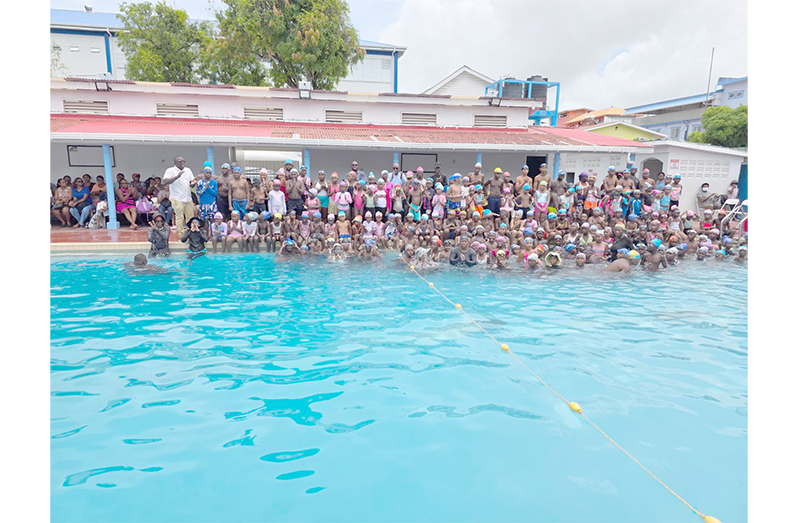
THE National Sports Commission (NSC), on Friday, concluded another edition of its longstanding Georgetown leg of the teach-them-young Learn-to-Swim Programme, with a larger-than-usual turnout at the Colgrain Pool, highlighting the growing interest in swimming and water safety among young Guyanese.
The programme, which is conducted by the NSC with the support of a team of certified swimming coaches, has become an important part of the Commission’s efforts to promote swimming not only as a sport, but also as an essential life skill.
Director of Sport, Steve Ninvalle, who addressed participants, parents and coaches at the closing ceremony, described the latest edition as another successful staging of the programme.
He first commended the coaches and organisers for completing the programme without incident, while also highlighting the NSC’s continued investment in strengthening safety measures around its aquatic activities.
Ninvalle pointed specifically to the certification of a number of lifeguards as part of the Commission’s efforts to improve its safety protocols and ensure that participants can learn in a properly supervised environment.
He described the teach-them-young initiative as one of the NSC’s most important programmes, stressing that the ability to swim extends well beyond competitive sport.
Ninvalle encouraged participants to take advantage of every opportunity to improve their swimming ability, particularly those living in communities, where rivers and other waterways form part of everyday life.
Ninvalle noted that Guyana’s geography makes swimming particularly relevant.
The Director of Sport also pointed to the programme’s growing national reach, noting that similar Learn-to-Swim initiatives have already been conducted in regions 2, 4, 5, 6, and 10.
With those efforts forming part of a broader strategy to take swimming instruction beyond Georgetown, Ninvalle said the NSC is now turning its attention to Region 8 as it continues working towards making the programme available across the country.
He said the long-term objective is to expand the initiative into all 10 administrative regions, ensuring that children and other members of communities have greater access to basic swimming instruction and water-safety education.