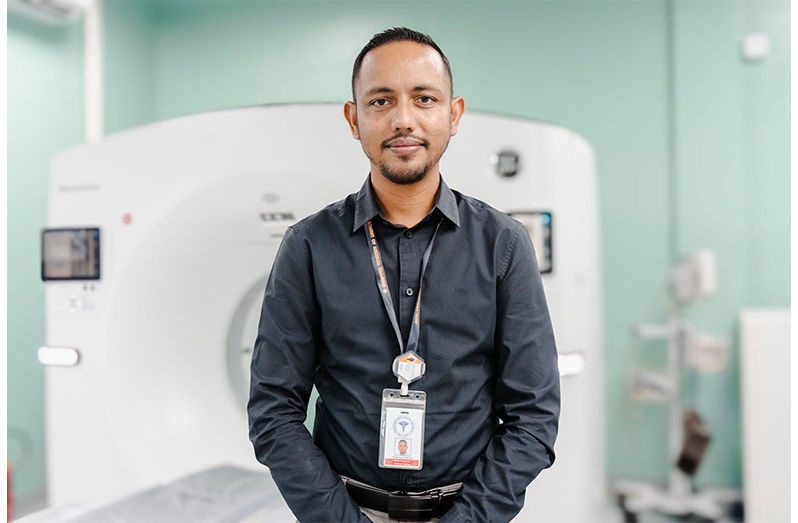
WHILE patients often meet doctors, nurses and other frontline staff during a hospital visit, another group of specialists works largely behind the scenes, providing information that can shape diagnoses, guide treatment and, in some cases, save lives.
For Dr Vidyanand Hemraj, a diagnostic radiologist at the Georgetown Public Hospital Corporation (GPHC), that responsibility is what continues to make medical imaging both challenging and rewarding.
Dr Hemraj’s path to radiology began after graduating from medical school in 2015. During his rotations through various specialties, he became increasingly interested in the connection between medicine, technology and analytical problem-solving.
He said the ability of imaging technology to reveal what is happening inside the human body without surgery or other invasive procedures drew him to the field.
In 2019, he entered GPHC’s Diagnostic Radiology Residency Programme and completed his training in 2022.
“What continues to inspire me is knowing that every scan we interpret can make a difference in patient care,” Dr Hemraj said.
As a diagnostic radiologist, he interprets a range of imaging studies, including X-rays, ultrasounds, CT scans and mammograms. His work helps physicians diagnose illnesses, determine the extent of disease and decide on the most appropriate treatment.
A typical day involves reviewing imaging studies, preparing reports, discussing findings with doctors from other specialties and working with residents, radiographers and other healthcare professionals.
Radiology is often described as the “eyes of modern medicine” because it allows doctors to examine internal organs, bones and tissues without the need for invasive procedures.
According to Dr Hemraj, imaging plays a role in nearly every area of healthcare, from emergency medicine and trauma care to cancer diagnosis and routine medical evaluations.
“From emergency care to cancer diagnosis and routine evaluations, imaging provides critical information that helps healthcare teams make timely and effective decisions,” he explained.
Although radiologists rarely have prolonged contact with patients, their findings can have a direct impact on treatment. An early diagnosis on a scan may lead to faster intervention, while accurate imaging can help avoid unnecessary procedures and improve monitoring of a patient’s progress.
The profession, however, comes with significant pressures.
Dr Hemraj noted that radiologists must maintain a high level of accuracy while managing increasing demand for imaging services and keeping up with rapidly evolving technology.
He said continuous learning, teamwork and a strong focus on patient care are essential to meeting those challenges.
Dr Hemraj also welcomed the recent introduction of a new CT scanner at GPHC, describing it as an important improvement for the hospital’s imaging services.
“The new CT scanner represents a significant step forward in improving the quality, speed and accessibility of imaging services for our patients. It also supports safer imaging through improved radiation dose management,” he said.
As medical imaging technology continues to advance, Dr Hemraj said he remains focused on ensuring that patients benefit from accurate diagnoses and informed treatment decisions.
For him, the work may happen behind computer screens and imaging monitors rather than at the bedside, but the goal remains the same: helping patients receive the best possible care.