






–regional court finds no actual or apparent bias in Minister Walrond’s issuance of ATP
— separate opinion concludes Azruddin Mohamed cannot rely on political attacks to establish bias after provoking similar exchanges himself
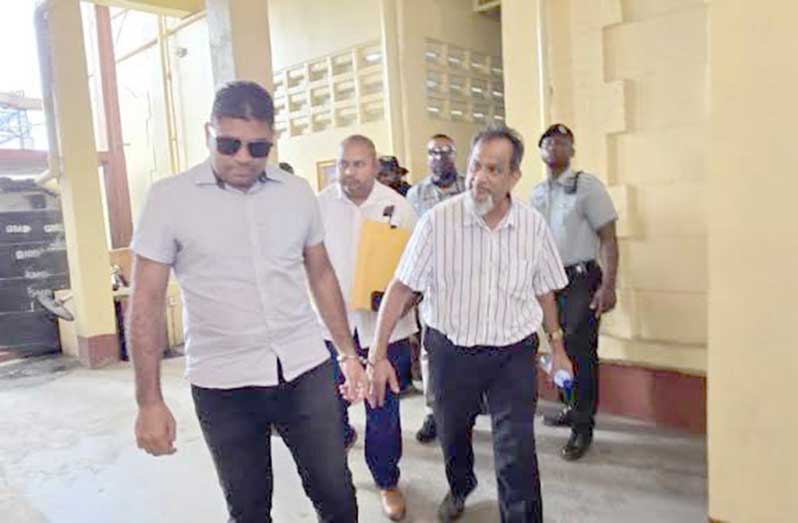
The Caribbean Court of Justice (CCJ) has cleared the way for extradition proceedings against Opposition Leader Azruddin Mohamed and his father, businessman Nazar Mohamed, to resume after all the presiding judges unanimously dismissed their appeal challenging the legality of the process initiated against them at the request of the United States.
The ruling brings to an end the Mohameds’ legal challenge, following the full hearing of arguments on April 21, and clears the way for extradition proceedings to continue before Chief Magistrate Judy Latchman at the Georgetown Magistrates’ Courts.
The two men are wanted in the United States to face an 11-count criminal indictment in the United States District Court for the Southern District of Florida.
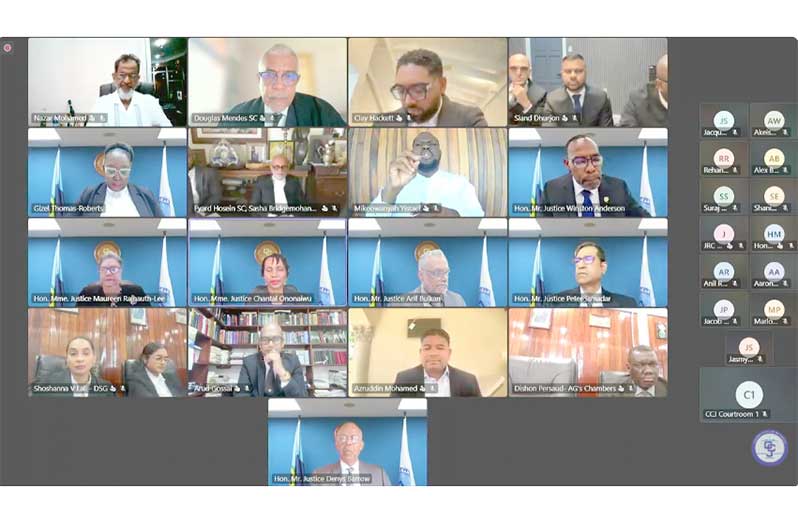
The CCJ’s lead judgment, written by CCJ President Winston Anderson and Justice Denys Barrow and delivered by Justice Barrow, upheld the earlier decisions of the High Court and the Court of Appeal. Both lower courts had rejected the Mohameds’ argument that the ATP was invalid because it was tainted by actual or apparent bias on the part of the Minister of Home Affairs.
The CCJ rejected arguments that Minister Walrond’s consultation with the Attorney General Anil Nandlall, SC invalidated the ATP. Justice Barrow noted that while “the Attorney-General, as Chief Legal Advisor to the Government, must necessarily be circumspect in any comment on extradition requests upon which his advice may be sought,” the statutory decision rested with the minister.
“The decision to issue the ATP was statutorily vested in, and was, as a matter of fact, exercised by the minister, with very minimal advice from the Attorney-General.” Accordingly, he said, “determination of whether the Attorney-General was biased served no probative value.”
The court noted that the allegation of bias stemmed from the ministers’ affiliation with the governing People’s Progressive Party/Civic (PPP/C).
The Mohameds argued that senior party officials, including the President, Vice-President and Attorney General, had publicly described them as criminals and used other derogatory language during the election campaign, giving rise to actual or apparent bias.
In a separate opinion, Justices Chile Eboe-Osuji and Chantal Ononaiwu, said the second appellant [Azruddin] “does not have clean hands,” finding that he had “provoked verbal attacks against him by his own early attacks against government officials or his own willing participation in a general brawl of political calumny.”
Beyond determining the Mohameds’ appeal, the CCJ issued important guidance for future extradition cases across the Caribbean region.
Justice Barrow said he and Justice Anderson were of the view that, except where extradition proceedings are plainly defective from the outset, challenges to an ATP should generally not interrupt ongoing committal proceedings.
In a significant clarification of the law, the CCJ disagreed with the lower courts’ conclusion that the rule against bias did not apply to the minister’s decision to issue the ATP.
Justice Barrow said the court held that “the rule against bias does apply to the ministerial grant of the ATP,” but emphasised that the issue had to be examined within the statutory context in which the decision was made. “In the instant case, the judges found that the ATP process does not import the full panoply of procedural rights available in judicial proceedings,” he said.
“There was no general right to be heard prior to the issuance of the ATP. There was no requirement for the minister issuing the ATP to be free from political bias.”
Instead, Justice Barrow explained that the law required only that “the minister engage in a process that allowed for consideration of the factors contemplated by the Act.”
The CCJ found that the Mohameds never alleged that the Minister Walrond ignored relevant considerations or took irrelevant matters into account.
Justice Barrow noted, “The applicants [the Mohameds] had not challenged the process that led to the issuance of the ATP, save for the allegation that the minister was politically biased. There was no allegation that the minister omitted to consider a relevant factor, or that she considered an irrelevant one.”
“Their Honours expressed the considered view that it should become the practice in all courts, except where it is manifestly clear that the extradition proceedings must fail, as, for example, where the ATP was issued by the wrong person, that while challenges to the issuance of the ATP may be brought at any time, such challenges should only be heard after the completion of the committal proceedings.”
“The second appellant (Azruddin Mohamed) does not have clean hands. He provoked verbal attacks against him by his own earlier attacks against government officials, or his own willing participation in a general brawl of politics,” Justice Denys Barrow.
According to the court, such an approach would be “consistent with the international framework for extradition, encourage prompt performance of extradition treaty obligations, and provide a reasonable balance between the interests of the person whose extradition is requested and that of the state.”
The two judges further observed that this approach aligns with the procedure contemplated by Parliament under Sections 17 and 21 of the Fugitive Offenders (Amendment) Act.
Having concluded that the allegation of bias failed, the CCJ said it was unnecessary to determine the Mohameds’ second ground of appeal—that the minister and Attorney General ought to have delegated their statutory responsibilities because of the alleged political conflict.
Nevertheless, the court observed that it had “grave doubt that there could properly be delegation of the powers under the Act to issue the ATP to any person who was not a minister.”
Likewise, because it found no bias in the issuance of the ATP, the CCJ said it was unnecessary to consider arguments raised by Minister Walrond in her cross-appeal concerning waiver and the doctrine of necessity.
The CCJ delivered three separate judgments. Apart from the lead judgment authored by Justices Anderson and Barrow, separate opinions were delivered by Justices Maureen Rajnauth-Lee, Peter Jamadar and Arif Bulkan, and by Justices Chantal Ononaiwu and Chile Eboe-Osuji.
Ultimately, the regional court unanimously granted special leave to appeal but dismissed the substantive appeal. The interim stay of extradition proceedings previously granted by the CCJ was lifted. The court further ordered that there be no order as to costs before the CCJ and reserved its decision on the costs in the courts below.
With the appeal dismissed, the interim stay discharged and no order made as to costs, the extradition proceedings against the Mohamed will now continue before Chief Magistrate Judy Latchman in the Georgetown Magistrates’ Courts, where the United States is seeking their surrender to stand trial on the charges contained in the indictment.
The Mohameds were represented by Fyard Hosein, SC, Roysdale Forde, SC, and attorneys -at-law Sasha Bridgemohansingh, Siand Dhurjon, Damien Da Silva and Aadam Hosein.
The First Respondent, the Minister of Home Affairs, was represented by attorneys-at-law Douglas Mendes, SC, and Clay Hackett.
The Second Respondent, the Attorney General, was represented by Attorney General Anil Nandlall, SC, Solicitor General Nigel Hawke, Deputy Solicitor General Shoshanna Lall and attorney-at-law Dishon Persaud. The Third Respondent, Chief Magistrate Judy Latchman, was represented by attorney-at-law Arudranauth Gossai.
BACKGROUND
On the morning of October 31, 2025, the businessmen were taken into custody in Georgetown following an extradition request from the United States, which had been transmitted the previous day. The father, 72, and son, 39, are the subject of an 11-count indictment filed in the United States District Court for the Southern District of Florida.
The indictment was handed down by a grand jury in October 2025.
They are jointly charged on 10 of those counts, while Azruddin Mohamed faces an additional charge relating to the importation of a 2020 Lamborghini Roadster SVJ into Guyana.
Court filings allege that the two conspired to commit wire fraud, mail fraud, money laundering, and customs-related offences, including conspiracy, aiding and abetting.
The most serious charge carries a potential maximum sentence of 20 years in prison. The allegations are linked to what investigators describe as a US$50 million gold export and tax evasion scheme. According to the documents, Nazar Mohamed holds a 90 per cent stake in Mohamed’s Enterprise, while his son owns the remaining 10 per cent.
In June 2024, both men and their associated companies were sanctioned by the Office of Foreign Assets Control (OFAC), a division of the United States Department of the Treasury, over allegations of gold smuggling and large-scale corruption. The sanctions announcement also referenced claims that more than US$50 million in taxes owed to the Guyanese state had been evaded.
United States authorities are believed to have begun investigating the Mohameds as far back as the mid-2010s. The probe reportedly involved intelligence sharing and law-enforcement cooperation between Guyana and the United States.
Several American agencies were involved in the investigation, including the Drug Enforcement Administration, the Federal Bureau of Investigation, and the Department of Homeland Security.
Prosecutors allege that between 2017 and 2024 the two businessmen participated in a scheme to export large quantities of gold from Guyana to the United States using falsified customs declarations and reused government export seals.
Investigators claim the operation enabled the shipment of more than 10,000 kilogrammes of gold while avoiding the payment of taxes and royalties owed to the Guyanese state.
The indictment also references a shipment of gold valued at approximately US$5.3 million that was seized at Miami International Airport during the course of the investigation.
Following the indictment, the United States formally sought the surrender of the two men under the extradition arrangements between the two countries, giving rise to the ongoing committal proceedings before the Georgetown Magistrates’ Courts.
They each remain on $150,000 bail as the hearing continues, with conditions requiring them to surrender their passports and report to the Ruimveldt Police Station every Friday.



