






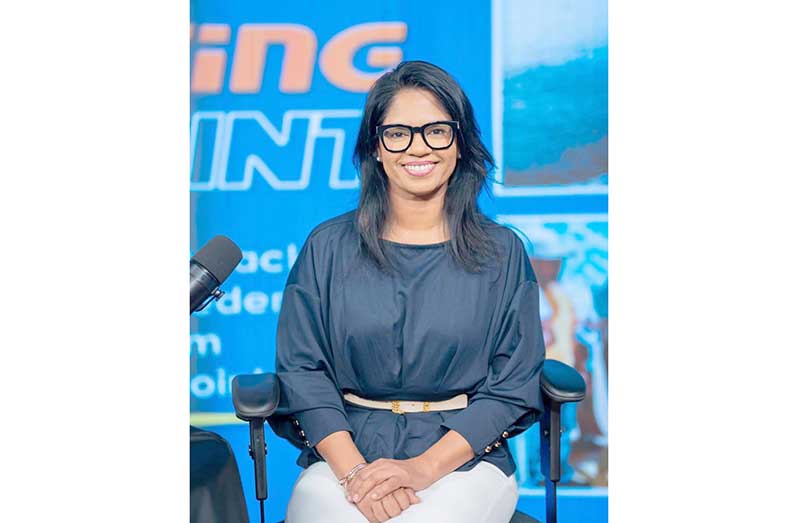
THE Minister of Education, Sonia Parag, is championing a shift away from an exam-centred approach to learning, advocating for classrooms that prioritise conceptual understanding over routine memorisation.
Parag, during her appearance on the Starting Point programme, said the shift is intended to ensure students learn for life rather than simply prepare to pass examinations.
Parag described the shift as a cornerstone of the government’s long-term vision for education.
She said it follows a record-breaking performance at the 2026 National Grade Six Assessment (NGSA), where 20 pupils earned perfect scores and results improved across Mathematics, English Language, Science and Social Studies.
Parag said planning for the 2027 NGSA has already begun. She noted that successful initiatives introduced this year, including mathematics stints, targeted teacher training and literacy support, will be rolled out from the start of the new school year rather than just months before the examinations.
Parag said the ministry will work closely with teachers to strengthen the delivery of key mathematics concepts in the classroom through targeted training and support.
However, she stressed that improving examination results is only one part of the ministry’s broader objective.
“Making sure that, when we are teaching these concepts, it’s teaching to understand and not just teaching to pass an exam, because I think that’s really, really important,” the minister said.
According to Parag, students who fully understand concepts are more likely to adapt when confronted with unfamiliar questions than those who rely solely on memorisation.
She explained that teaching solely for examinations often results in a narrower, more targeted approach, rather than ensuring students develop a thorough understanding of every concept.
Parag said that by ensuring students develop a solid understanding of concepts rather than simply memorising answers, they would be better equipped to handle unfamiliar questions during examinations.
She noted, “You will, even if a curve ball is thrown at you, you will be able to survive that because you understand the foundation of that concept, you understand the basics, you understand what you have to do there, no matter what form the question takes.”
Parag said mathematics remains one of the ministry’s priority areas because it has historically been a challenge not only in Guyana but across the Caribbean.
She said this year’s mathematics interventions, particularly the math stints, proved highly successful by giving students additional support outside the regular classroom.
The sessions brought together children from several schools to receive instruction from specialist mathematics teachers, while parents also welcomed the opportunity for children who struggled with the subject to receive extra assistance ahead of the examinations.
“I truly believe that the math stint was successful in that way, as well as the training of the teachers in mathematics,” she said.
Beyond mathematics, Parag said literacy and numeracy remain the cornerstone of the ministry’s long-term reforms.
“The next thing is improving, of course, our literacy and our numeracy,” she said, noting that literacy assessments for Grades Two and Four are helping educators identify learning gaps at an early stage.
Parag added that the ministry is also developing a short-term literacy programme for pupils entering Grade Six so they can strengthen their reading comprehension before sitting the NGSA.
She reasoned that these assessments are intended to serve as diagnostic tools, allowing teachers to identify weaknesses early and provide targeted interventions before students fall behind.
Parag also highlighted the growing role of the Guyana Digital School initiative, which she said will be expanded this year to provide students throughout Guyana with easier access to lessons, past examination papers and reinforcement in difficult subject areas.
“Our digital school will play a very important role from this year onwards,” she said, adding that the ministry intends to increase awareness of the platform so more students can benefit from its resources.
Ultimately, the minister said the government’s goal extends far beyond producing students who perform well on examinations.
Parag said, “It’s not just about the results.”
“It is ensuring that our children, when they move from primary school to secondary school, are literate; that they can understand what they’re reading; that they can interpret what they need to interpret properly; that they can be successful in secondary school and then on to university; and that they can be successful human beings.”
She added that while examinations remain important, the ministry’s broader vision is to build an education system that equips students with the critical thinking, comprehension and problem-solving skills needed not only to excel in school, but to succeed throughout their lives.




