—DPP says increased reporting is encouraging, but victims withdrawing from cases continues to hamper prosecutions
THE lack of victim co-operation remains the biggest challenge facing the Office of the Director of Public Prosecutions (DPP) in prosecuting sexual offence matters, even as the agency continues its nation-wide outreach and sensitisation efforts aimed at increasing awareness, encouraging reporting and helping communities better understand these crimes.
This is according to DPP Communications Officer Liz Rahaman, who said earlier this week that while reports of sexual offences have been increasing across the country, largely as a result of greater awareness, gaining the co-operation of victims remains the critical hurdle to successfully bringing cases before the courts.
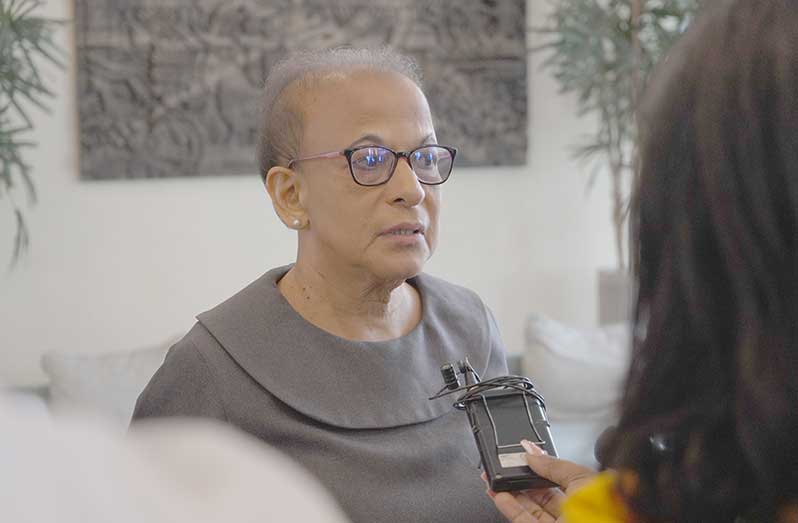
Speaking to the media on the sidelines of a recent event, Rahaman explained that because sexual offences are typically committed in private and without witnesses, a victim’s willingness to give evidence is often the deciding factor in whether a matter can proceed to prosecution.
“The DPP faces challenges, a lot of challenges, in prosecuting sexual offences, particularly in getting victims themselves to come forward and give evidence,” she said.
She added, “When sexual offences are committed, they are committed in private, they are committed in the dark, they are committed outside of extraneous witnesses. So, if that victim does not wish to proceed with the matter, it places the DPP in a very difficult position, and that is the main challenge which the DPP faces.”
Rahaman also addressed questions about a recent report on the number of teenage pregnancies referred to the Childcare and Protection Agency (CPA), and why a comparable number of sexual offence cases have not reached the courts.
She said this, too, comes down to victims’ reluctance to make police reports. However, Rahaman noted that the chambers’ outreach programmes are aimed at closing that gap by educating communities on the importance of reporting abuse and co-operating with investigators.
“During our outreaches, we have spoken to them about the importance of coming forward and reporting it,” she said.
The DPP’s public-education programme has been running since 2013 with officers travelling across Guyana’s 10 administrative regions to engage communities on sexual offences, domestic violence and child protection.
Rahaman said the programme has placed particular focus on hinterland communities, where access to information and legal resources can often be more limited.
“The DPP’s Chambers, from 2013 to now, has been continuously conducting outreaches across the 10 administrative regions of Guyana,” she said.
She highlighted that the chambers has conducted engagements across several hinterland areas, including communities in Regions One and Nine.
“We have focused on the hinterland communities—Region One, Baramita, Sub-Region Moruca, Mabaruma and Region Nine—because Region Nine has vast territories and we have to ensure we cover them all,” she said.
Rahaman further noted that representatives from the DPP recently participated in the South Rupununi Women’s Conference in Aishalton as part of the chambers’ continued efforts to engage Indigenous communities on sexual offences and domestic violence.
She explained that the outreach programme is designed not only to inform residents about the law, but also to help individuals recognise abusive behaviour and understand when an offence has been committed.
“The aim and objective is educating our people, our Indigenous communities, on sexual offences and domestic violence,” Rahaman said.
She continued: “The only way we can ensure that they become more aware is if we continue our public-education programme. It is aimed at sensitising them to what the elements of sexual offences are.”
She noted that the programme’s focus has expanded beyond girls, as boys are increasingly affected as well.
“Sexual offences are not only being committed against our girl children anymore; they are also being committed against our boy children across the world,” she said.
Rahaman stressed that abuse can occur in the very environments where children are expected to be safest, including within homes, schools and churches, often at the hands of trusted individuals.
“Whether that crime is being committed within their own homes, by their mother, father, family members or people close to them, people who are in positions of trust, our schoolchildren, they go to school, our church leaders, whomever we place our children in the care of, our children must know, our parents must know what can happen,” she said.
Despite the challenges surrounding victim co-operation, Rahaman said the DPP has seen encouraging results from its outreach efforts, with more sexual offence matters being reported to the Guyana Police Force and subsequently referred to the chambers.
Highlighting this trend, she added: “Over the recent years, we have had numerous police files sent to the DPP’s office involving sexual offences that are being reported more and more to the Guyana Police Force across all the regions.”
Rahaman credited the increase in reporting to growing awareness within communities about the importance of seeking help, calling it a direct result of the chambers’ continued efforts.
“We can safely say it is as a result of our public education programme that we continue to sensitise our people. They have become more aware of the importance of going to the Guyana Police Force and reporting these crimes,” she said.
For Rahaman and the DPP’s Chambers, the increase in reports shows that more Guyanese are learning to recognise abuse and are more willing to report it, even as turning that awareness into convictions remains a challenge.