
AS an avid user of social media, I often see people label themselves as “minimalists”, with minimalism becoming a very popular lifestyle trend. If you scroll through your social media, you’ll see spacious white rooms, homes that look untouched or gardens with one tone of flowers. Many celebrities are adopting these styles in their houses and lifestyles. The pictures look very appealing online, and people seem to be more pleased by “minimalist” pictures. I do think that there is a misconception about minimalism. It does not mean that one should own fewer things or that a picture needs a certain appeal or style to be shared online.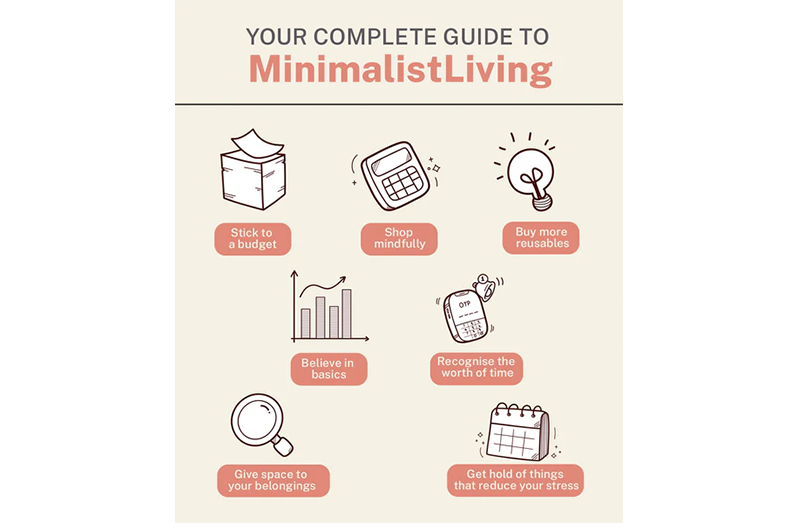
Minimalism is beyond what we can see. It involves the intentional choices we make and asks people to evaluate what truly adds value to their lives. It goes beyond the physical things we see and own. It also encompasses the mental, emotional, spiritual and social aspects of our lives. It is not a matter of depriving yourself of something; it’s about prioritising what matters.
We are often encouraged to be large-scale consumers in today’s fast-paced world. We are often led to believe that the newest iPhone, the latest fashion and the mass production of goods and services are meant to give us happy and prosperous lives. How happy and prosperous do many of us genuinely feel after consuming these, despite the high cost or irrelevance?
Many people still feel very overwhelmed, not because they have too little but because they have too much. They have too many distractions, too many commitments, too many demands and too many expectations to keep up with.
With that in mind, minimalism is essentially a concept that challenges the culture of excessiveness. We are encouraged not to remain silent but to ask questions about everything we own. Are we spending enough time on things that matter, like our family? Are our schedules overpacked with activities that don’t include self-reflection? Sometimes, the greatest form of decluttering isn’t cleaning out a closet; it’s learning to say no to obligations that no longer serve us. Minimalism can be when we choose to disconnect from our inboxes and endless digital notifications to focus on our family. Or it is when we choose to use our finances and resources wisely on more sustainable and permanent solutions for our lives.
Perhaps the greatest benefit of minimalism is the clarity it brings. When we remove unnecessary distractions, we create room for creativity, purpose and peace. We begin to appreciate experiences over possessions, relationships over status and quality over quantity. This doesn’t mean everyone should own only thirty items or live in a tiny house. Minimalism looks different for every person. A family with children will live differently from a university student. A traveller may value mobility, while an artist may treasure collections that inspire creativity. The goal isn’t to fit into a minimalist image; it’s to build a life that reflects your values. Ultimately, minimalism isn’t about having less for the sake of having less. It’s about making room for more of what truly matters: more time, more purpose, more gratitude and more freedom.
The most meaningful form of minimalism isn’t found in perfectly curated spaces; it’s found in intentionally lived lives.