TWO controversial pathways in life are political service and public sector service to the country you belong to. Both of these pathways are fraught with psychological problems as one gets older in life. Politicians get into government, where they work hard and hardly sleep. As public servants get older, life’s chagrin becomes a constant companion because of financial burdens.
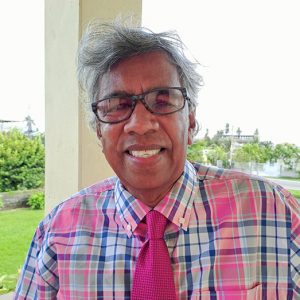
I know about these pathways. I worked for 26 consecutive years as a lecturer at the University of Guyana. Today, my UG and NIS pension is $90,000 monthly. I drove the same car for 21 years whose derelict nature almost drove me crazy. $90,000 is a sum in Guyana that the bourgeoisie spends on frivolities on a daily basis. The petit bourgeoisie in Guyana may not spend $90,000 a day on trivialities but $90,000 is of little consequence to all, (yes, all) of them.
Politicians with state power are people that work hard. Presidential adviser, Jerry Gouveia, said that President Irfan Ali gets about two hours sleep each night. When public servants, presidents and prime ministers leave office, what future they have in their own countries for themselves and their families, especially if they go out of office when they are still young?
There is a theory of politics handed down by Western sociology to the former colonies that stipulates that there is a moral foundation that must envelope the lives of presidents, prime ministers and public servants – you cannot be earning money outside of your attachment and service to the state.
It is a theory I have long rejected and it is a theory that results in the impoverishment of former presidents, prime ministers and retired public servants. Why does this theory have such a long life? The reality is that it has a long life in the post-colonial world but not in the former empires of Europe and in the US, Canada and Australia.
According to this theory it is wrong for rulers and public servants in the Global South to have entrepreneurial entities but nothing is wrong if Western rulers have shares, stocks and bonds. Almost every Cabinet Minister in the Western world has a source of business income outside of state salary. The income may not be from a visible business company but there are considerable earnings from shares and stocks. Almost 90 percent of US senators have shares and stocks.
Enter President Ali’s farm. What is wrong with his commercially viable farm? Everything is wrong about it if you accept Western theory that presidents and prime ministers should not be receiving income from any source once they are in office. Why this is a valid theory and why post-colonial societies adhere to it as gospel?
The answer is simple – a prime minister or a president has considerable latitude so they can use power to help their business. That is no reason why presidents and prime ministers should not have entrepreneurial outfits. The issue is not possession of a company but if state power can be used to enhance the functionalism of the entity.
Has President Ali done anything wrong? By having an agricultural farm is he guilty of indiscretions? What President Ali may have done is to lay the theoretical ground for rejecting traditional Western political theory that restricts prime ministers and presidents from having income from other sources except the state.
What about the farm itself? There was no secret in Guyana that President Ali had a chicken farm before he became Head of State. What Dr Ali did was to expand his business because there was a market for his product. He knew that his production of chickens could be expanded because the market was there. Why should he have not enhanced his poultry business because it will look bad because he is president?
President Ali has gone into diversified farming and unless it can proven that he has committed state funds to his business, then the theory of prime ministers and presidents should be precluded from owning companies should finally be dissolved. I think for all the criticisms, the president is facing, he may end up being a trailblazer in that he has contributed to the opening up of new thinking that was taboo for decades in the Third World: that presidents and prime ministers should live on their pensions when they retire.
I end on a note of optimism. What the President of Guyana has done will open the door for other leaders of their nation to consider. When you serve your country at the neglect of your health, when you leave office, you should have a future. I wish after 26 years serving UG and over 58 years of political service to Guyana, I had a future.
DISCLAIMER: The views and opinions expressed in this column are solely those of the author and do not necessarily reflect the official policy or position of the Guyana National Newspapers Limited.