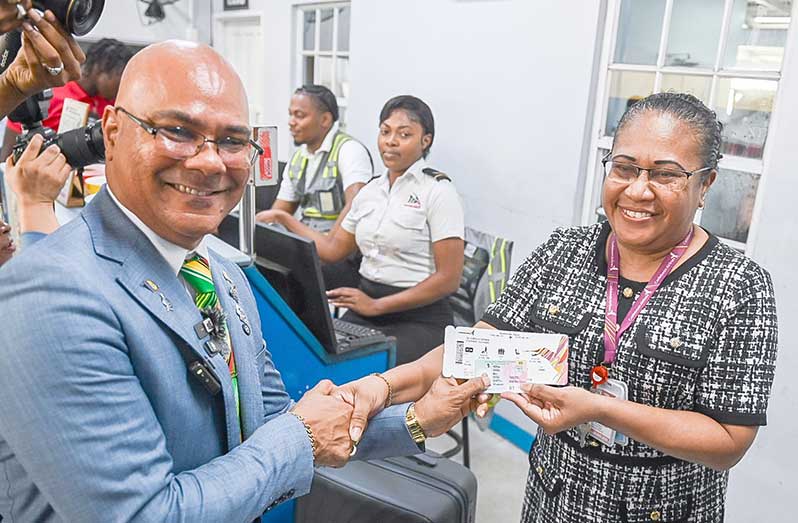
– pioneering passport-free CARICOM movement
GUYANA and Barbados on Wednesday made Caribbean history by becoming the first two CARICOM nations to implement passport-free travel using electronic identification (e-ID) cards, marking a major milestone in regional integration and digital transformation.
The groundbreaking initiative, officially launched at the Eugene F. Correia International Airport (Ogle), allows eligible citizens of both countries to travel between Guyana and Barbados using only their national electronic identification cards, eliminating the need for traditional passports.
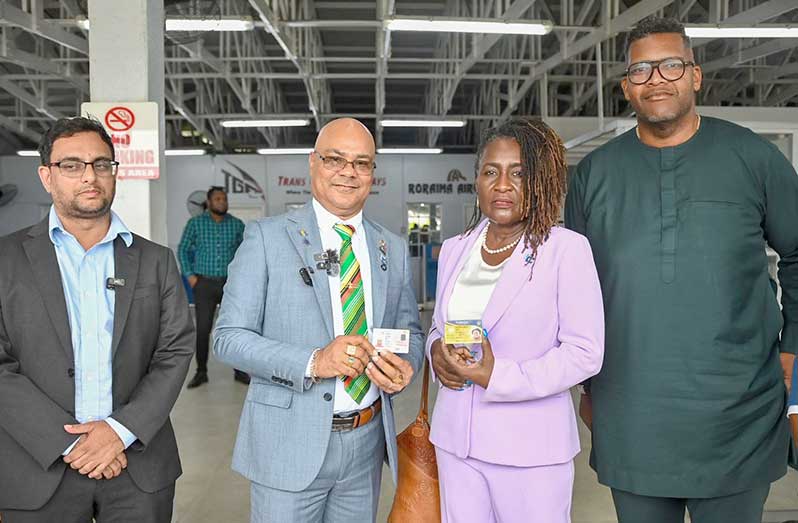
The launch represents the culmination of a shared vision championed by President Dr. Mohamed Irfaan Ali and Barbados Prime Minister Mia Amor Mottley to deepen regional integration, modernise public services, and simplify travel for Caribbean citizens.
In a symbolic demonstration of the new system, Guyana’s Deputy Chief Immigration Officer, Stephen Telford, and Barbados’ Chief Immigration Officer, Margaret Innes, became the first officials to complete international travel using only their respective e-ID cards.
The exercise showcased the entire travel process, from airline check-in and immigration clearance to boarding procedures, without the use of passports.
Speaking at the launch, Minister of Public Service, Government Efficiency and Implementation, Zulfikar Ally, described the event as a historic achievement and a significant step toward broader regional connectivity.
“President Ali has been pushing this integration, working closely with Prime Minister Mottley; together they have championed the use of the electronic ID card as a travel document between both countries,” Minister Ally said. “We are not going to stop here. This card will also be used for travel throughout the Caribbean.”
He noted that the initiative demonstrates the Caribbean’s capacity for innovation and collaboration, highlighting that the system was developed and implemented in approximately one month through coordinated efforts among government agencies in both countries.
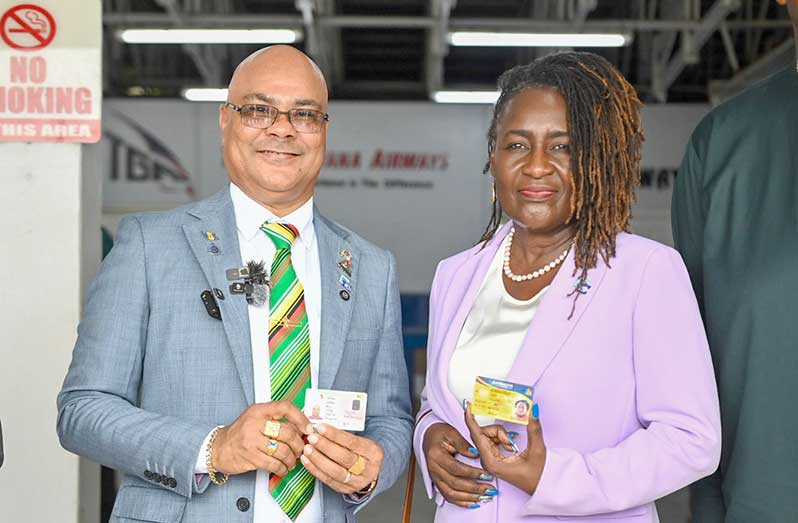
“It is a historic moment, and I’m proud to be part of it, working alongside my colleague in Barbados, the team from Mr. Telford, the Passport Office, the National Data Management Authority, and everyone who worked together at record speed to put this together,” he said.
Minister Ally also disclosed that while the system is already operational with Caribbean Airlines and other regional carriers, discussions are underway with LIAT to expand the use of e-ID cards across additional Caribbean routes.
“More and more you will see this card integrated with travel throughout the region,” he added.
Barbados’ Minister of Innovation, Industry, Science and Technology, Johnathan Reid, hailed the achievement as a powerful example of regional co-operation and technological advancement, noting that the initiative was implemented in less than six weeks.
“The idea of regional entities coming together, optimising systems to give people a better quality of life, making good things easier in the Caribbean, that matters,” Minister Reid said. “Too many things in the Caribbean, despite our small populations, are complicated and burdened by protocols and procedures that serve a good purpose but are not always fit for the modern times we’re in.”
He said the successful rollout demonstrated what could be accomplished when governments and institutions work collaboratively toward common goals.
“Once we brought the right authorities together, backed by the two chiefs, and had the support of the President and the Prime Minister, we were able to drive this through in record time,” he said.
Deputy Chief Immigration Officer Stephen Telford described the initiative as an exciting development for Guyana and the wider Caribbean.
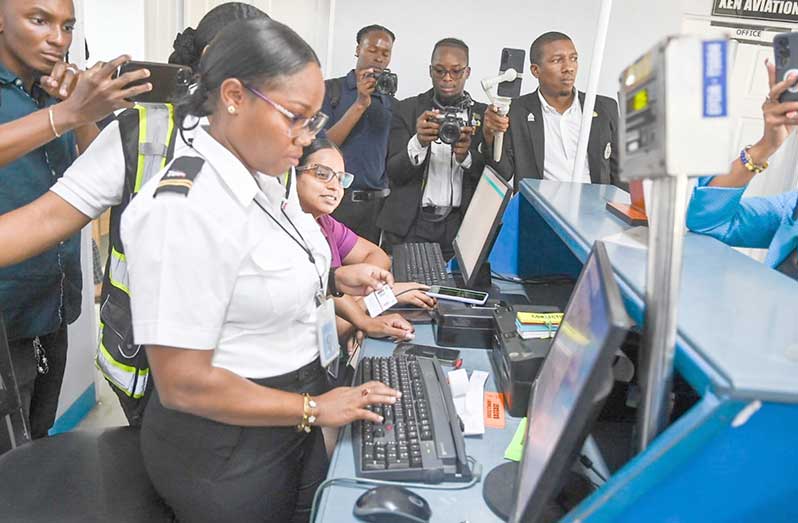
“It is wonderful to know that you can travel with a card from Guyana to Barbados, and from Barbados back to Guyana, if you don’t have a passport,” Telford said.
Barbados’ Chief Immigration Officer Margaret Innes echoed those sentiments, describing the initiative as a reflection of the strong partnership and friendship between the two nations.
“As we deepen our regional integration, this is certainly a step in the right direction, and we look forward to working with our colleagues in Guyana as we move between Barbados and Guyana,” Innes said. “This is for citizens of Barbados and citizens of Guyana to use with the ID card.”
Officials from both countries said the introduction of e-ID card travel represents a significant advancement in CARICOM’s long-standing goal of improving the free movement of people and enhancing regional connectivity through digital innovation, with plans already underway to expand the initiative across the wider Caribbean.