







THE Attorney General’s Chambers has welcomed a recent High Court ruling in the case brought by the International Decade for People of African Descent Assembly – Guyana Country Co-ordinating Mechanism Inc. (IDPADA-G Inc.).
It said the judgment “substantially vindicates the State’s position” and confirms that the organisation has no legal entitlement to continued government funding.
In a statement issued following the June 24, 2026, judgment, the Attorney General’s Chambers clarified what it described as misconceptions surrounding the ruling delivered by then acting Chief Justice Roxane George, SC, who has since been appointed acting Chancellor of the Judiciary.
According to the Chambers, “contrary to certain public commentary, the judgment did not order the reinstatement or continuation of subventions to IDPADA-G Inc.”
Instead, it said the court ruled that IDPADA-G Inc. “has no legal right to continued government funding” and dismissed the organisation’s substantive claims, including allegations of breach of contract, breach of constitutional property rights, legitimate expectation, and requests for mandamus, exemplary damages and costs.
The proceedings stemmed from High Court Action No. 2022-HC-DEM-CIV-FDA-1760, in which IDPADA-G Inc. challenged the Government’s decision to discontinue financial subventions to the organisation.
The court examined several key issues, including whether the applicant had standing to bring the proceedings, whether a contractual relationship existed between the Government and IDPADA-G Inc., whether the organisation had a legitimate expectation of continued funding, and whether it was entitled to be heard before the subvention was discontinued.
Addressing the contractual issue, the Attorney General’s Chambers said it argued there was no evidence of any binding agreement between the Government and the applicant.
It quoted the Attorney General’s submission that “no case of contract has been made out either in the pleadings or by evidence and the issue of a breach cannot arise.”
The court agreed, finding there was no written contract, no clear offer or acceptance, no consideration and no sufficiently certain terms capable of creating a legally binding agreement.
As a result, the claim for breach of contract failed.
The judgment also rejected IDPADA-G Inc.’s argument that it had acquired a substantive legitimate expectation that government funding would continue.
According to the Attorney General’s Chambers, the court found that any statements relied upon by the applicant amounted only to policy declarations rather than enforceable promises.
In her ruling, Chancellor George stated: “I agree with the submission for the respondents that the President’s statement outlined the Government’s support for a cause, that is, a programme of activities associated with the UNIDPAD (United Nation’s International Decade of the People of African Descent), and not to the applicant.”
She further noted that former President David Granger’s 2016 speech “did not make a promise to any particular group or persons, and most definitely did not make a promise to the applicant or its predecessor.”
The court also observed that both IDPADA-G Inc. and its predecessor organisation did not exist at the time the speech was delivered.
The Chambers further highlighted another portion of the judgment in which the court concluded that government allocations were intended to support the objectives of the UNIDPAD rather than confer a proprietary right on any individual organisation.
Justice George stated: “The government budgeted the subvention in favour of the cause, and not the applicant specifically.”
She added that “a legitimate expectation to the continued allocation of the subvention to the applicant cannot arise.”
The High Court also dismissed claims that ending the subvention violated IDPADA-G Inc.’s constitutional right to property, finding that neither the incorporated entity nor its predecessor established any legal right to continued funding beyond 2022. However, the court granted limited procedural relief.
The Attorney General’s Chambers explained that the court found the unincorporated body, IDPADA-G, should have been afforded an opportunity to respond before the Government ceased making payments.
Consequently, the court ordered payment of the remaining instalments for October, November and December 2022. No order for costs was made against the State.
Further, the Attorney General’s Chambers noted that the court also found IDPADA-G Inc. “was not the proper party to have instituted the proceedings” and that its substantive claims lacked merit.
The Chambers further emphasised that the judgment affirmed the Government’s authority to determine how public funds should be allocated.
Quoting the ruling, it noted that “since the subvention was for the cause, the government as a matter of policy could decide that it would seek to execute the policy through another executing agency.”
Justice George, according to the release, further warned that directing the Government to provide a specific budgetary allocation to IDPADA-G Inc. “would amount to judicial overreach.”
She also held that “the government was and remains free to change its policy regarding the utilisation of the budgetary allocation for the UNIDPAD.”
According to the Attorney General’s Chambers, the Government remains committed to advancing the objectives of the United Nations General Assembly Resolution proclaiming the International Decade for People of African Descent.
It said annual budgetary allocations continue to be made for programmes benefiting Afro-Guyanese organisations across Guyana.
The Chambers also stated that several organisations representing Afro-Guyanese had previously complained that they did not benefit from more than $500 million disbursed to IDPADA-G Inc. under the programme and had petitioned the Government to redirect the funds directly to multiple representative organisations.
Additionally, the statement asserted that financial records showed more than 80 per cent of the funds received by IDPADA-G Inc. were spent on salaries, rent, meals and administrative expenses rather than on programmes directly benefiting ordinary Afro-Guyanese.
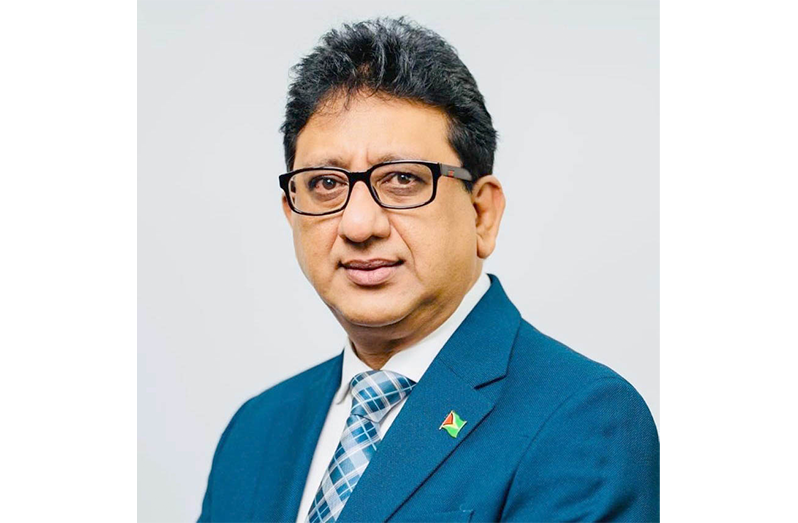
The respondents in the matter were represented by attorneys Deborah Kumar, Shoshanna V. Lall, Ronetta Sargent and Loretta Noel, led by Attorney General Anil Nandlall, SC, who appeared in person.




