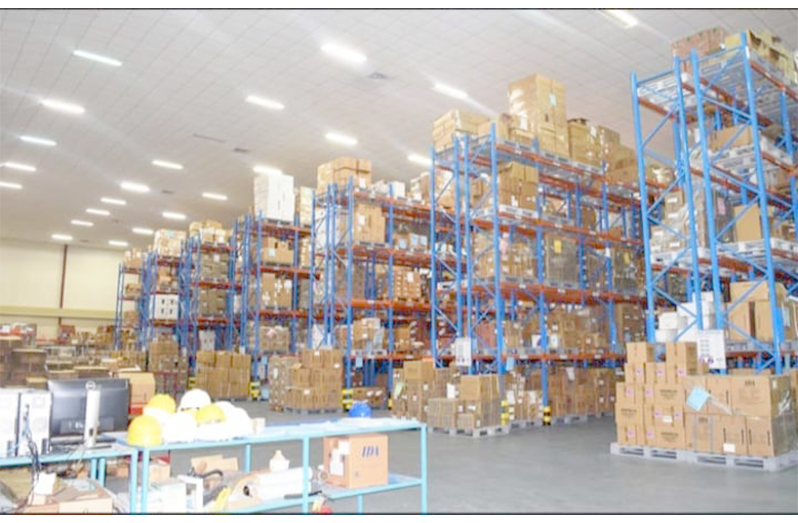
- Health Ministry rolls out digital inventory system for medicines July 1
GUYANA’S healthcare system is set to take a major step toward full digitalisation on July 1st with the launch of Cortex, a new pharmaceutical supply chain management system designed to improve the availability of medicines, reduce wastage and strengthen inventory monitoring across the country’s health facilities.
The platform will replace many of the manual processes currently used to track and order pharmaceuticals, allowing healthcare facilities to monitor stock levels in real time and automatically trigger replenishment requests before supplies run critically low.
Coordinator for Indigenous People’s Communities within the Ministry of Health’s Regional Health Services Department, Micheal Gouveia, said the new system is expected to significantly improve the efficiency with which medicines are distributed throughout the country, particularly in remote and hinterland communities.
“With the new system, facilities will know exactly what they have in stock at any given time. Not only will it tell the facility what is available, but it will also trigger a reorder to the Materials Management Unit when supplies begin running low,” Gouveia explained.
Under the current paper-based system, healthcare workers are required to manually assess inventory levels, complete requisition forms and physically submit orders to the Ministry of Health’s MMU before supplies can be processed and dispatched.
According to Gouveia, weather conditions and logistical challenges can sometimes delay the movement of supplies, particularly to remote communities, making inventory management a critical component of healthcare delivery.
The Cortex platform is expected to change that by utilising population data and consumption trends to determine stock requirements and automatically calculate reorder quantities for each facility.
“It can ensure that facilities receive enough supplies to adequately serve patients while maintaining appropriate stock levels,” he said.
Beyond improving supply availability, the software will also help reduce the number of medications expiring on shelves by identifying products approaching their expiration dates and allowing health officials to transfer them to facilities where they can be utilised before becoming unusable.
“So let’s say, Arakaka asks for Paracetamol and they realise that Matthew’s Ridge has that medication that can actually expire before they could utilise it and since its within distance, the MMU can then issue an instruction for that medication to be transferred from Matthew’s Ridge to Arakaka. We call this an inter-facilty transfer,” he said.
Gouveia noted that the technology represents another significant step in the Ministry of Health’s ongoing modernisation efforts.
“The aim is to improve access to medicines, improve patient outcomes and ultimately help people live longer, healthier lives. Technology is allowing us to do that in ways that were not possible before,” he added.
Training is currently underway across the regions ahead of the July 1st rollout, with healthcare workers being prepared to utilise the system as part of the Ministry’s broader push to strengthen healthcare delivery and improve services nationwide.