






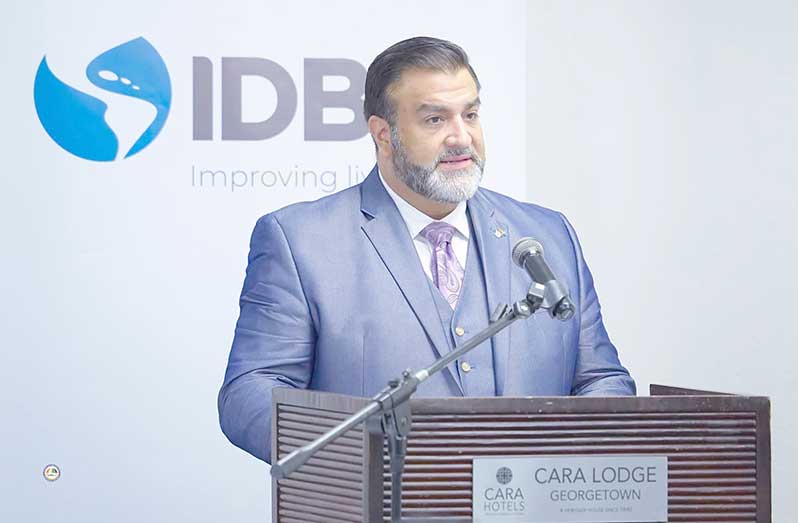
CHIEF of Operations for the Inter-American Development Bank (IDB) – Guyana, Ivan-Alonzo Gaviria, has commended Human Services and Social Security Minister Dr Vindhya Persaud for her exemplary leadership in the implementation of the Support to Safety Nets for Vulnerable Populations Affected by Coronavirus in Guyana project.
He described the country as a stand-out performer among the IDB’s 26 member states. Reflecting on the programme’s achievements between 2020 and 2024, Gaviria said Guyana distinguished itself through effective execution, innovation and a steadfast commitment to serving vulnerable citizens, noting that the initiative not only provided critical support during the COVID-19 pandemic, but also delivered long-term benefits that strengthened the country’s social-assistance systems and capacity to protect livelihoods.
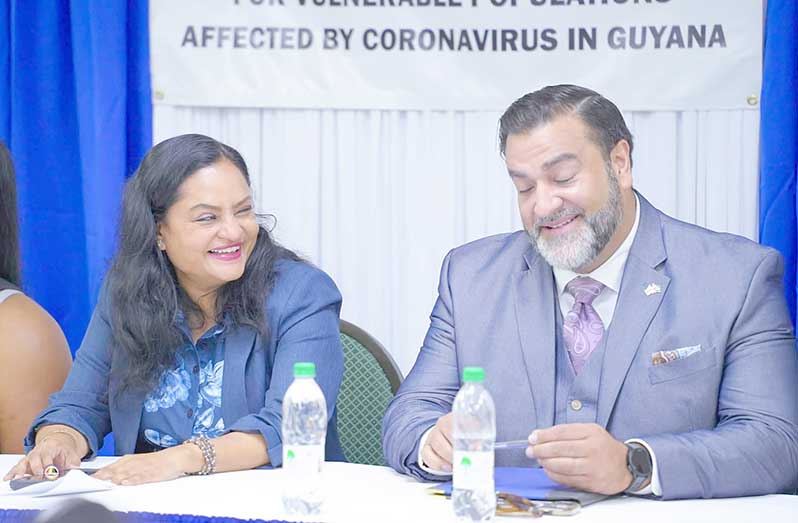
Speaking at a recent event focused on highlighting the key interventions implemented under Component One of the Support for Safety Nets for Vulnerable Populations Affected by COVID-19 programme, Gaviria lauded the leadership of Minister Persaud, noting that the accomplishments of the programme would not have been possible without her leadership.
“I think it merits saying that nothing is accomplished without excellent leadership. And to that end, I do want to recognise the Honourable Minister. As you could tell by her remarks, she understands every aspect of the project. And not only this one, every undertaking that she has. She knows the persons who are affected. She knows the plan, and she’s constantly innovating.”
Moreover, he added that strong leadership and partnership have been vital to the work of the IDB.
“Without that kind of leadership and that partnership, it’s very, very difficult for the Inter-American Development Bank to be successful in obtaining these objectives. So, again, minister, thank you so much for your support,” he further noted.
Designed to cushion the impact of the COVID-19 pandemic on vulnerable populations, a total of 58,534 old-age pensioners and more than 47,000 households had benefitted from key interventions implemented under Component One of the programme. The programme, which was financed by the IDB, was launched in December 2020 and was implemented by the Ministry of Human Services and Social Security.
Gaviria further noted that through a strong partnership between the Co-operative Republic of Guyana and the Inter-American Development Bank, the project helped to strengthen the country’s capacity to support vulnerable populations, protect livelihoods and enhance the delivery of social assistance to those most in need.
He also stated that among the 26 member countries that implemented the project, Guyana stood out as one of the nations that created a positive, long-term impact on its people.
“This project was not like any other one we had prepared in response to COVID-19 across our 26 member countries. Thanks to the vision of the ministry and the minister and all collaborators, it included elements that created long-term impact,” the IDB official noted.
Gaviria emphasised that while the IDB carried out a number of reviews and assessments, the true success of the operation could not be measured in quantifiable data alone, but rather in the people it served — and this, he added, is where Guyana made its real impact. “You are going to hear a lot about percentages, et cetera. But percentages and reports and financial execution aren’t people. The only thing that matters is people. And whether or not they have been served duly, truly, equitably by the operation and by the services that we have financed. And in this particular case, I believe they have.”
In addition to the one-off cash transfers provided to pensioners, the initiative reached 16,183 public-assistance beneficiaries and delivered cash grants to 4,971 children living with disabilities. The electricity credit-transfer programme benefitted 47,059 households across the country. The initiative also established the Survivor Advocate Programme, aimed at supporting victims and survivors of gender-based violence by helping them navigate the criminal justice system and access essential services, benefitting a total of 30 survivors.




