






THE High Court has dismissed a legal challenge brought against President Dr Irfaan Ali’s appointment of seven members of the Teaching Service Commission (TSC), ruling that the appointments were lawful and constitutional despite the absence of a Leader of the Opposition at the time.
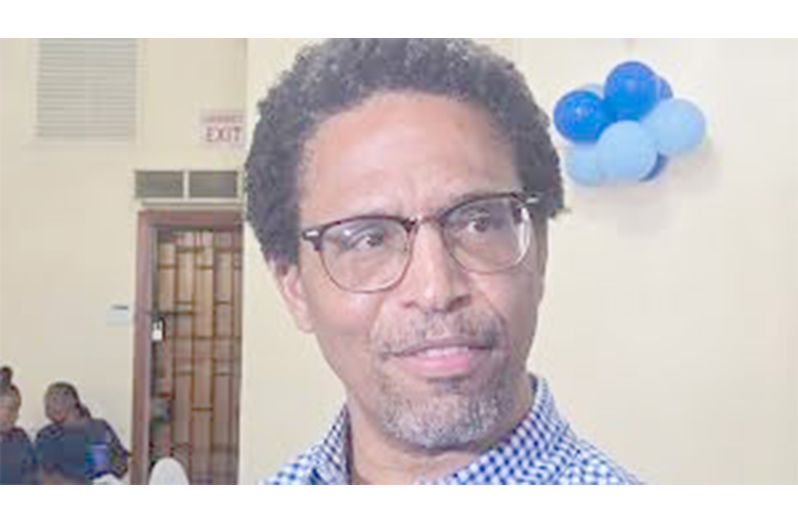
The decision was handed down on Friday by Justice Damone Younge, who rejected an application for judicial review filed by A Partnership for National Unity (APNU) member, Terrence Campbell.
Campbell, through his attorneys-at-law, Khemraj Ramjattan and Christopher Ram, had argued that the President breached Article 207(2)(d) of the Constitution of Guyana by appointing members to the TSC without first consulting the Leader of the Opposition.
He sought declarations that the appointments were unconstitutional and asked the court to quash them through an Order of Certiorari.
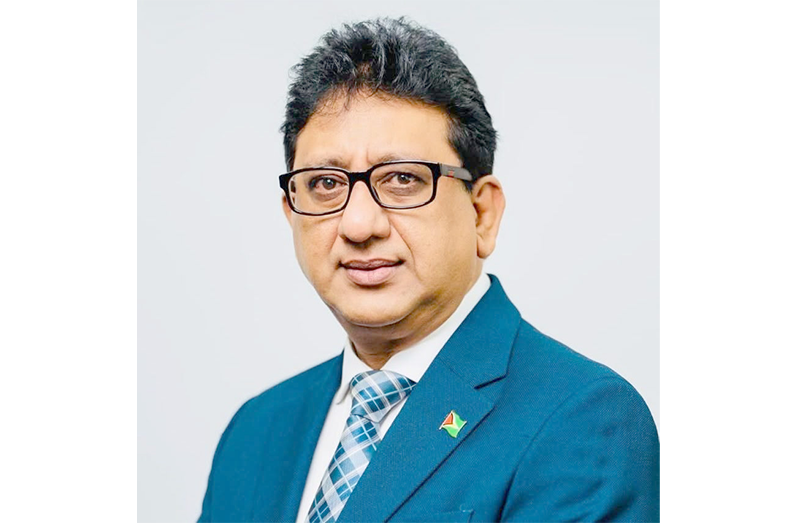
The Attorney General, Anil Nandlall, SC, was named as the respondent in the proceedings.
In defending the appointments, the Attorney General argued that the President’s constitutional power to appoint members of the TSC is not extinguished by a vacancy in another constitutional office.
He further contended that the constitutional requirement for consultation can only be fulfilled where consultation is capable of being undertaken and that the law does not require the performance of an impossibility.
Nandlall also submitted that the President acted reasonably and in the public interest to prevent a constitutional vacuum and paralysis within the TSC.
Additionally, he argued that even if there had been a procedural issue, the court should decline to grant the remedies sought because of considerations of public interest, good governance and the discretionary nature of judicial review.
Justice Younge accepted those submissions and relied heavily on an earlier ruling delivered by then Chief Justice Roxane George, SC, in the case of Aubrey Norton v Attorney General of Guyana and Clifton Hicken.
That case concerned President Ali’s appointment of Clifton Hicken to act as Commissioner of Police during a period when there was no Opposition Leader in place.
In dismissing that challenge, the Chief Justice had ruled that while meaningful consultation is generally required by the Constitution, a decision-maker is not prevented from acting where such consultation is impossible through no fault of his own.
Justice Younge found that the same principle applied to the Teaching Service Commission appointments.
At the time President Ali appointed the seven members of the TSC on December 31, 2025, there was no elected Leader of the Opposition. The court noted that this situation was not attributable to any action or omission on the part of the President.
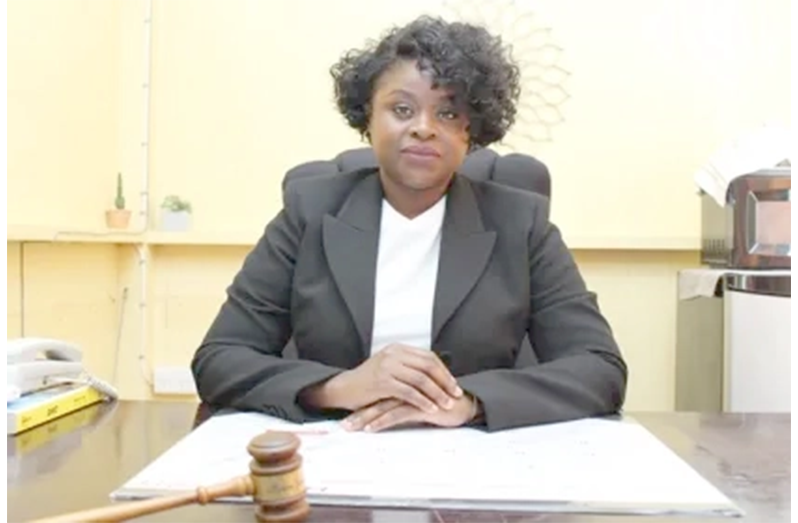
In her ruling, Justice Younge emphasised the importance of ensuring the continued functioning of constitutional bodies.
“The administration of education in Guyana remains a vital pillar of national life. To leave the system without a functioning Commission would have exposed it to uncertainty and disruption, thereby imperilling the orderly governance of the sector,” the judge stated.
She further held that the constitutional framework must be interpreted in a manner that preserves continuity in governance and prevents key institutions from becoming inoperative due to circumstances beyond the control of those responsible for establishing them.
The judge concluded that the absence of an elected Opposition Leader made meaningful consultation impossible and therefore there could be no breach of the constitutional requirement.
“Having regard to the foregoing, this Court holds that the absence of an elected Leader of the Opposition made it impossible for there to be meaningful consultation as contemplated by Article 207(2)(d) of the Constitution and as such there could be no breach of that constitutional requirement,” Justice Younge ruled.
She added that the absence of consultation did not invalidate the President’s constitutional authority to make the appointments and declared that the appointments were neither unlawful nor unconstitutional.
In dismissing the challenge, Justice Younge ordered that Campbell’s Fixed Date Application, which was filed on January 19, 2026, be dismissed in its entirety. The judge further ruled that, given the public interest issues raised in the proceedings, each party would bear its own legal costs.
Attorney General Nandlall appeared in the matter alongside attorneys Shoshanna Lall, Prithima Kissoon, Ronetta Sargent-Prince and Sabira Ali Hydaralie.
The seven-member TSC, comprising Doodmattie Singh, Shafiran Bhajan, Lancelot Baptiste, Joan Davis-Monkhouse, Satti Jaisierisingh, Mayda Persaud, and Saddam Hussain, was appointed for a three-year term commencing December 31, 2025.
The TSC is an independent constitutional commission established under the Teaching Service Commission Act of 1975 and is responsible for the appointment, promotion, transfer, and disciplinary oversight of teachers across the public education system.



