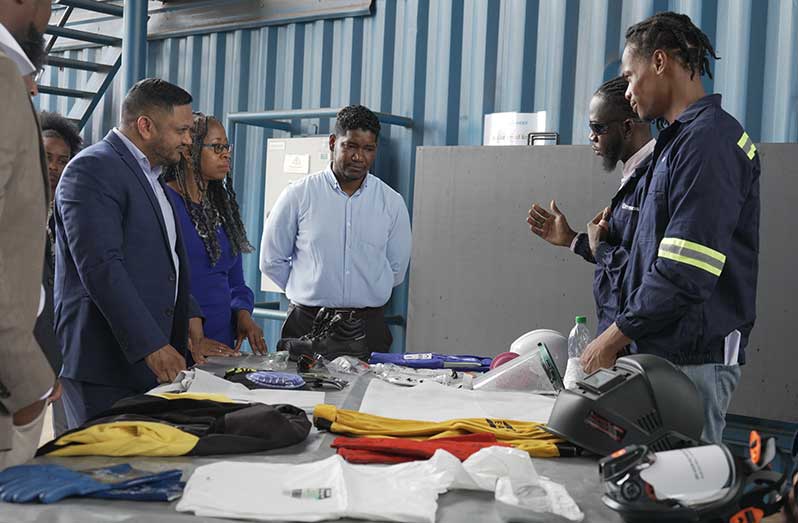
—Minister Bharrat says milestone reflects transformational impact of Guyana’s local content legislation
MEETING international standards with zero defects and no need for repairs, high-pressure process pipes for a Water Injection Riser Depressurisation (WIRD) system were fabricated in Guyana for the first time.
The milestone was hailed as a clear example of how deliberate investment in local capability can support Guyana’s long-term development and industrialisation.
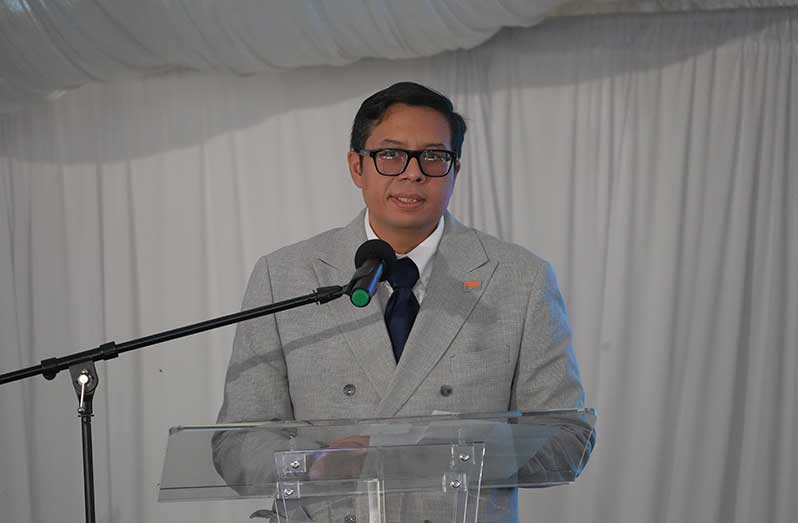
Speaking during a fabrication ceremony on Tuesday, SBM Offshore Guyana General Manager, Martin Cheong, said the pipe systems will operate under some of the highest water pressures on the Liza Unity Floating Production Storage and Offloading (FPSO) vessel.
“For the first time, high fabrication and high-pressure water testing for an FPSO project has been completed locally by Guyanese workers in accordance with internationally recognised quality and safety standards. At SBM Offshore, we know that local content is not simply about where work is done. It is about creating opportunities for people, strengthening local businesses and building technical expertise that will support Guyana’s long-term development, impact communities and individuals, and establish us as a long-term partner in Guyana’s development,” Cheong said.
The project was intentionally pursued as a local content development opportunity, providing Guyanese workers with hands-on experience in one of the most technically demanding areas of offshore fabrication.
Crucially, the work was completed with zero weld defects and zero repairs, a performance described as an exceptional accomplishment.
Guyanese welders played a direct role in developing and qualifying the welding procedures used for the project, while three additional welders obtained international certification, further strengthening the country’s pool of highly skilled technical workers.
“The fact that this work was completed in Guyana with zero weld defects and zero repairs required is an exceptional accomplishment. It speaks to the quality, professionalism and dedication of the workforce, while demonstrating that Guyanese talent can successfully execute highly specialised offshore work to international standards,” Cheong said.
He noted that the achievement was made possible through collaboration with Friedlander, which facilitated a rigorous qualification process involving vendor audits, weld procedure qualification testing, international laboratory testing, American Bureau of Shipping (ABS) classification approvals and the training and qualification of Guyanese welders.
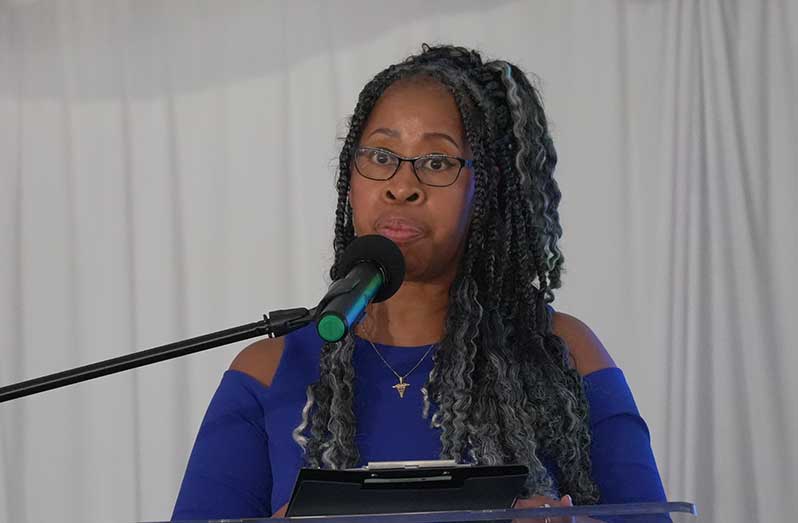
Dr Carla Crawford, Director and Co-owner of Friedlander, described the project as a powerful statement about the country’s growing industrial capability.
“This is more than a performance; it is a statement. A statement about quality, a statement about capability and, above all, a statement about people,” Crawford said.
“The success belongs first and foremost to the teams in the yard and on the workshop floor, working through every stage, cutting, fitting, welding, testing and painting, while meeting some of the most demanding technical requirements in the offshore industry.”
A NEW CHAPTER
Positioning the WIRD project as proof of concept for local content, Crawford said it demonstrated that advanced fabrication work can be executed successfully in Guyana.
“Our ambition in Guyana has been clear, not just to operate here, but to build here, develop local expertise, invest in skills and create opportunities that last beyond a single project. This is why training and qualification were central to this project. Today, we are proud to see the results: Guyanese welders trained, qualified and certified to international standards,” she said.
She noted that while the current work supports the Liza Unity FPSO, similar opportunities are expected across future FPSOs and offshore projects, ensuring the skills developed continue to create value for years to come.
“We are opening a new chapter, a chapter where Guyana is not only an oil-producing nation, but a country capable of delivering world-class industrial services, a country building its own expertise. The future of the industry in Guyana will not be imported. It will be built here by the great people of this great nation, Guyana,” Crawford said.
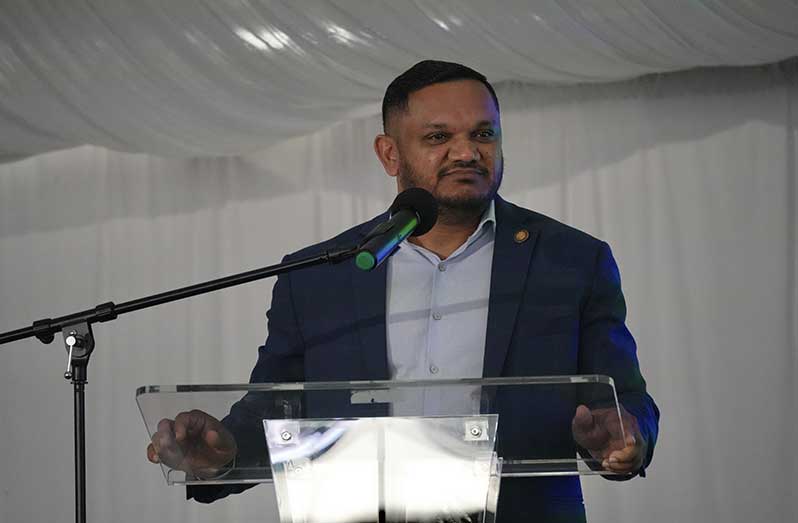
Meanwhile, Minister of Natural Resources, Vickram Bharrat, credited Guyana’s Local Content legislation as a key driver of the transformation taking place in the oil and gas sector.
According to Bharrat, the legislation has boosted job creation, improved safety standards and positioned Guyana as the world’s fastest-growing economy.
He stressed that the law was never intended to discourage foreign investment or create barriers for operators but rather to ensure Guyanese participate meaningfully in higher-value segments of the industry.
“In drafting that bill, there was no way that we intended to bring difficulties to the oil and gas sector. There was no way it was intended to keep away foreign investment in Guyana, by no means, because we live in the real world and we know there is no way that Guyana and Guyanese businesses at that point in time could have developed the oil and gas sector to where it is today,” Bharrat said.
He argued that genuine local content means producing goods and services in-country rather than importing finished products and simply reselling them to operators.
The minister also highlighted what he described as a transformational shift in safety and quality standards, noting that practices introduced through the oil and gas industry are now being replicated in sectors such as mining and forestry.
“Today we have locals, we have Guyanese participating in a meaningful way in the sector. You have young Guyanese trained and working in the sector, and those are just 7,000 direct jobs,” Bharrat said.
He added that projects such as the WIRD fabrication initiative demonstrate the success of Guyana’s local content policy and the growing capacity of Guyanese workers and companies to compete at the highest international standards.