







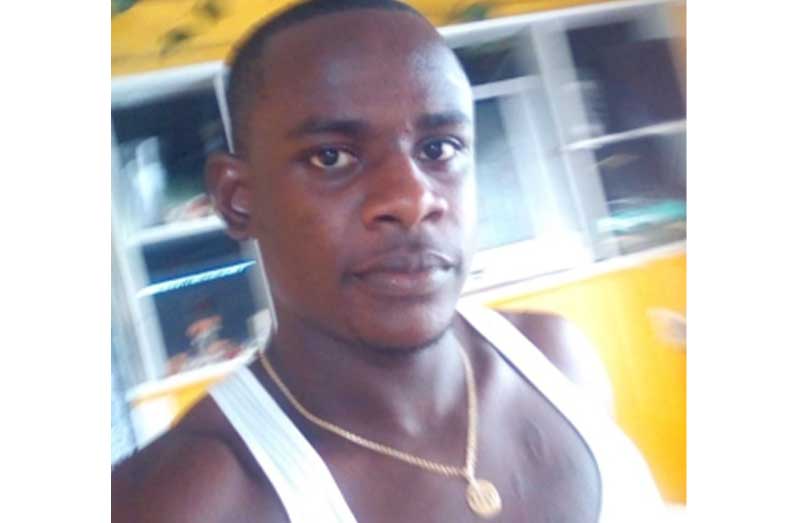
ACTING Chief Justice Navindra Singh has sentenced a 27-year-old West Ruimveldt labourer to 32 years in prison for the 2021 killing of Nico Layne, known as “Daddy,” following a violent chase through Georgetown that culminated in a fatal cutlass attack.
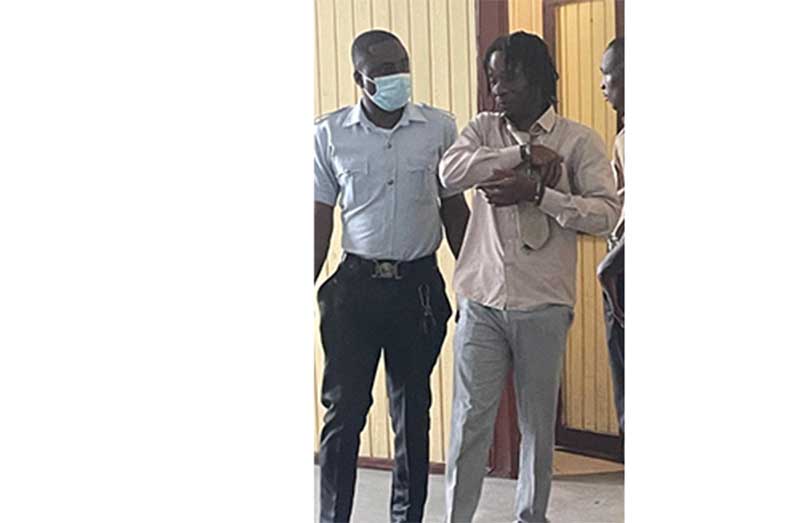
Randy Tafari Smith received the sentence in the Demerara High Court after admitting responsibility for Layne’s murder.
The court ordered that the time Smith spent on remand awaiting the conclusion of the case be deducted from the sentence.
In determining the penalty, Justice Singh adopted a starting point of 36 years’ imprisonment before reducing the sentence to account for Smith’s guilty plea. The court also weighed several aggravating and mitigating factors before settling on a final sentence of 32 years.
Among the factors considered were the extreme violence used in the commission of the offence, the devastating consequences for the victim’s relatives, Smith’s expressions of remorse and his efforts at rehabilitation while incarcerated.
Smith was indicted for the murder of Layne, which occurred on March 28, 2021.
According to agreed facts, Layne was last seen around 01:15hrs riding a bicycle before stopping near a snackette at the junction of High and Hadfield Streets, where he joined a group of individuals playing cards. About 30 minutes later, he realised his bicycle was missing and left the area heading north along High Street toward Brickdam.
Approximately one and a half hours later, between 03:10hrs. and 04:05hrs, Layne was seen running back towards the same group, this time being chased by three individuals. Among the group was Osafi Johnson, who was armed with a knife. Smith was earlier sentenced to 32 years’ imprisonment, less time served, after admitting his role in Layne’s murder.
Smith, meanwhile, wielded a cutlass during the attack. A woman, Natasha Taitt, was also present and armed with a cutlass. At that time, Layne appeared injured, with a wound under his armpit and what appeared to be blood on his clothing.
Layne approached the group asking for a knife before continuing to flee south along High Street. He eventually turned onto Leopold Street, where he fell to the ground. Johnson, Smith and the others caught up with him, and Johnson proceeded to inflict multiple stab wounds, while Smith chopped him several times.
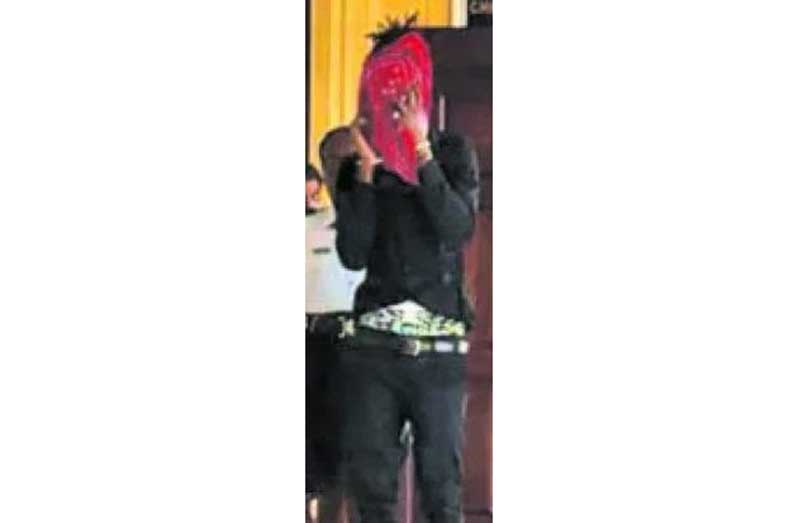
After the attack, Layne was left lying face up on the road while Johnson stood over him. Johnson and his accomplices then walked away, attempting unsuccessfully to stop a passing vehicle before fleeing the scene. Johnson was later apprehended on Lyng Street, Charlestown, cautioned, and taken into police custody.
Layne was transported to the Georgetown Public Hospital, where he was pronounced dead. CCTV footage later retrieved by investigators captured parts of the pursuit and the fatal attack.
A post-mortem examination revealed that Layne sustained 17 incised wounds resulting from chopping and stabbing injuries. The official cause of death was recorded as haemorrhage and shock caused by multiple wounds.
During sentencing submissions, State prosecutor Christopher Belfield urged the court to impose a substantial penalty, pointing to the particularly brutal nature of the attack. The prosecution also referenced CCTV footage that captured portions of the chase and events leading up to the killing.
The court further considered victim impact statements submitted by Layne’s relatives, who described the emotional devastation caused by his death.
Family members detailed the trauma they experienced after learning of the killing and the lasting effects it had on those closest to him. The court was informed that an aunt who had played a significant role in Layne’s upbringing later died after struggling to cope with the grief stemming from his death.
A probation report prepared on Smith’s behalf painted a picture of a troubled childhood marked by the loss of both parents at a young age. The report noted that while on remand he participated in several rehabilitation programmes, including anger-management training and family reconciliation sessions.
The court also heard that Smith expressed remorse for his actions and acknowledged responsibility for the offence.
Despite those considerations, Justice Singh found that the gravity of the crime, the prolonged nature of the attack and the profound suffering inflicted on the victim’s family warranted a lengthy custodial sentence.
In sentencing Johnson, the Chief Justice condemned the brutality of the attack, describing it as a case in which the victim was “butchered to death” and observing that even hunted animals are not subjected to such cruelty.
With the sentence now handed down, Smith and Johnson will serve the remainder of their 32-year prison terms, with credit given for the time they have already spent in custody.



