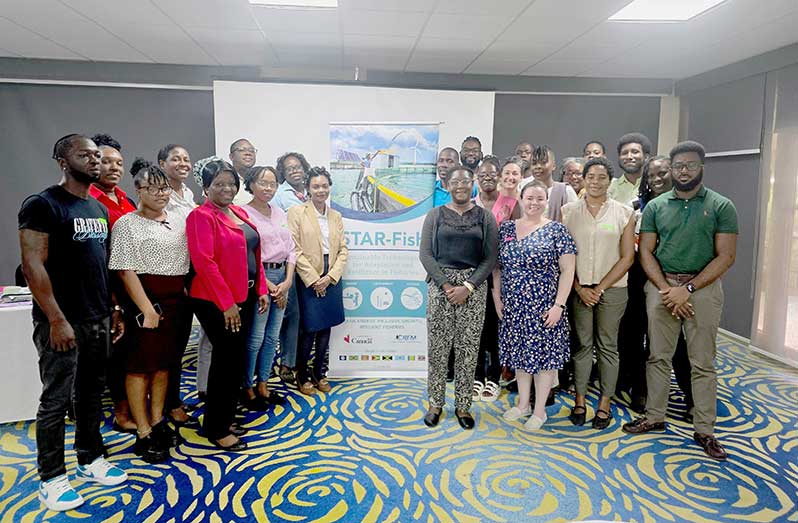
The Caribbean Regional Fisheries Mechanism Caribbean Regional Fisheries Mechanism is accelerating clean energy adoption across the region’s fisheries and aquaculture sectors as part of a CAD 4.324 million climate resilience initiative aimed at cutting energy costs, strengthening food security, and improving competitiveness.
The initiative, known as the STAR-Fish Project, Sustainable Technologies for Adaptation and Resilience in Fisheries, is being implemented across Belize, Dominica, Grenada, Guyana, Jamaica, Saint Lucia, Saint Vincent and the Grenadines, and Suriname, with a focus on deploying renewable energy technologies, improving cold chain infrastructure, and advancing low-carbon certification for fisheries operations.
Officials say the project is designed to help the sector adapt to rising energy prices and intensifying climate impacts while opening new market opportunities for sustainably certified products.
Key implementation priorities for 2026–2027 were outlined at the 2nd Regional Project Steering Committee Meeting held on 14 May 2026, where Regional Project Coordinator Sherron Barker presented the approved work plan and budget guiding the next phase of activities.
Among the immediate goals are the development of viable business models to attract investment in clean energy technologies, the conversion of selected fish processing facilities to low-carbon systems, and expanded support for fisheries seeking certification in sustainable production standards.
Ms. Ena Ćimić, STAR-Fish Project Lead at the High Commission of Canada to Jamaica, representing Global Affairs Canada, said the fisheries and aquaculture sectors remain critical to livelihoods and food security across the Caribbean but are increasingly exposed to climate and market risks.
She noted that rising energy costs, climate change, and shifting global demand patterns are placing significant pressure on the industry, underscoring the importance of targeted adaptation measures.
Ms. Ćimić said the STAR-Fish Project is strengthening institutional capacity, advancing gender-responsive approaches, and supporting the adoption of clean energy technologies while improving access to finance and building resilience to climate and disaster risks across participating countries.
She further emphasized that the initiative aligns with Canada’s priorities on gender equality, climate action, and inclusive economic growth, while also supporting expanded regional trade opportunities.
Reflecting on progress, CRFM Executive Director Dr. Marc Williams said the project has already advanced key technical areas including renewable energy business model development, carbon footprint assessments, and the establishment of low-carbon certification frameworks.
He noted that the second year of implementation marked a transition from foundational planning to more structured, coordinated execution across participating states.
Dr. Williams also highlighted progress in gender equality and social inclusion, including the development of Gender Action Plans for Belize, Grenada, Jamaica, and Saint Vincent and the Grenadines, as well as expanded capacity-building and stakeholder engagement efforts.
He said these measures have deepened understanding of gender-related dimensions of the clean energy transition while strengthening policy tools for more inclusive development.
As the project enters its third year, Dr. Williams said implementation is expected to intensify, with clearer pathways for scaling renewable energy solutions across fisheries value chains.
“We look forward to continuing to work with all of you to support effective implementation and to contribute to a more resilient, sustainable, and inclusive Caribbean fisheries sector,” he said, underscoring the CRFM’s commitment to long-term transformation of the industry.