






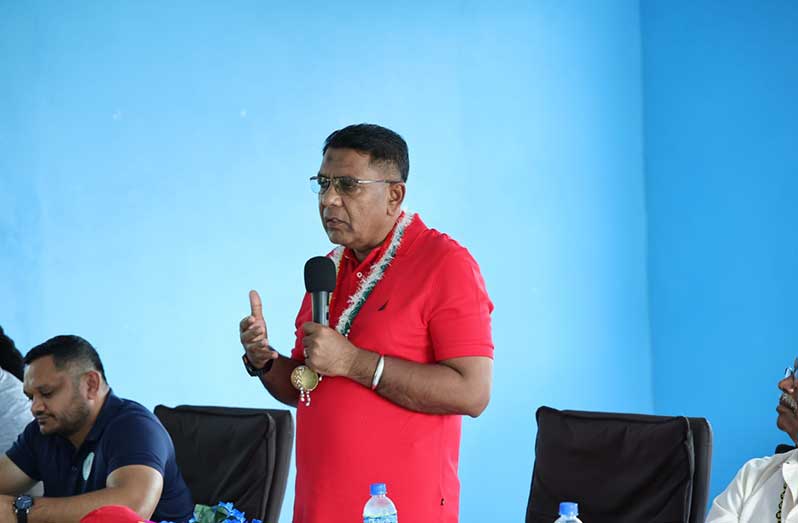
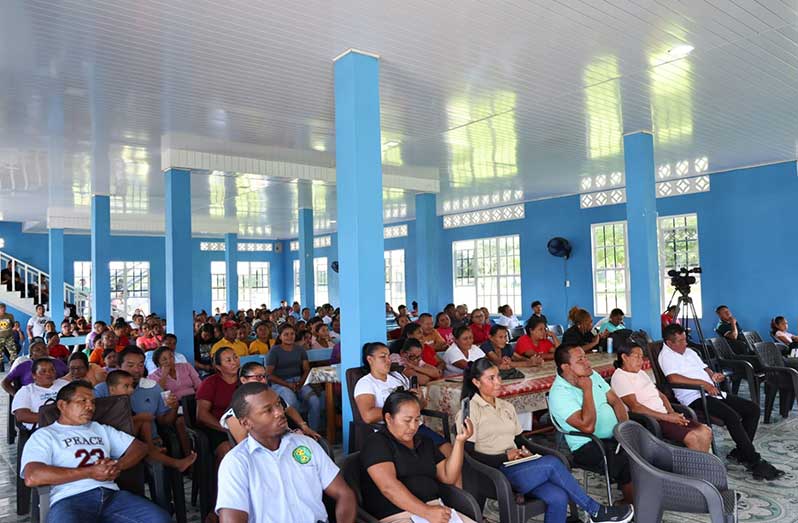
 – Agriculture Minister announces major agricultural interventions
RESIDENTS of Jawalla Village in the Upper Mazaruni, Region Seven, are set to benefit from a series of agricultural and economic-development initiatives after Minister of Agriculture, Zulfikar Mustapha, committed to targeted interventions aimed at boosting food production, creating income opportunities and improving livelihoods in the community.
The commitments were made during a Cabinet outreach led by President, Dr Irfaan Ali, where Minister Mustapha and a team from the Ministry of Agriculture met with residents to discuss challenges affecting the village and explore opportunities for sustainable development.
During the engagement, residents raised concerns and proposals related to farming, economic activities and community development.
In response, Minister Mustapha announced that officials from the National Agricultural Research and Extension Institute (NAREI) will return to the village within a week to conduct a comprehensive assessment and collaborate with residents on a plan for large-scale agricultural production.
According to the minister, the government’s objective is to move communities beyond subsistence farming and establish sustainable agricultural enterprises capable of generating incomes and improving living standards.
“We have made significant investments over the last five years to transform the agriculture sector,” Minister Mustapha told residents. “The budgetary allocation to agriculture has increased substantially, allowing us to invest in infrastructure, research, drainage and irrigation, mechanisation, and support services for farmers across the country.”
He noted that the government has introduced improved crop varieties, expanded the cultivation of high-value crops, and is working to ensure that every region contributes meaningfully to national food production.
As part of the proposed development programme, a technical team comprising officers from NAREI and the Guyana Livestock Development Authority (GLDA) will work closely with residents to design an economic development plan tailored to the village’s resources and needs.
The minister also pledged support in the form of agricultural inputs, including seeds, fertilisers, and agrochemicals, while immediate action will be taken to address the Acoushi ant infestation that has been affecting cultivation in the area.
Recognising the community’s potential for aquaculture, Minister Mustapha announced plans to establish a fish-cage project in Jawalla. The initiative is expected to provide residents with an additional source of income, while improving access to protein.
He also encouraged farmers to increase cassava cultivation, citing growing demand for cassava and cassava-based products in local and regional markets.
“Cassava is one of the crops that has tremendous potential. We are seeing growing demand for cassava and cassava-based products, and we want communities like Jawalla to benefit from these opportunities,” he said, adding that improved planting materials, technical support, and better market access can help farmers expand production and earnings.
To support increased agricultural output, the minister said the New Guyana Marketing Corporation (New GMC) will assist residents with marketing and agro-processing initiatives aimed at creating value-added products and securing markets for produce.
“We are not only interested in producing more crops; we want to create value-added products and build agro-industries,” Mustapha said. “Our vision is to move Guyana from being primarily a producer of raw agricultural commodities to becoming a regional agro-processing hub.”
The outreach forms part of the government’s broader strategy to expand agricultural production across Guyana, strengthen rural economies and advance the country’s food-security agenda. Through investments in infrastructure, research, agro-processing, and market development, the administration has been encouraging communities in hinterland and riverine regions to play a larger role in national agricultural production, while creating new economic opportunities for residents.



