Joro Dance School Director says growing cultural celebrations and tourism are creating new opportunities for young performers in Guyana
NATALIE Adams, director of Joro Dance School and Company, has watched dance transform from a pastime to a profession.
As Guyana’s cultural calendar continues to expand, now marked by bigger Independence celebrations, cultural events and a growing tourism scene, groups like Joro are at the centre of that shift.
This week, Adams spoke to the Pepperpot Magazine about the economic opportunities performance now offers young dancers, the therapeutic power of movement, and the glowing reviews the group has received from Guyanese and tourists alike.

As Guyanese dance and creativity make their way to the international stage, Adams says she looks forward to more cultural exchange, more exposure, and a creative sector that finally gets the recognition it deserves as Guyana builds its orange economy.
Founded on June 6, 2021, Joro Dance School has rapidly become a well-respected name in the Guyanese dance community.
With a student body of more than 100, the school caters to a wide range of dancers, offering structured classes for all skill levels: Starter, Preliminary, Intermediate, Advanced, and Company.
Led by Adams, an experienced and passionate choreographer, alongside Assistant Director Latonyah Asim, Joro’s dance group has become a staple at cultural events and showcases.
While founded on African dance, the group also collaborates with other cultural dance groups through uniquely curated choreographies.
As Adams shared, “We play the role of the Africans. We normally do the choreographies. We do coordinate, as in working along with other teams to create that cohesion, when we do the finale, bringing the races together. And I think the collaboration is very good as well.”
But more than presence, Adams noted that dancers can now see the art form as more than a pastime.
Dance, she explained, is being given more attention and recognition than ever before.
With greater state support, creative ventures like Joro’s can pursue dance as a profession.
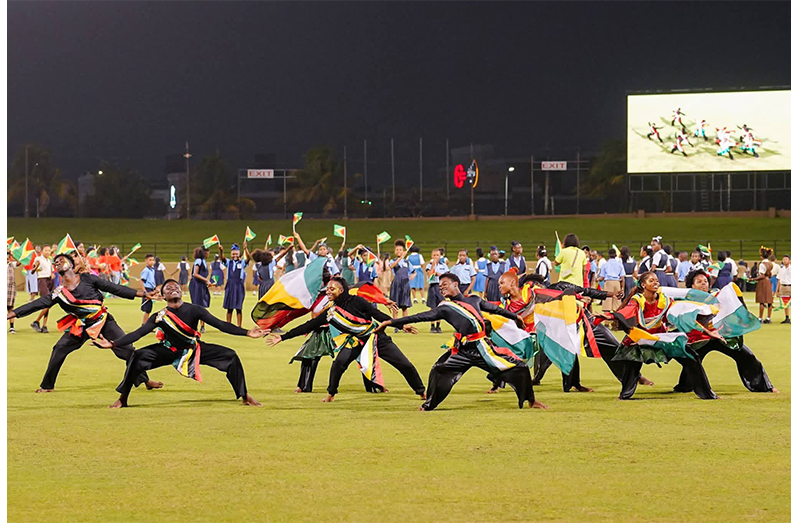
As Adams explained, “Under the government, dance has played a significant role for our youth. To me, it created job opportunities. This is more like a second job for the young people. There are young dancers ranging from age three, but then 30 years old also.”
She added, “These young people are being given a stipend every time they perform. Years ago, dance was just dancing. But now it is not just dancing because when you perform, you are being given a little stipend.”
While many dancers pursue dance alongside other jobs and professions, Adams noted that keeping dance alive is also important on social and emotional levels.
She explained that many dancers use the art form as creative expression, and the opportunity to showcase that creativity offers more than financial support; it is fundamentally rewarding to them as dancers.
Speaking on this, she said, “A lot of these young people come with their issues. And it constrains them. Dance constrains them because they are being given the opportunity to perform at so many events. I do not think they have the time to think about what exactly is happening to me at home or where else.”
She added, “It is more like a safe space for them. So they get to vent through that. It not only created jobs for them, but it is also like a therapy for the dancers.”
The development of dance has also had a ripple effect on how the art form is perceived.
As Adams explained, dance, like most other art forms, was not seen as a viable career path for years.
With the support it has seen in recent years, however, the art form has moved from being seen as only a pastime to something young people pursue, something more parents support, and a part of Guyanese cultural celebrations that people look forward to.
As Adams told the Pepperpot Magazine, “For years, dancers have been complaining, they feel as though it is worthless. Parents would have said, ‘dancing does not take you nowhere.’”
Adams noted today, however, that tone is changing along with the development of the arts, adding, “Dance is going somewhere. And finally, that space is there for us so that people can see us. Tourists can see us and they recognise our potential. They are happy to be a part of what we have to offer.”
The support for dance does not end with Guyanese audiences.
The simultaneous growth of tourism means more international eyes are on Guyana’s dancers.
Highlighting the feedback the group received following last week’s Diamond Jubilee Celebration, Adams says Guyanese, people from the diaspora and tourists alike have praised the group.
Citing the high praise received, Adams says supporting art is about more than a good show; it is also the kind of tourism spectacle that bolsters the sector and supports new generations of dancers.
As she stated, “We creating that spectacle will bring more tourists to our country because one person will go and spread the news to others from their country, telling them, ‘I have been to this event, this is what I saw.’ There were little obstacles here and there, but I think this dimension was in the spectacle.”
The support, both state and private, local and international, has significantly impacted Joro’s dance group.
As Adams told Pepperpot Magazine, the group has grown and has been able to offer new opportunities to Guyana’s young people.
As she shared, “Now we have over 100 students. I must say we are grateful to the government because through them, we were able to give so many young people exposure and also created job opportunities for some.”
Moving forward, Adams says she would like to see more of what made Joro’s and other Guyanese dance groups captivating in the first place: collaboration.
As she said, “I would like to see that we have the opportunity to go to other countries, experience their culture, to have more cultural exchange. If we can bring Chinese, they can train us a little, or we go to them; because it must mean that we are doing something for tourists to say, ‘this piece was super, it was awesome.’”