






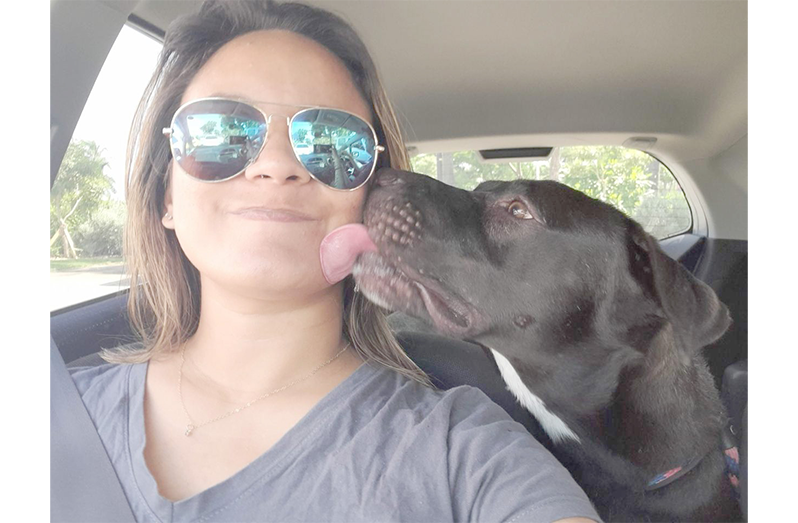
Dr Malika Singh remembers that many of her earliest memories involved animals.
THERE were chickens and ducks scattering across the yard at her grandmother’s house in Anna Regina, on the Essequibo Coast, Region Two. Stray dogs often trailed behind her on walks and whether it was a cat, fish, or budgie, there was always something to feed, clean up after, or become attached to.
At the time, she did not realise those experiences were quietly shaping the direction of her life. Having spent much of her childhood on the Essequibo Coast with her grandmother, Dr Singh said some of her fondest memories remain tied to the region.
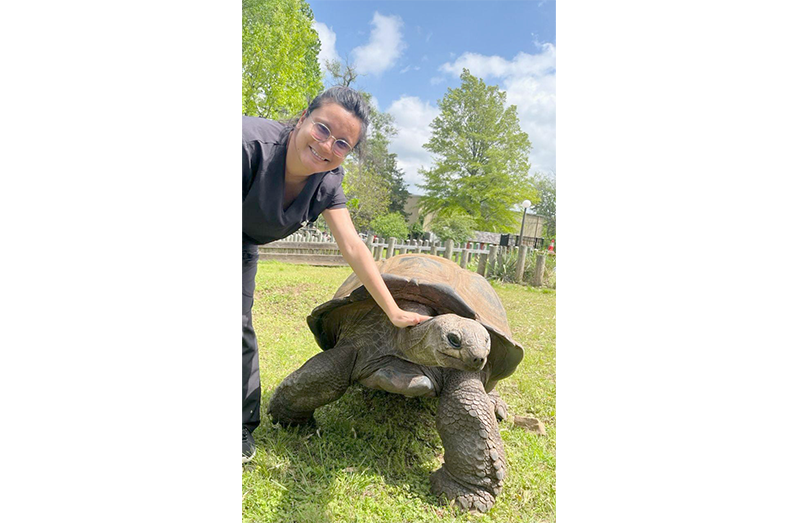
“When I think back on those years, the simplest things are the most vivid. Playing with my childhood friends under the orange glow of a sunset. Neighbours calling to each other across fences. Most of all, I remember returning to the capital after holidays with tanned and bruised knees, despondent that it was already time to tackle a new term of school,” she said.
As such, her appointment as Veterinary Officer for Region Two is both a professional responsibility and a personal homecoming, as she returns to the place where she was born after many years away.
Dr Singh’s interest in veterinary medicine arose not only from a genuine love for animals, but also from a growing awareness that many animals, particularly wildlife and shelter animals, exist without adequate advocacy or care.
“This is true worldwide but was especially highlighted growing up in Guyana. At first glance, shelter medicine, wildlife medicine and livestock medicine can seem markedly different, but they share the same core principle: advocacy for under-represented populations that depend on people to protect and care for them responsibly,” she said.
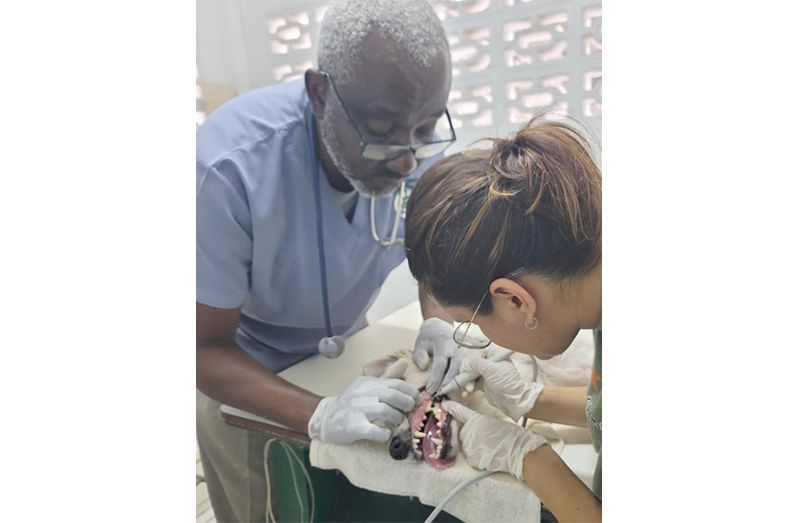
Dr Singh told the Guyana Chronicle that leaving home for veterinary school was a difficult adjustment, particularly after completing her undergraduate studies in Guyana and being accustomed to having her support system nearby.
She recalled experiencing moments of self-doubt, but said those challenges ultimately strengthened her resilience and endurance.
Dr Singh added that the importance of balance was emphasised early in her training, as the field can be equally rewarding and emotionally demanding. Spending time with loved ones and finding comfort in films, music and writing became especially important.
At the same time, she said she was fortunate to gain a variety of experiences during her studies. Working with different species and learning in advanced medical settings constantly challenged her to grow.
“I was also fortunate to meet incredible teachers throughout my training and form meaningful friendships,” she said.
Dr Singh related that there is something very special about the bonds formed through those shared experiences.
She noted that there is often a perception in this part of the world that veterinary medicine is a man’s profession, a notion she finds ironic given that most of her years in veterinary school were spent surrounded by brilliant women.
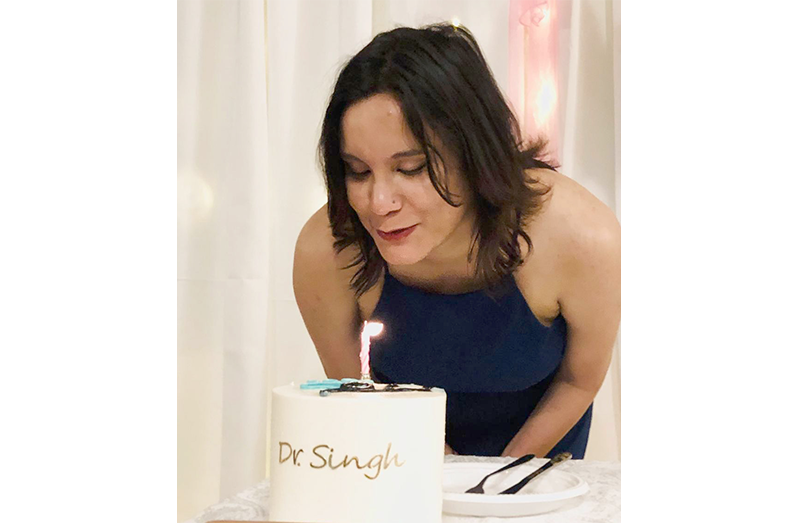
“I never felt inadequate because I was a woman, nor did I ever feel that my goals should be smaller because of it. If anything, my experiences reinforced the belief that women are capable of far more than society sometimes expects of them,” she said.
Dr Singh stated that she owes a great deal of who she is today to her upbringing and to the people who encouraged her along the way.
She pointed out that her parents always stressed the importance of education as a means of broadening one’s horizons and creating opportunities.
Her father, she said, was one of her biggest cheerleaders, while her grandmother nurtured her in countless quiet ways that helped shape the person she became.
At the core of it all, however, her motivation has always been a desire to contribute positively to the world around her.
Dr Singh believes the way people treat animals is a reflection of their values, and that compassion, responsibility and advocacy should not stop at human beings.
She added that better treatment of animals ultimately contributes to healthier and more thoughtful communities.
As part of a combined effort through the Guyana Livestock Development Authority’s (GLDA’s) Extension Services, Dr Singh said she looks forward to strengthening the delivery and impact of veterinary services across Region Two.
She explained that this includes continuing work in field outreaches, disease prevention and control, as well as established vaccination and parasite-management programmes.
Dr Singh said her goal is to improve herd-health outcomes, enhance productivity, and ensure that veterinary services remain responsive to the needs of communities through collaboration with farmers and other stakeholders.
Farmer engagement and education, she added, will be central to her approach.
“I am particularly passionate about public education in veterinary practice, with emphasis on areas such as biosecurity, nutrition and reproductive management. I also remain committed to strengthening veterinary public health functions, including disease surveillance and the promotion of safe food production systems,” she said.
Dr Singh said she looks forward to working alongside farmers, communities and partner agencies as they continue to build on the strong foundation already in place in Region Two (Pomeroon-Supenaam).
Having grown up in the region, she understands both its challenges and its potential, and is committed to contributing through steady, service-focused veterinary care.
If she could offer advice to any young girl dreaming of becoming a veterinarian, Dr Singh said it would be simple:
“Do not let anyone or anything convince you that your dreams are too big.”
She added, “The profession will stretch you in every possible way, but it will also reveal strengths you did not know you had. With the right support and discipline, things that feel impossible slowly become achievable.”




