






– surveillance cameras, predictive tech transforming traffic policing
THE Guyana Police Force’s Traffic Department says advances in technology, expanded resources, and stronger local and international partnerships have significantly improved its ability to monitor roadways, respond to incidents, and deliver services to the public amid rising traffic demands across the country.
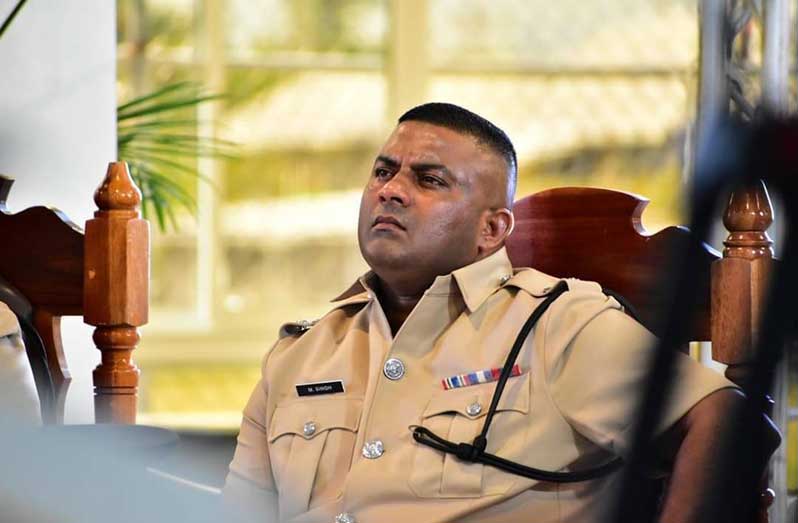
Speaking on the latest edition of Police Round Up, Traffic Chief and Assistant Commissioner of Police Mahendra Singh said the force has evolved substantially over the past six decades, transitioning from a largely reactive style of policing to a more proactive and responsive model supported by surveillance technology, improved mobility, and enhanced monitoring systems.
According to Singh, the rapid expansion of Guyana’s road network and the dramatic increase in vehicle ownership have placed unprecedented pressure on the Traffic Department, forcing the organisation to modernise its operations and improve efficiency.
“Now we have more than 600,000 registered motor vehicles in the Co-operative Republic of Guyana that are in use on a daily basis,” Singh disclosed, noting that the growing number of vehicles has increased demand for traffic enforcement, directional duties, accident response, and public awareness services.
Guyana has experienced significant economic and infrastructural growth in recent years, driven largely by rapid urban expansion and increased commercial activity linked to the country’s oil and gas boom. This transformation has resulted in major highway upgrades, new road networks, and heavier traffic flows, particularly along the East Bank and East Coast Demerara corridors.
Against that backdrop, Singh said the Traffic Department has increasingly turned to technology to improve operations and strengthen accountability.
“Where we usually stand on the road then to receive a report in order to observe an accident or an issue of traffic and then take it to the station to actually provide that service to those affected, now owing to technology and the progress we have experienced as an organisation and a department, we can remotely monitor through the use of technology,” he explained.
The Traffic Chief said the deployment of surveillance cameras and monitoring systems now allows police to oversee larger areas more efficiently while improving response times and enforcement capabilities.
He added that technological advancements have also strengthened transparency and professionalism within the force.
“Technology enhanced our integrity and improved our accountability with which we serve the public and address issues of enforcement and service delivery,” Singh stated.
The department has also expanded its operational capacity through the use of motorcycles, patrol vehicles, and improved communication systems, allowing officers to respond more rapidly to emergencies, accidents, and congestion.
Singh said the force is also investing heavily in training and development to ensure traffic ranks are better equipped to handle modern policing demands.
“Training and development, a core function of human resource management, that is at its forefront,” he said, while emphasising that officers are continually refining their skills to improve service delivery.
“In short, I can say 60 years on, we are far better than we were then,” he added.
The increased use of technology is particularly significant as Guyana hosts activities marking its 60th Independence Anniversary, with authorities relying on remote monitoring systems and predictive traffic management to oversee large gatherings and busy roadways during the celebrations.
Singh noted that the force can now monitor traffic patterns and anticipate potential issues before they escalate.
“Over time, we have seen we are not standing on the roadside waiting for a report anymore. We can remotely monitor spaces within our country now. We can predict what can happen, will happen or how it happens,” he said.
Beyond technology, Singh credited collaboration and strategic partnerships as major contributors to the department’s development and improved effectiveness.
“Collaboration has enhanced our performance, our reach and how we do things in that we are not operating in an environment as if we are isolated anymore,” he stated.
The Traffic Chief said partnerships with stakeholders and agencies have strengthened the force’s ability to address road safety issues and improve public service delivery.
He also stressed that road safety is a shared responsibility, noting that motorists, passengers, cyclists, and pedestrians all play an important role in creating safer roadways nationwide.




