






—AI traffic patrols flag 250 vehicles during pilot test, President Ali reveals
PRESIDENT Irfaan Ali, on Friday, announced that the Government of Guyana plans to install more than 20,000 additional CCTV cameras across the country by 2030 as part of an ambitious national security transformation programme aimed at creating a fully integrated “Safe Country” infrastructure.
Speaking during a press conference at the Office of the President, President Ali said the expansion of surveillance infrastructure is a critical component of Guyana’s evolving national security architecture, which will incorporate artificial intelligence, predictive policing, smart traffic systems, drones and integrated command centres.
The Head of State explained that the government intends to achieve nationwide CCTV coverage through a combination of static and mobile surveillance systems linked to regional and national command centres.
Out of the broader $100.3 billion security sector budget for 2026, $5 billion was set aside to expand the Safe Country network. This follows a $6.2 billion deployment utilised throughout 2025.
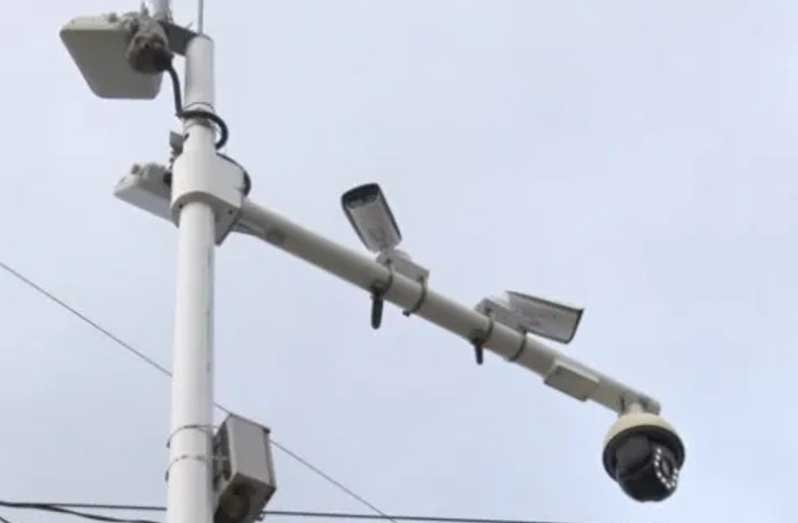
Currently, the network already relies on 781 highly active intelligent video surveillance sites deployed across multiple administrative regions. Civilian and police operators run regional command centres built across Regions Two, Three, Five, Six, and 10.
“We need more than 25,000 cameras to cover the entire country,” President Ali said, while noting that the government has already established approximately 1,300 surveillance sites and installed around 6,000 cameras to date.
He disclosed that the administration will continue investing aggressively to ensure that an additional 20,000-plus cameras are installed before or by 2030.
According to President Ali, the surveillance network will go beyond traditional monitoring and will integrate artificial intelligence to assist law enforcement agencies with crime detection, traffic enforcement, behavioural analysis and emergency response.
ARTIFICIAL INTELLIGENCE SURVEILLANCE
The President said the intelligent system is already producing tangible results through the rollout of smart traffic cameras, which he noted have contributed to significant reductions in speeding and traffic violations in areas where they have been deployed.
He explained that the AI-backed system can now automatically identify repeat traffic offenders within seconds and generate reports for integration into the judicial system.
“We can now generate for us who are the repeat offenders in traffic offences,” the President said, adding that the technology eliminates opportunities for human interference while improving enforcement efficiency.
President Ali also revealed that the government has completed pilot testing of mobile AI surveillance units capable of automatically identifying vehicles with outstanding traffic violations.
During one recent operation on the East Coast corridor, the system reportedly identified more than 250 vehicles with outstanding tickets.
The mobile units, he explained, are equipped with 360-degree monitoring capability and can either patrol roadways or remain stationary while scanning for traffic offences and suspicious activity.
Beyond traffic management, the broader surveillance system will include sensor-enabled infrastructure, smart street monitoring, drone integration, and predictive threat detection.
President Ali said the technology will eventually allow authorities to track the movement of suspect vehicles, analyse behavioural patterns, and integrate information from cameras, drones, and intelligence systems in real time.
“If you see the camera, the camera is seeing you, and if you’re hiding from the camera, you’re hiding something,” the President stated while emphasising the role of surveillance in crime prevention and public safety.
The President said the government’s long-term objective is to create a people-centred national security model that improves citizen safety while modernising public services and law enforcement operations.
The expanded CCTV initiative forms part of a wider digital transformation strategy that also includes smart police stations, AI-supported policing systems, integrated border management, cyber security infrastructure, digital IDs and intelligent traffic management systems.




