






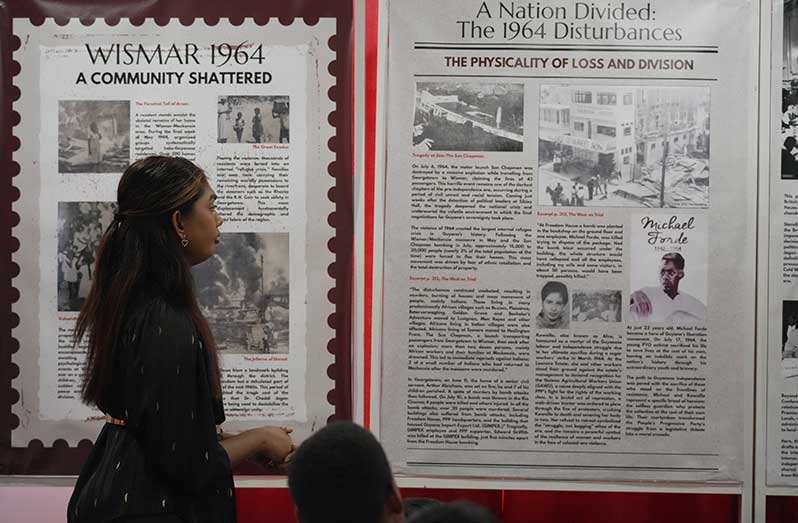
AS Guyana prepares to celebrate 60 years of Independence later this month, the Cheddi Jagan Research Centre is offering the public a rare glimpse into the country’s political and social history through a new exhibition that brings together decades of archival material, photographs and historical artifacts.
The “Guyana at 60: Independence Exhibition,” which opened last Wednesday at Red House, High Street Georgetown, will run until May 29 and has already attracted strong public interest, particularly from schools and history enthusiasts eager to explore lesser-known aspects of the country’s journey to nationhood.
Curator Amrita Naraine said the exhibition was designed not only to honour the legacy of former presidents Cheddi Jagan and Janet Jagan, but also to highlight the contributions of political allies, activists and organisations involved in Guyana’s independence movement and the formation of the People’s Progressive Party.
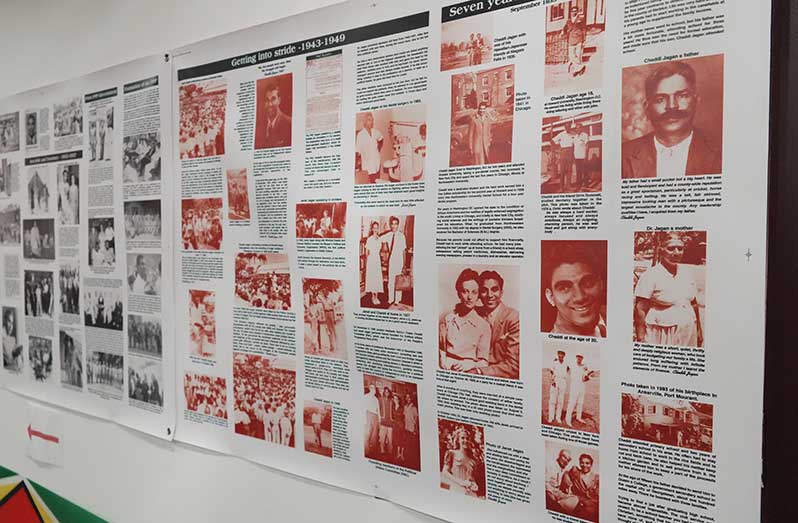
According to Naraine, the exhibition places particular emphasis on archival images and documents that have rarely been seen by the public, some dating as far back as the 1940s and extending through the post-independence era.
“We thought it was especially important for educators, students and world travellers alike to come across to the Guyana at 60 Exhibition, because there are very many untold stories,” Naraine said, noting that the display also captures events surrounding the political disturbances of the 1960s.
She explained that the idea for the exhibition emerged in late 2025, but as preparations advanced, organisers realised the research centre possessed a much larger collection of historical material that had not yet been properly sorted or documented.
That discovery, she said, created an opportunity not only to showcase the materials, but also to begin cataloguing and preserving them for future generations.
“This was an opportunity to look into the collation of that data and start to catalogue them, while at the same time letting people see who was involved in their history, good or bad,” she explained.
Naraine, through her company Artellica AI, also incorporated data science and artificial intelligence into the process of organising and sorting the extensive archive collection. She said the use of technology helped improve accessibility and contributed to the overwhelming public response since the exhibition opened on May 13.
Among the most enthusiastic visitors so far have been students. Naraine said classroom sessions have been taking place throughout the week, with schools from across Georgetown already participating.
“I think what has garnered the most interest is the fact that this research centre right here holds the largest amount of archival textual information that there is,” she said.
Thus far, 17 schools have confirmed visits to the exhibition, while students from the University of Guyana are also expected to attend.
The exhibition explores Guyana’s transition from British colony to independent nation and includes rare photographs, political posters, cultural artifacts and historical documents that trace the country’s political struggles, alliances and social transformation.
Naraine noted that the exhibition also sheds light on the role played by international allies, including the United Nations, during Guyana’s push for independence.
The exhibition is open Monday to Friday from 09:30 hours to 15:00 hours at Red House and is expected to form part of broader activities commemorating Guyana’s 60th Independence anniversary.




