





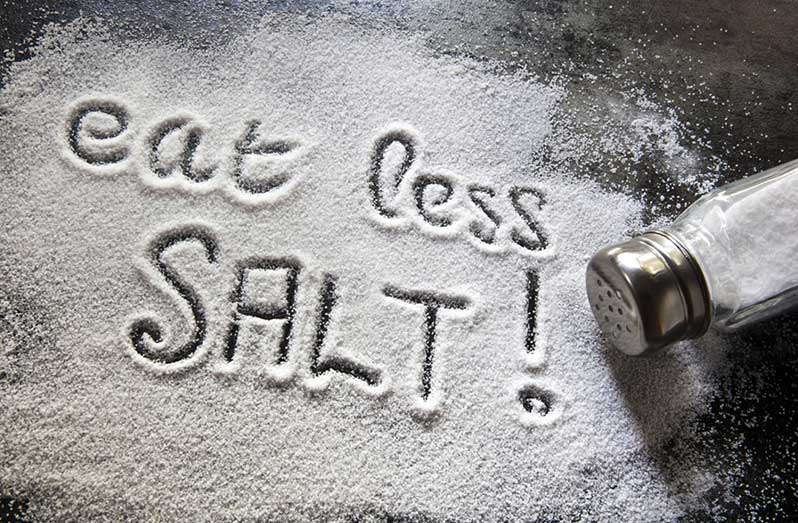
THE Caribbean Public Health Agency (CARPHA) is urging Caribbean citizens to reduce their salt intake as hypertension and heart disease continue to rise across the region.
In observance of World Salt Awareness Week 2026, being marked from May 11 to 17 under the theme “Salt It Out,” the regional health body said between 21 and 27 per cent of Caribbean adults are hypertensive, with many populations consuming nearly double the World Health Organization’s (WHO) recommended daily salt intake.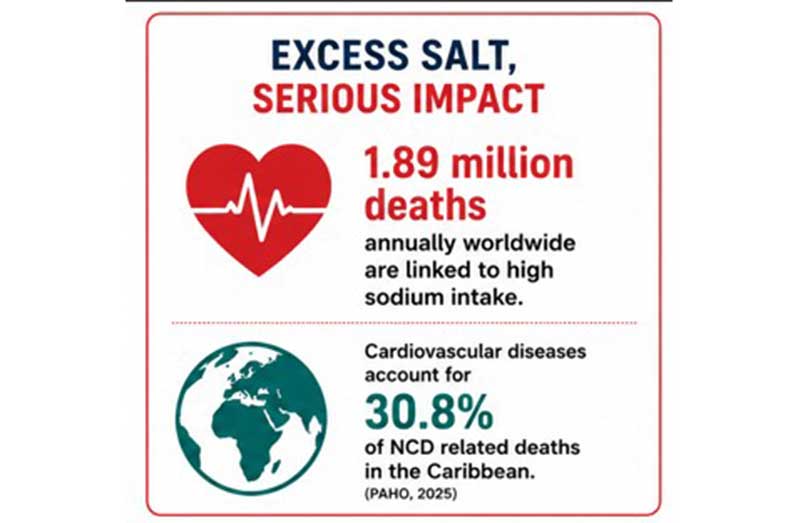
According to the WHO, adults should consume less than five grams of salt per day, equivalent to less than one teaspoon. However, global average salt intake currently stands at 10.78 grams daily.
CARPHA noted that excessive sodium consumption contributes to approximately 1.89 million deaths globally each year and remains a major risk factor for non-communicable diseases (NCDs), particularly cardiovascular illnesses.
The agency said cardiovascular diseases account for 30.8 per cent of NCD-related deaths in the Caribbean, citing a 2025 Pan American Health Organization (PAHO) report.
CARPHA Executive Director, Dr. Lisa Indar, warned that many persons are unaware that the majority of the salt consumed comes from processed and ultra-processed foods.
“Excessive salt consumption is a silent but significant contributor to hypertension, heart disease, and stroke across the Region. Many people do not realise that much of the salt we consume comes from processed and ultra-processed foods, not just from the salt added at the table,” Dr. Indar said.
She added: “Through stronger policies, food reformulation, better labelling, and public education, we can reduce sodium intake and save lives. World Salt Awareness Week reminds us that reducing salt is one of the simplest and most cost-effective actions we can take to improve public health and protect future generations.”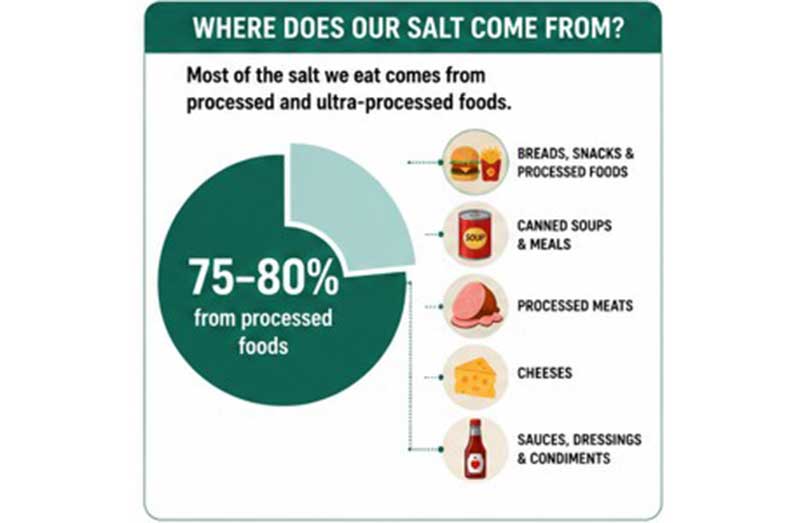
CARPHA said it continues to support regional non-communicable disease prevention strategies through collaboration with Ministries of Health, PAHO and other stakeholders. The agency provides technical guidance on food labelling, public education campaigns and monitoring of NCD risk factors.
The agency also highlighted its Six-Point Policy Package (6-PPP), a regional framework aimed at promoting healthier food environments and improving food security in tackling childhood obesity and NCDs.
One recommendation under the framework calls for regional standards and time-bound salt reduction targets for specific food categories.
Building on that initiative, CARPHA developed the CESA Regional Sodium Reduction Framework in 2020. The framework focuses on four pillars: changing food environments through policies and legislation, educating the population, strengthening systems through research and monitoring, and assessing progress.
CARPHA has also proposed additional measures including school nutrition education, restrictions on advertising high-sodium foods to children, mandatory front-of-package labelling, nutrition standards and product reformulation.
The agency said its overall goal is to reduce average salt intake across the Caribbean to below the global target of five grams per day for adults, with even lower levels recommended for children.
As part of its public education efforts, CARPHA has also produced “Kids Can Cook Too,” a recipe book featuring nutritious meals with little or no added salt, fat and sugar aimed at encouraging healthier eating habits among children.





