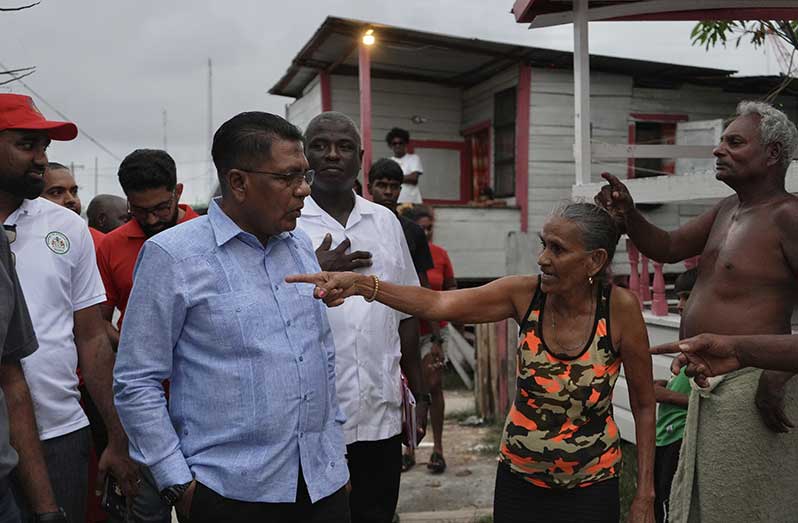
–as Gov’t ramps up flood responses for hardest-hit Georgetown communities
PRESIDENT Dr. Irfaan Ali, in the wee hours of Tuesday morning, announced an intensified national flood response, including the emergency deployment of additional pumps to vulnerable communities in Georgetown, and along the coast as heavy rainfall continues to test the city’s drainage system.
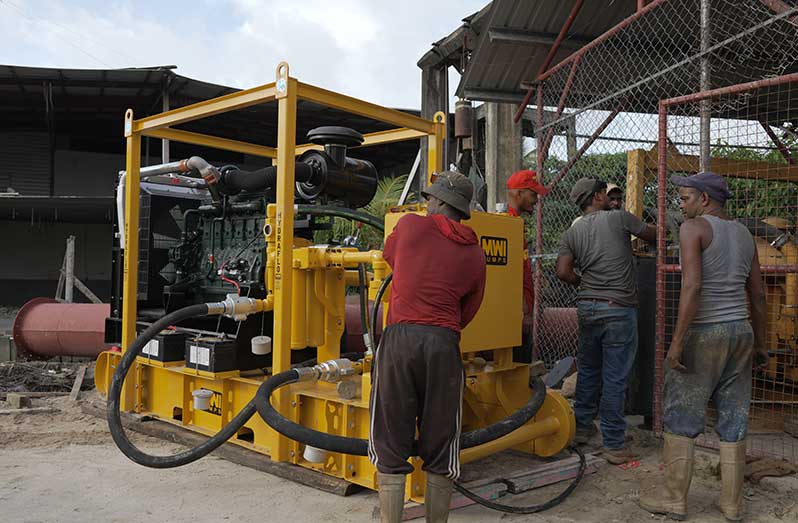
Speaking during an on-site assessment in Queenstown and Alexander Village, President Ali said Guyana is moving from one period of heavy rainfall into another, and that government agencies are working around-the-clock to minimise flooding, particularly in low-lying areas.
He noted that investments in pumps and outfall channels have already reduced the scale of flooding in some traditionally flood-prone parts of the capital, but warned that poor maintenance and indiscriminate dumping of garbage continues to undermine drainage capacity.
“Our focus is on getting the water out as fast as possible; we have seen tremendous improvement in the city because of the investment,”President Ali said.
Meanwhile, Agriculture Minister Zulfikar Mustapha reported at the time that 217 pumps were operable across the country, including 15 along the Atlantic coastline, all of which are in use.
Up to 14:00 hrs the following afternoon (Monday), approximately four-and-a-half inches of rainfall had been recorded.
“We are monitoring these critical situations around-the-clock,” Minister Mustapha assured the public as he explained that teams are focusing on low-lying areas where water has accumulated, even though there were “no major concerns” yet of water entering homes.
He said that new pumps will be deployed to additional and vulnerable areas, and that drainage structures are being opened to complement the pumping capacity already in place.
CITY DRAINAGE UNDER STRAIN
In Queenstown, President Ali highlighted recurring flooding in a few streets despite broader improvements in the city.
He pointed to overgrown drains, builders’ waste, sand filling, and encumbrances on drainage reserves as key contributors to localised flooding.
“This should have been a drain that had storage capacity, but it’s not maintained at all,” the President said, stressing that many alleyways and drains in Queenstown, Albouystown, and other areas are “completely overgrown”, and “not maintained by the city council at all.”
He said that Central Government has been forced to undertake capital interventions to clear drains and alleyways, and will now have to develop a long-term maintenance programme rather than rely on the Mayor and City Council.
CLEARING OUTFALLS AND COASTAL WORKS
Meanwhile, Chairman of the National Drainage and Irrigation Authority (NDIA), Lionel Wordsworth said the government began clearing outfall channels in Georgetown about two weeks ago, ahead of the peak rainy season.
“We have 13 sluices which are operated, and all those outfalls will be cleaned. And that will continue,” he said.
He added that amphibious excavators are being used to clear inlets and outlets along the coast and in Region Six, with “a lot of excavation work” ongoing to maximise the efficiency of existing drainage infrastructure.
Minister Charles Ramson, who was also on site, identified Fourth Street, Alexander Village as one of the hardest-hit areas in Georgetown.
President Ali added that technical teams will remain on the ground until the additional unit is installed and operational.
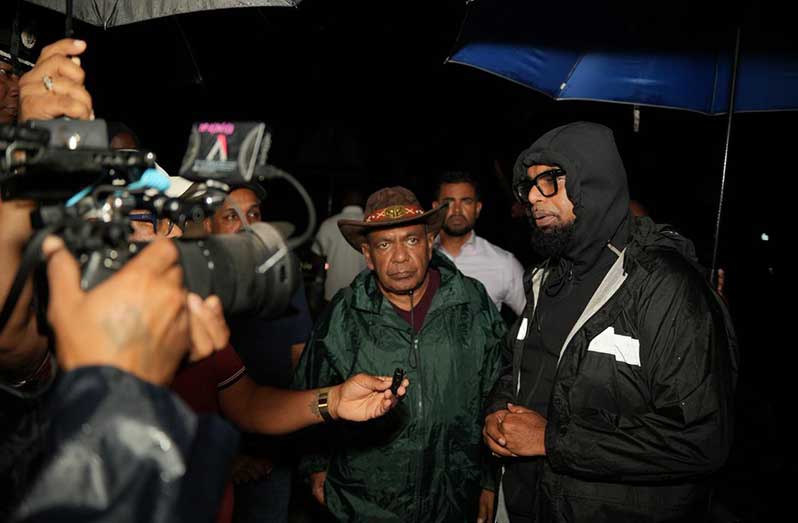
He emphasised that while some of the worst effects have been avoided compared with previous events, the speed of drainage is still constrained by limited storage capacity in clogged and encumbered drains, especially where buildings have encroached on drainage reserves.
ADDITIONAL PUMPS
Speaking during a follow-up visit to the Riverview pump station, Minister Mustapha said the President instructed that an additional pump be relocated there in response to the rapid water accumulation in the area.
The Minister confirmed that two pumps are now in place, with one already operational. The other, he said, will be put into operation once a sluice door is closed. He stressed that the additional unit will remain permanently.
Mustapha reported that as a result of recent interventions, most of Georgetown’s low-lying areas are now dry, and that all 16 pumps in the City are currently operable. Nationwide, he said, Guyana now has 217 pumps, with new units recently arrived and being deployed to address problem areas.
However, he expressed disappointment with the Georgetown Mayor and City Council, noting that the Cowan Street sluice was not opened during low tide despite heavy rainfall.
“I’m very disappointed that this morning, during the low tide, the Cowan Street sluice was not opened by the City Council… Although we had so much rainfall, they failed to open the sluice,” he said.
Mustapha indicated that if the Council fails to operate key drainage structures, the Central Government is prepared to take over management and operation to protect residents.
With the Hydrometeorological Office warning of more rainfall closer to the weekend, the minister said teams are continuing preparatory and monitoring work to ensure an effective drainage system in Georgetown and other regions. He noted that recent investments have already reduced the length of time floodwaters remain in affected communities, particularly in Alexander Village, which he described as “very vulnerable and prone to flooding”.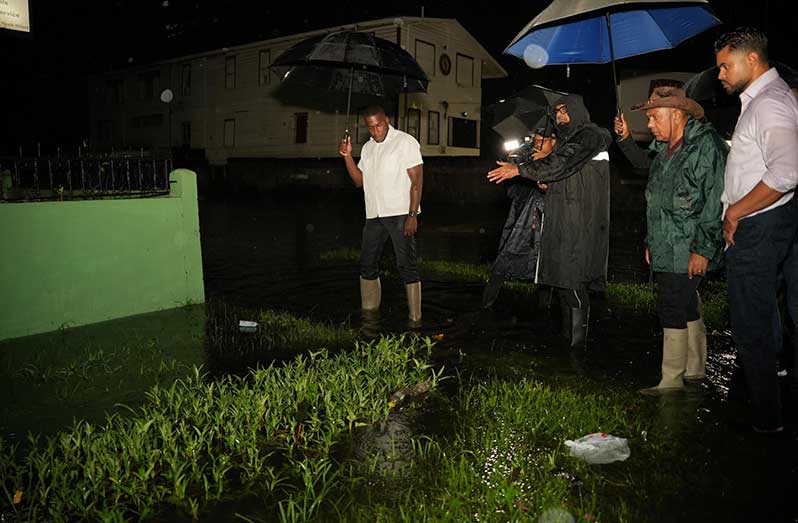
JOINT MONITORING AND CONTINUOUS RESPONSE
President Ali said the government has established a joint monitoring mechanism, involving the Joint Services and technical agencies, to oversee pump operations and respond rapidly as rainfall patterns change.
He stressed that constant monitoring, additional pumps, and sustained capital and strategic investments in drainage are aimed at minimising rather than fully eliminating the impact of intense rainfall events.
He noted that with more rain expected in the coming days, the authorities will maintain 24-hour operations of pumps nationwide, and continue targeted interventions in the most vulnerable communities.