






-Health Minister credits specialised training, waiting homes, stricter accountability measures
THE Ministry of Health is continuing its robust, hands-on approach to addressing maternal deaths within Guyana’s healthcare system.
Speaking on the most recent episode of the ‘Starting Point’ podcast, Minister of Health, Dr Frank Anthony noted that the last decade has seen a decline in maternal death rates, with only an estimated 12 deaths reported last year.
Speaking on this change and the steps guiding it, the minister cited targeted healthcare interventions and specialised training as major drivers behind this shift.
Giving insight into the healthcare hurdle of maternal deaths, Minister Anthony noted that Guyana has seen a steady decline over the last decade. Moreover, he noted that there are a number of causes and factors that contribute to maternal deaths, highlighting complications such as postpartum haemorrhaging, which has been a familiar challenge for the sector.
In response, the ministry has equipped more of Guyana’s health landscape to better tackle this challenge.
“The reports over the last, I would say, 10 years, we have seen a decline in maternal deaths, and that is because of the interventions that we have put in place.”
He added that in the last three to four years, there have not been any cases of postpartum haemorrhage-related deaths. This, the minister credits to the development of training within the sector, noting, “I attribute that largely to the kinds of training that we have given to our healthcare workers. One of those major causes has been removed, basically.”
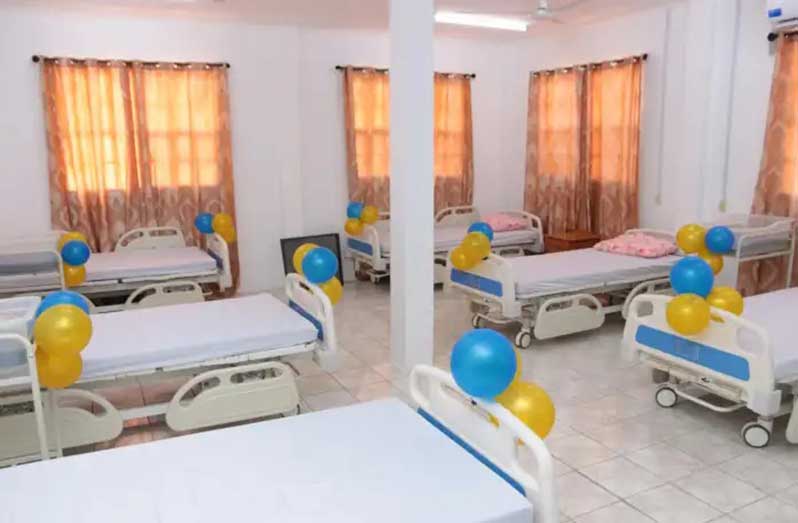
While development in training and the introduction of more specialised personnel have been major drivers in this area, Minister Anthony also credited the implementation of waiting homes. As he explained, waiting homes, apart from the standard waiting areas in hospitals, are separate buildings situated within hospital compounds to facilitate mothers who live far distances away from the hospital in the time leading up to labour.
The minister explained this ensures pregnant mothers are not travelling to the hospital during labour, an occurrence which was a common issue in interior and riverain areas.
To date, the ministry has established six of these waiting homes.
Speaking on their impact, he noted, “Prior to the waiting homes, a lot of people on their way to the hospital would deliver the baby. And sometimes that’s very unsafe and it can lead to a lot of complications.”
He further shared that the goal is to ensure that every interior hospital has a waiting home. He added that the impact is already being felt. Highlighting this impact, he noted, “We have already seen the impact. Take Region One, for example. Last year, they did not have any maternal deaths, which is great.”
Strict adherence to protocols is also an area that the ministry has worked to strengthen. As Minister Anthony shared, the ministry has implemented a standard procedure following a maternal death, with the patient’s information being sent to the Chief Medical Officer and a full internal review being conducted.
“When a maternal death occurs, what we do immediately, within 24 hours, the entire chart for that patient is basically seized. And that has to be sent to the chief medical officer,” he said adding, “They will set up an internal team at that institution who will review the case. And then you have an external team that would go in and also do a review.”
Accountability is also a major pillar of the ministry’s push against maternal deaths. As the minister noted, when negligence is found, that person is brought before the Medical Council.
“If there is any negligence on anybody’s behalf, that person is then taken in front of the medical council. And medical council would decide what actions to take. So, that has been our approach to it. And for the nurses, if there’s any negligence on their part, then they go before the nursing council,” he shared. The minister noted that in extreme cases, healthcare professionals can have their licences revoked, effectively ensuring that they are unable to practise in Guyana.
Minister Anthony noted that while these cases have not been common, the processes and steps implemented by the ministry ensure that not only is maternal healthcare in Guyana improved, but an ecosystem is also created to ensure patient safety and that healthcare professionals are held accountable.
“In extreme cases, you can have your licence pulled and you’re prevented from practising in Guyana. That goes both for nurses and doctors,” he said adding, “They do take actions. There is disciplinary action that is taken. It is not just on paper.”




