–clubs, green spaces central to national sustainability push, Minister Parag emphasises
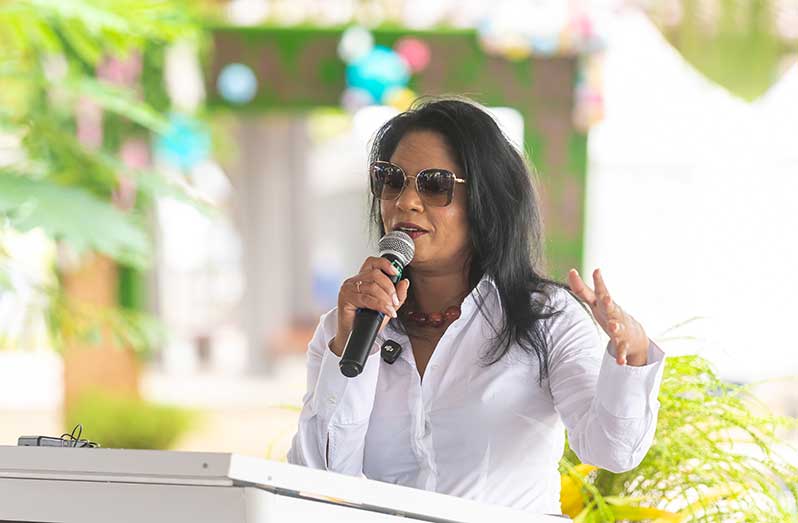
THE Government of Guyana is moving to strengthen public engagement in environmental protection, with a particular focus on getting young people more involved in preserving Guyana’s natural resources, according to Minister of Education Sonia Parag, on Monday.
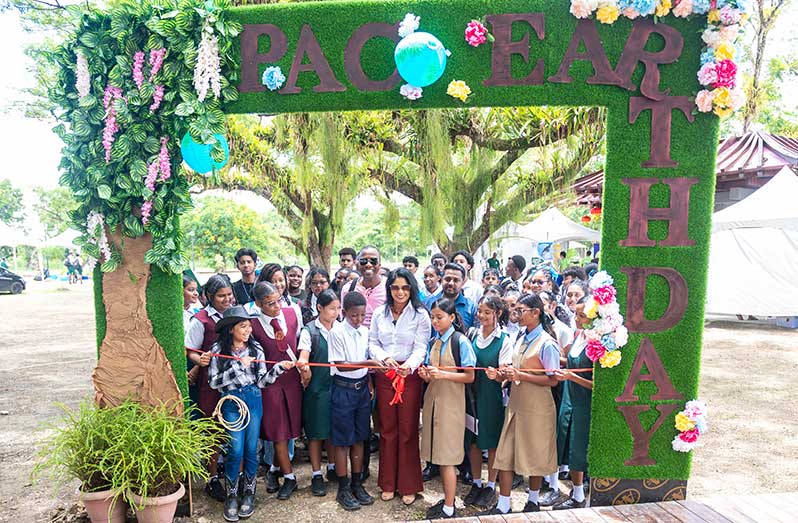
The minister emphasised this point during her address at a Protected Areas Commission (PAC) exhibition held at the Guyana-China Friendship Park, West Bank Demerara, where students, agencies and environmental groups gathered to showcase conservation efforts and promote greater awareness.
The event, which formed part of activities surrounding Earth Day, highlighted the importance of reconnecting people with nature and encouraging everyday actions that support sustainability.
Minister Parag stressed that while Guyana is gaining global attention for its economic growth, continued emphasis must be placed on protecting the country’s rich natural environment, noting that initiatives such as environmental clubs in schools and expanded green spaces are aimed at building that connection from an early age.
Addressing the hundreds of students and participants at the event, Minister Parag noted that it is important to sustain Guyana’s environment alongside the nation’s economic success, adding that both areas are equally important in the holistic development of the country.
She shared that while Guyana has gained international attention for its success in oil and gas, the nation’s natural resource diversity should receive equal recognition.
“Today, Guyana is on the map for several reasons, one of it being oil, and the second one is that it is the fastest-growing economy in the world. But Guyana should have been known a very long time ago, not for oil or not because it was the fastest-growing economy, but because of its beauty,” she said.
Minister Parag added that this is why the government has worked to make the most of this natural diversity through steps such as the Low Carbon Development Strategy.
Reinforcing the impact and growing role of these policies, Minister Parag noted that these steps have translated into progress and growth, not just for the sector but also for the lives of Guyanese.
Guyana’s policies, she added, are making an impact in communities across the country.
Parag said: “It is not something that is just a concept in a book. It is something that is lived; it is something that is a work in progress, and it is something that Guyana earns from.”
The minister added: “A percentage of that is given to every single Amerindian community across Guyana. And the village, and the village council, without the interference of government, gets to sit, they get to discuss, they get to consult, and they decide on what projects they implement in their community using the money that was earned from the carbon credits. And they are allowed to build buildings that are climate resilient.”
ENVIRONMENTAL CLUBS
In addition to community-based initiatives, the ministry is working to bolster this success by implementing environmental clubs in schools across the country.
Minister Parag noted that clubs already exist in a number of schools, with steps already being taken to expand the presence of these critical spaces.
“Right now, the Ministry of Education is working to ensure that we place environmental clubs in schools across the country, to promote an awareness of your environment, and also how you can play a part in connecting with nature, preserving your environment, and protecting your environment,” she said.
A major aspect of this push is youth involvement.
Minister Parag further urged young people and students to better connect with nature through the number of green spaces present in Guyana.
She also encouraged students to consider careers in environmental studies and sustainability, noting that as climate change and Guyana’s sustainability efforts continue, they could become leading voices.
Parag said, “We are losing our biodiversity because of climate change. We are losing our flora and fauna. That is why the Global Biodiversity Alliance was formed with so many countries coming on board. But you can play a role in that because you are the next generation of leaders.
“You are the next generation that will be leading your country and will be ensuring that your country is placed on the map for a different reason than the positive reason.”
Guyana is also partnering with the King’s Foundation to create more urban green spaces.
GREEN SPACES
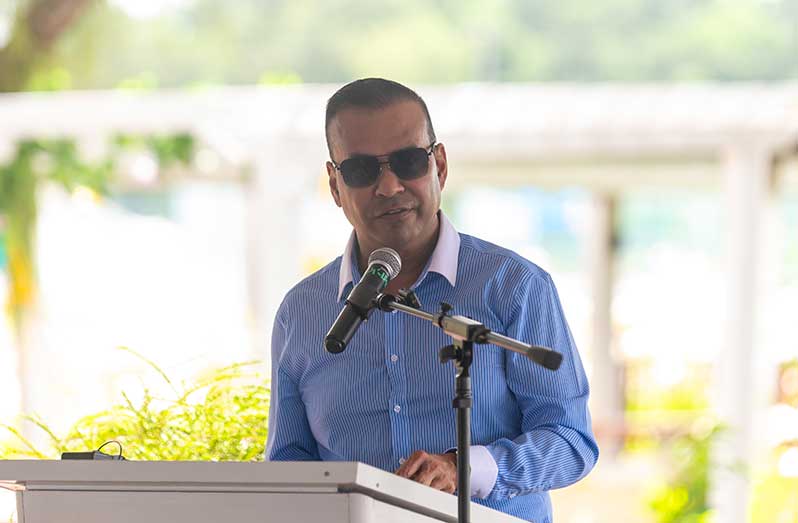
Foreign Secretary and Chairman of the PAC Board of Directors, Robert Persaud, in his address, emphasised the role of green spaces beyond being simply recreational areas.
Persaud noted that the Guyana-China Friendship Park and other green spaces are designed to serve as a metaphorical bridge between people and nature.
He further emphasised the vital role of such spaces in the national conservation strategy and how it aligns with the government’s aim.
“For our government, the idea of bridging people and nature is central to how we are building Guyana. A global model of development that grows with nature, not apart from it,” he said, adding: “That is where the Protected Areas Commission comes in. Our work is about connection, not only protecting forests and rivers far away, but also making sure nature is present in people’s everyday lives, especially for you, our young people. That is what spaces like this park are about.”
Persaud noted that the exhibition served as more than a symbolic observance, but also as a call to integrate conservation into everyday life and strengthen the relationship between people and the environment.
“Today is more than an Earth Day exhibition. It is a reminder that conservation must be close to people, part of daily life, and not distant from it. Spaces where children learn, families gather, and communities reconnect,” he said, adding that the government will continue to strengthen this connection through policies and initiatives aimed at bringing nature closer to communities.
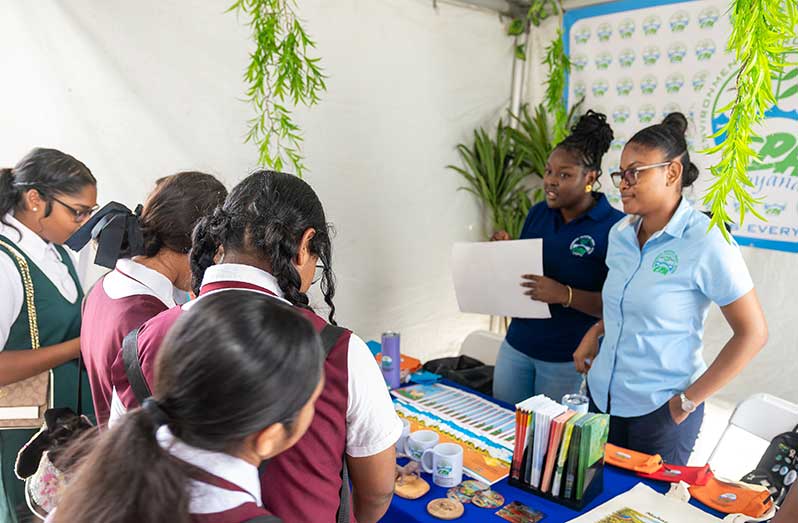
The event also featured a range of activities including “Tree Talks” presentations and interactive exhibits from agencies such as the PAC; the Environmental Protection Agency (EPA); the World Wildlife Fund (WWF); the National Agricultural Research and Extension Institute (NAREI); the University of Guyana (UG), and other partners, all aimed at promoting awareness, education and greater public participation in environmental stewardship.