Plants, some of which we have come to trust and respect…
WE have matured enough to respect and understand plants, not because they yield fruit we enjoy and, at times, provide delicious tea, but because they can also heal. But sometimes they can be detrimental. The 1960s–70s age of the hippies that even flowed down to us is credited to one man’s experiment and proposed experiences, which he wrote about; he is even accused of initiating cults and levels of lost balance. We can only respond to the publication THE DOORS OF PERCEPTION, HEAVEN AND HELL. Upon reading it, if Aldous Huxley experienced what he wrote, then we must contemplate and compare his definition of the Mexican cactus and the peyote, to which, upon reading this book for the first time, I then convinced myself of the loss of perception with human sacrifice, through the human sacrifice of the old world in this case, but quickly reasserted through widening my reading habit to the ways of the present world—not so long ago, not much different—using diverse means and weapons. But Huxley’s book, no doubt, could have influenced so many.
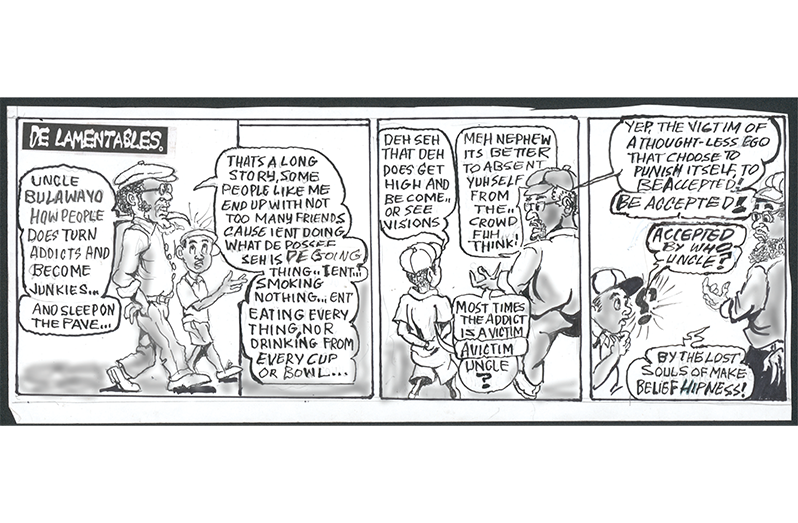
Let me explain close to home. I lived in West Ruimveldt. I saw marijuana rise, and I witnessed it delude many who couldn’t live as their lives fell apart. I witnessed and did not turn my face as I followed cocaine, and too many to count passed; others are hooked. Some say it’s a demon… I honestly think if you see the result of coke and continue to sell or use it, then, “You’re the prisoner, a creature that stumbled and surrendered to enslavement, a spectre of fallen humanity.” If you, the observer, see the outcome and nothing within moves you because of the temptation, or worse—self-deception because you contributed—then you too have lost yourself, to become a mockery of clouded humanity.
But when the kin have to handle the rude mockery that its kind has cast itself down into, that cannot redeem itself, and it grows into a legion, then it becomes our moral question: to ignore or pursue the strength of our question of responsibility. For a society must explore its moral conscience if it is to survive or be swarmed by the other, who, for its own need, shall feign scorn and sympathy but see nothing but the feast of our weakness. I cannot ignore my fallen, and I cannot be sympathetic without just accusations, for self-pity without the course of redemption cannot bear fruit.