






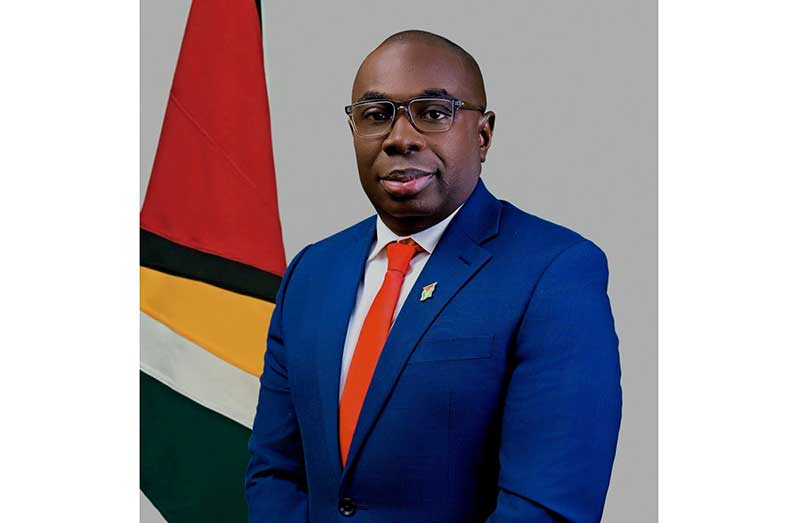
— McCoy underscores progress, acknowledges past constraints, calls for balanced global assessments
AS Guyana joined the international community in observing World Press Freedom Day 2026, Minister within the Office of the Prime Minister Kwame McCoy reaffirmed the government’s commitment to maintaining a free, responsible and enabling media environment, while urging a more balanced global approach to assessing press freedom.
In a statement, McCoy said this year’s observance, held under the theme “Shaping a Future at Peace: Promoting Press Freedom for Human Rights, Development and Security”, carries added national significance as it coincides with Guyana’s 60th Independence Anniversary.
He noted that the milestone provides an opportunity not only to reflect on the country’s development trajectory, but also on the role of the media in strengthening democracy.
“Press freedom in Guyana is not an abstract ideal. It is a lived reality, supported by a governance framework that enables the free, responsible, and unfettered operation of the media across all platforms,” McCoy stated.
The minister highlighted ongoing investments in the media sector, pointing to the work of the Guyana Media and Communication Academy in building capacity among journalists to navigate an increasingly complex information landscape.
He further emphasised Guyana’s engagement at the international level, including its participation in the Media Freedom Coalition as part of broader efforts to promote press freedom and the safety of journalists globally.
At the same time, McCoy acknowledged that Guyana’s post-independence history has included periods where press freedom was constrained, noting that such realities must form part of an honest national reflection.
“There were periods in our post-independence history when press freedom was constrained, when the safety and independence of journalists were undermined… These realities form part of our national experience and must be acknowledged,” he said.
However, he underscored that since the restoration of democratic governance following the 1992 Guyana general elections, the country has seen a sustained transformation towards a more open and enabling media environment.
According to McCoy, today’s media landscape reflects those reforms, allowing journalists to “engage, critique and inform without systemic constraint.”
Turning to global discourse, the minister also raised concerns about the methodology used by Reporters Without Borders in its annual Press Freedom Index, arguing that it does not adequately capture national realities or the progress made by countries like Guyana.
“Guyana maintains that assessments of press freedom must be comprehensive, balanced and contextually grounded,” McCoy said, adding that such evaluations should reflect both challenges and achievements.
He stressed that while freedom of expression is fundamental, it must be exercised with responsibility, including adherence to accuracy, fairness and ethical standards.
The minister used the occasion to pay tribute to Guyana’s media fraternity, honouring past and present practitioners for their role in informing the public, holding power to account and contributing to national development.
As Guyana marks both World Press Freedom Day and its diamond jubilee of Independence, McCoy said the government remains committed to strengthening partnerships and investing in the sector to ensure the continued growth of a free and responsible press.
“As we commemorate both World Press Freedom Day and sixty years of Guyana’s Independence, we renew our commitment to fostering a media environment that is free, responsible, and secure,” he added.




