






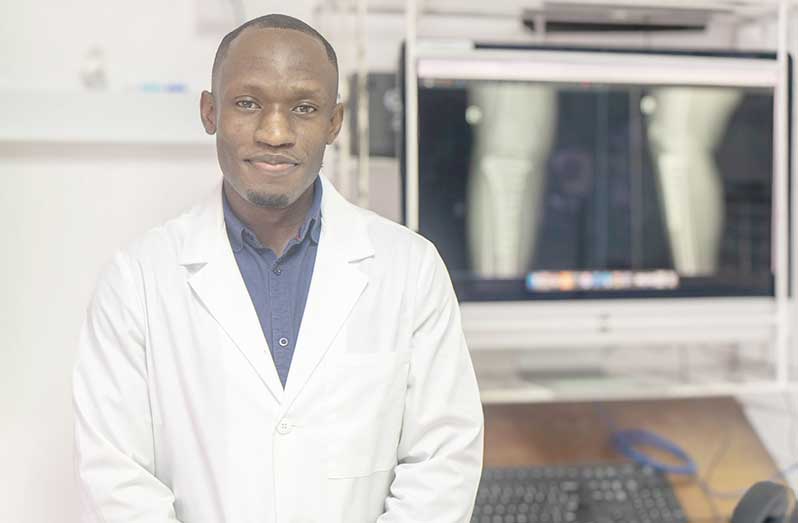
FOR Dr. Dominic Park, orthopaedics is not simply a medical specialty, it is a career shaped by purpose, persistence, and the desire to help patients reclaim their independence.
Now a senior resident in the Orthopaedic Department at the Georgetown Public Hospital Corporation (GPHC), Dr. Park’s path into medicine began years earlier at Queen’s College before taking him halfway across the world to China. There, he spent six years pursuing his medical degree, studying entirely in Mandarin while adapting to a new culture and healthcare environment. The experience, though demanding, provided early clinical exposure and helped shape his disciplined, patient-focused approach to care.
Since returning to Guyana in 2017, Dr. Park has steadily advanced in his field and is currently in the final year of his orthopaedic specialisation. His interest in the discipline predates medical school, driven by a fascination with how surgical intervention can restore movement and dramatically improve quality of life.
That interest has since evolved into a particular focus on spine care, an area he describes as both technically complex and deeply rewarding. From correcting spinal deformities in children to managing traumatic injuries in adults, Dr. Park says the visible transformation in patients’ mobility and confidence continues to motivate his work.
A typical day begins early, moving quickly from ward rounds and case discussions to hours in the operating theatre. The pace is demanding, and in recent years, the workload has intensified. According to Dr. Park, the department is seeing a growing number of severe injuries, many stemming from road accidents.
High-impact trauma cases—especially those involving motorcycles, have become increasingly common, often presenting complicated fractures and life-threatening injuries. Dr. Park has voiced concern about what he sees as a troubling pattern of unsafe behaviour on the roads, including speeding and reckless driving.
“Many of these injuries are preventable,” he noted, pointing out that some cases result in permanent disability, including limb loss. He stressed the need for greater public awareness and more responsible road use, particularly among motorcyclists, to help curb the rising number of serious accidents.
Despite the physical and emotional demands of orthopaedic care, Dr. Park maintains a patient-centred approach grounded in empathy. He places strong emphasis on clear communication, effective pain management, and ongoing support throughout recovery. Collaboration is also key, as he works closely with physiotherapists and other healthcare professionals to guide patients through rehabilitation and help them regain strength and independence.
For Dr. Park, the most rewarding moments come not in the operating room, but in the progress that follows, watching patients move from immobility to recovery, and ultimately back to their daily lives.
As he approaches the completion of his training and prepares to qualify as an orthopaedic surgeon, Dr. Park remains focused on contributing to the advancement of orthopaedic care in Guyana. His journey, marked by determination and continuous growth, reflects a broader commitment to service, and a belief that meaningful impact in medicine begins with both skill and compassion.




