– light rail, larger buses among options under active consideration
PRESIDENT Dr. Irfaan Ali has signalled a major shift in the country’s transportation strategy, stating that the government is actively examining the development of a modern mass transit system to complement the rapidly expanding road network.
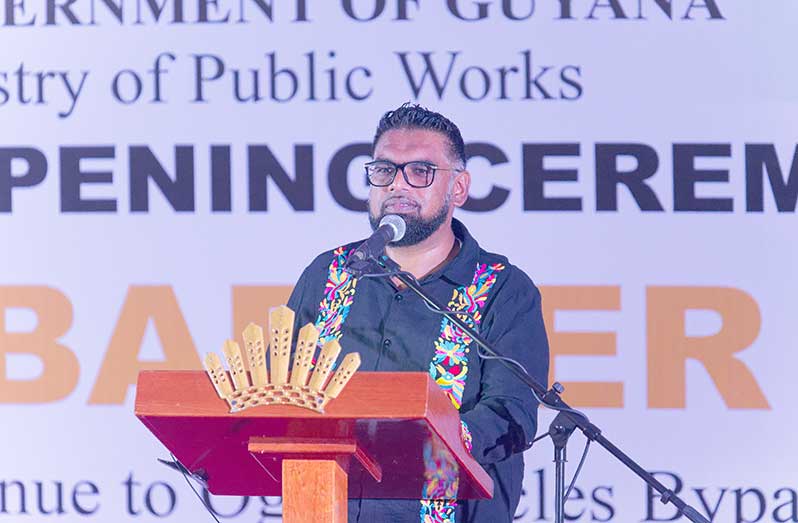
The Head of State made this known at a recent commissioning event during which he said that while significant investments are being made in highways and road infrastructure, a growing economy will require more efficient ways to move people.
“But while we are building roads to meet existing demand, and to prepare for future growth, we also recognise that roads alone cannot carry the full burden of a modern and expanding nation,” he said.
President Ali explained that the government is looking at a more integrated approach to transportation, aimed at improving daily commuting, reducing congestion, and increasing overall efficiency.
“That is why our plans go beyond highways and bridges. We are actively examining the development of an integrated mass transit system that will complement our road networks, reduce congestion, lower travel time, and improve the daily lives of citizens,” he said.
Among the options under consideration are a light rail system for high-density corridors, expanded bus services, and new routing strategies to ease pressure on existing roadways.
“This is why we’re giving serious consideration to options such as light rail systems for high-density corridors… and larger modern buses for longer distance services, including routes to rural and hinterland communities,” the President said.
Against this backdrop, he stated that such initiatives form part of a broader vision to modernise Guyana’s transport sector in line with its rapid economic growth and urban expansion.
“The future of transport is not only about moving vehicles, it is about moving people,” President Ali said while adding that an effective system must be safe, affordable and accessible.
According to Dr. Ali, the proposed mass transit system would work alongside existing and planned road infrastructure, creating a more balanced and efficient network.
“Our vision is clear: A Guyana where roads, public transit and smart planning work together in harmony, because the best transport network is one that gives people choices, saves them time, and connects every citizen to opportunity,” he said.
The government continues to roll out an aggressive infrastructure programme across the country, with billions being invested in highways, bridges, and road expansion projects aimed at improving connectivity and supporting economic development.
However, the president acknowledged that while road construction has brought temporary inconveniences for commuters, these challenges are part of a broader transformation.
“We ask for your patience because patience today will produce prosperity tomorrow… the traffic you endure today will become the travel you enjoy tomorrow,” he said.
As Guyana’s population grows and vehicle ownership increases, the President stressed that forward planning will be essential to avoid future congestion and inefficiencies.
He stated that the move toward mass transit represents a proactive step in ensuring that the country’s transport system keeps pace with development.
“These are not ideas for tomorrow alone. They are part of the groundwork we are laying today,” President Ali said.