– Burrowes School of Art’s Lasting Imprint on Guyana
FOR the past five decades, the Burrowes School of Art has been Guyana’s premier creative institution, honing the talent of many of the country’s leading artists, creatives, and teachers. Last year, the school celebrated its 50th anniversary with a captivating exhibition at Castellani House, held to commemorate the milestone. Artist and educator Dominique Hunter, who entered the institution at 16, told Pepperpot Magazine that the school’s legacy is deeply embedded in Guyana’s education and creative systems, with generations of art teachers, practitioners, and cultural workers tracing their roots back to its classrooms.
Now, as Guyana’s art landscape shifts, with emerging artists increasingly launching independent exhibitions, public art projects, and digital platforms, Hunter said that, with institutional training from Burrowes coupled with social media and technology, young creatives now have more visibility and are reshaping how their work is seen and engaged with by audiences both locally and internationally.
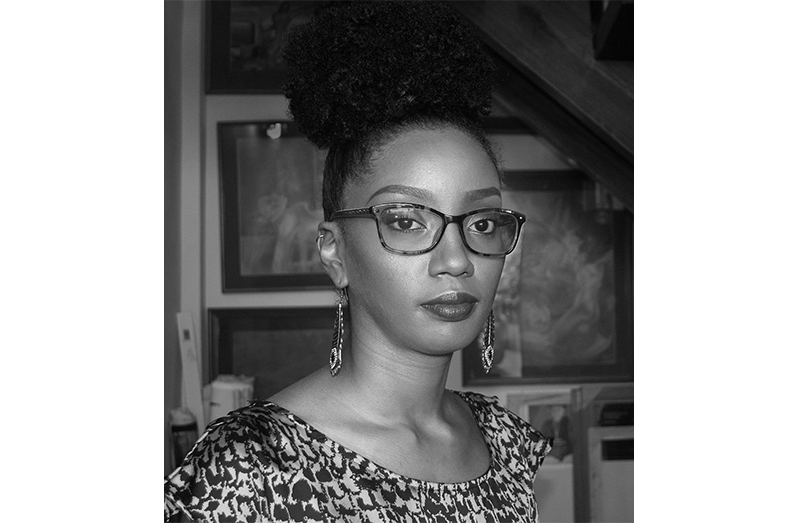
Hunter is one of the many artists produced by the Burrowes School of Art. After starting at the institution at just 16 and graduating in 2007 as the top student of her year, she launched her first solo exhibition at Castellani House in 2010. Since then, Hunter has expanded her studies and worked as a full-time artist from 2017 to 2022. In 2022, she returned to teach at the school, starting with research methods and eventually taking on duties as Director of Studies and Registrar. For Hunter, the exhibition not only marks a milestone but also highlights the school’s reach and impact. Originally planned for last year to coincide with the anniversary, the exhibition puts the scope of Guyana’s creative field into perspective.
Speaking to the school’s wide influence, Hunter emphasised that Burrowes has served as the foundation for most of Guyana’s artists and teachers. She shared, “Most of the students who pass through Burrowes are attached to secondary and primary schools across the country. Every art teacher you come across more than likely passed through Burrowes,” she said. “Fifty years is a long time, and the school has gone through tremendous transformation,” she added. “Over the years, we’ve had artist residencies, external examiners, workshops, art camps, and sketch tours. We even took students to Suriname for a week, which was a great experience.”
In those fifty years, and in the years since Hunter was a student, the school has evolved significantly. As she explained, the institution’s structure has changed tremendously, with expanded systems designed to better teach, accommodate, and support student growth. “There are also many more courses now. We did not have access to these when I was a student. Now we offer pottery, fashion, modelling, entrepreneurship studies, computer graphics, costume design, and Caribbean studies,” she said. This, she added, is something to celebrate, as it opens new doors for young creatives entering an evolving art world.
The growth and diversification of Burrowes also reflect wider changes in Guyana’s art landscape. While Hunter said the community of creatives has grown significantly, the field has also seen new trends emerge. Major institutions such as Burrowes have helped shape a close-knit, supportive network of artists. “There is a group of formally trained artists, but the community is very close-knit. Everyone meets at exhibitions and shares ideas, so it is a healthy ecosystem,” she said. At the same time, there has been a rise in private and self-taught artists.
As Hunter added, “There are also more private initiatives now. Past and current students are identifying gaps and stepping up to fill them, organising pop-up exhibitions, mural projects, and other creative initiatives.” Whether the local art landscape continues to see more traditionally trained artists versus self-taught creatives, or more pop-up exhibitions alongside contemporary showcases, Burrowes will continue to facilitate the growth of art regardless of shifting trends.
As Hunter explained, art in Guyana, despite its growing diversity, remains an interconnected and supportive space. She noted that the sector is now better able to build stronger links among artists, their work, and audiences through evolving art forms and growing support from both public and private sectors. “There are different pockets in the art community, but they all intersect. The sector is now bridging the gap between practitioner and audience. More artists are engaging sponsors and receiving support, which is very positive. Artists are dependent on audiences, whether public or private, to engage with their work and sustain their practice,” she said. Hunter added that, as the market expands, embracing corporate partnerships is one way to bridge that gap and eventually tap into regional and international markets.
She is also optimistic about the future of art in Guyana and what it holds for the next generation of young artists. The future of art in Guyana is backed by Burrowes but also continues to see growing support from other vital institutions. Noting the shift in government support, Hunter shared that bodies such as the Ministry of Education are not only supporting but promoting the arts as a viable career choice for young people, which is vital for the sector’s development. “There are so many areas young people can explore in the arts. The Ministry of Education did a really good job with their career fairs, highlighting different fields such as animation, film, photography, writing, and digital art. They showed that there are many paths beyond just teaching,” she said.
But the future of art in Guyana goes beyond traditional ways of showcasing work. As Hunter shared, art in Guyana, like the rest of the world, is being reshaped by technological and social media developments. “Social media and technology have also helped artists become more visible and access wider markets. The younger generation is doing a fantastic job building and nurturing the art community.” Institutions like Burrowes remain the foundation and heart of Guyana’s creativity, and it is because of the work it has done, and continues to do, that art as a career is now more of a possibility than ever before. As Hunter expressed, “There is no single path anymore. Technology has made it possible to reach goals in multiple ways. That is important for students to understand—that a career in art is broad and full of possibilities.”