






- says Canal Polder investment unlocks new wealth for farmers
THE commissioning of a new $58.5 million agro-processing facility at Canal Number One Polder has been hailed by Head of the Region Three Private Sector Inc. (R3PSInc), Halim Khan, as a transformative investment that positions the region for stronger economic growth, agro-industrial expansion and increased earnings for farmers.
Khan, a long-standing advocate for private-sector-led development in Region Three, said the facility represents a critical shift from traditional agricultural practices towards value-added production, an approach he has consistently promoted as essential for modernising the region’s economy.
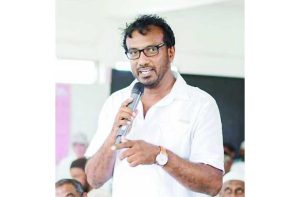
“This is the kind of strategic investment Region Three has needed for years,” Khan said, noting that farmers have long faced challenges with post-harvest losses and limited access to processing opportunities. “We are now creating a system where farmers are not just producers, but participants in a wider value chain that increases income and sustainability.”
The $58.5 million facility, commissioned on Saturday at Canal Number One Polder, is designed to convert raw agricultural produce into processed goods, reducing waste while opening new market opportunities.
Equipped with mixers, blenders, stoves, stainless steel containers, heavy-duty scales and chillers, the plant is capable of operating around the clock and will be made available free of cost to small and medium-sized enterprises.
Minister of Agriculture Zulfikar Mustapha, who delivered the feature address at the commissioning, underscored the government’s broader push to transform the agricultural sector.
“For too long we have been producing and exporting primary products [sic]. Today, we are beginning to harvest that potential by adding value right here in our communities,” he said, describing agro-processing as key to unlocking new opportunities and empowering rural populations.
But for Khan and the private sector, the significance of the facility goes beyond its physical infrastructure.
He pointed to its potential to stimulate entrepreneurship, encourage agro-based investments and create a more resilient local economy.
Region Three, particularly areas such as Canal Number One Polder, has long been recognised for its high agricultural output, especially in fruit and cash-crop production.
However, limited processing capacity has historically meant that much of this produce was either sold raw at lower margins or was lost through spoilage.
Khan emphasised that the new facility addresses these longstanding gaps.
“Post-harvest losses have been a major issue for farmers. With this facility, we are not only preserving produce but also creating higher-value products that can compete locally and regionally,” he said. “This is how we build wealth within communities.”
He also highlighted the importance of public-private collaboration in ensuring the facility’s success, noting that organisations such as R3PSInc stand ready to support farmers and entrepreneurs in effectively utilising the new infrastructure.
The Canal Number One facility is part of a wider national initiative that has seen similar agro-processing plants established across multiple regions, bringing the total to 15 nationwide. These facilities are intended to provide equitable access to processing capabilities, including in hinterland communities.
Minister Mustapha noted that the initiative is part of a broader strategy to diversify Guyana’s economy and make agriculture a more significant contributor to national income.
For Khan, however, the Region Three facility represents a particularly important milestone.
“Region Three has always been a strong agricultural hub, but now we are moving into agro-industrial development,” he said. “This is the kind of progress that will define the next phase of economic growth, not just for this region, but for Guyana as a whole.”
The facility is expected to begin delivering tangible benefits to farmers and businesses in the coming months, as training, integration, and operational support are rolled out.
As Region Three continues to expand economically, Khan expressed confidence that investments such as this will help bridge the gap between primary production and industrial-scale output, ensuring that more value is retained within local communities, while positioning Guyana as a competitive player in agro-processing.
Khan noted that President, Dr Irfaan Ali and his able Minister of Agriculture Zulfikar Mustapha are driving a transformative agricultural agenda to make Guyana the regional food hub and leader.




