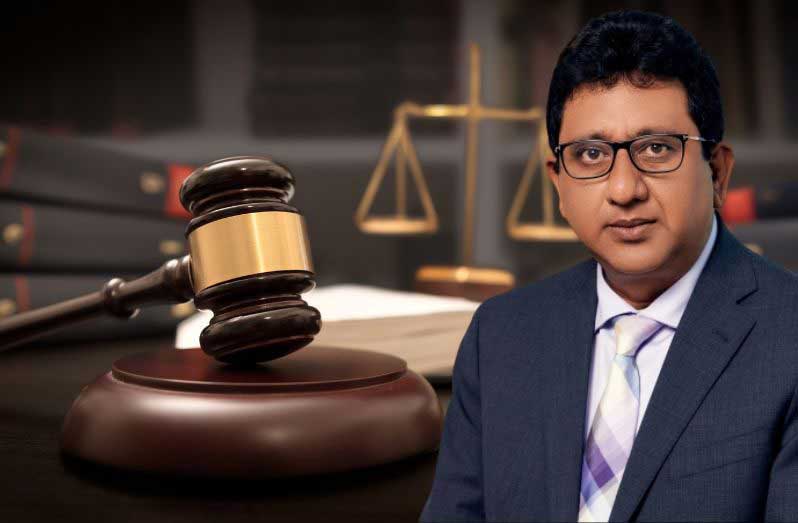
– repeat offenders could face imprisonment, mandatory clean-up duties
STRICTER penalties, including imprisonment and mandatory community service, are under consideration as part of the government’s push to clamp down on littering across Guyana.
This is according to Attorney General Anil Nandlall, who made this known during his weekly show, Issues in the News, during which he said he has been instructed by President Dr Irfaan Ali to review the existing legal framework with the aim of strengthening enforcement and increasing penalties for offenders.
“We are going to treat these matters as the highest priorities,” Nandlall said, referring to littering and other public nuisance issues.
He explained that the review will target key legislation, including the Environmental Protection Act and the Summary Jurisdiction (Offences) Act, with a view to expanding their scope and introducing tougher sanctions.
Among the measures under consideration are increased fines, imprisonment for repeat offenders, and the introduction of community service penalties that could require violators to participate in cleaning public spaces.
Against this backdrop, Nandlall revealed that Guyana already has a comprehensive set of anti-littering regulations, published in the Official Gazette on November 16, 2013, which have never been fully operationalised.
“These regulations are very elaborate and set out a detailed regime dealing with littering, creating offences and establishing an enforcement framework that is quite comprehensive,” he said.
However, they unfortunately have never been operationalised and, as such, the government will seek to encore and implement them.
The existing regulations address a wide range of offences, including littering in public places, dumping waste from motor vehicles, and improper disposal of garbage on both private and public premises.
They also outline responsibilities for local authorities and provide for the appointment of wardens with powers to enforce the laws.
According to the Attorney General, these wardens would have the authority to take offenders before the courts, while the police would also play a supporting role in enforcement.
Added to this, the framework places obligations on public transportation operators to provide receptacles for garbage and mandates local authorities to ensure adequate waste disposal facilities are in place.
Nandlall emphasised that strengthening the legal framework is only part of the solution, noting that effective enforcement will be critical to achieving cleaner communities.