






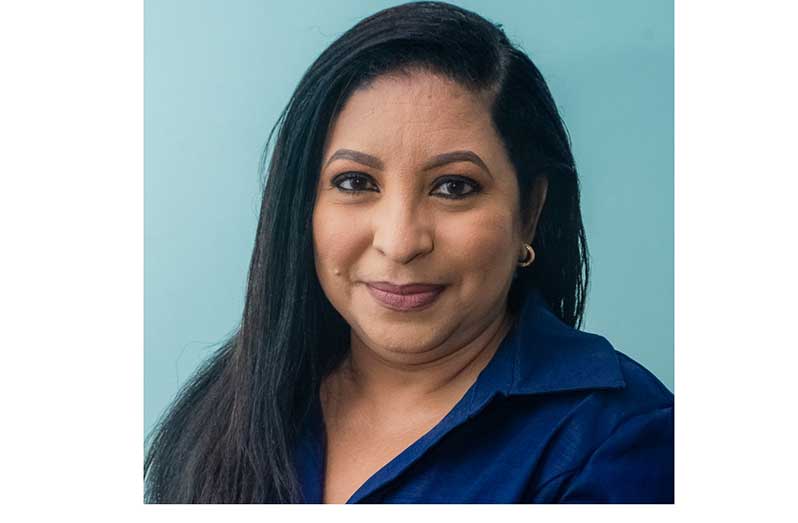
IN 2020, the University of Guyana (UG) appointed Professor Dr. Paloma Mohamed-Martin as the institution’s eleventh Vice-Chancellor (VC) and the first woman to hold the post in its more than 50-year history.
It was announced in March that she was stepping down from the position at the end of her contractual period in the coming months.
Prior to becoming the VC, Professor Mohamed-Martin had led a critical process as Deputy Vice-Chancellor in 2018-2019, the university’s Blueprinting Process, which reviewed all studies done on the university for the past 30 years, which was then evaluated against the environmental scans of Guyana and the region, and mapped against the predicted changes in Guyana (like oil and gas) for the coming 20 years.
Asked about the vision she had for the university, and how far that vision has come, the well-respected professor recently told this publication that she was very clear about what needed to be done and put all her efforts into executing the plan.
“Having produced with my colleagues the Blueprint 2040 for the university, I could then immediately spend time once I became VC to implement the first phase from 2020-2025. Which is what we did. We set a north star, we followed it with laser focus, and those milestones have been met and then some,” she related.
In the last six years, she has been instrumental in several changes and developments at UG such as the addition of 30 new programmes, the implementation of 70 new policies, regional expansion, strengthening research, the addition of zoom rooms, new buildings, better sports facilities, among many other advancements.
She emphasised that the legacy of her work over this period might be those things that cannot be seen easily but felt. A legacy of systems, integrity, fiscal discipline, technological agility and robust policy responsiveness, and institutional stability and dignity.
Professor Mohamed-Martin stated that when she was appointed as UG’s eleventh Vice-Chancellor in July 2020, it was a disruptive time with Covid-19 on the rise, political impasse, deaths of family members, and new responsibilities.
“I couldn’t think about being the first woman. I didn’t even know. It was brought to my attention by another woman. Then it was an additional ‘thing’ to carry. Now I understand much better what it means.” Dr. Mohamed-Martin said.
She recalled the challenges faced daily, describing them as hugely difficult. Covid-19, which saw UG transitioning rapidly from full face-to-face classes, to fully online, and then to hybrid learning, and the task of keeping the premier institution focused on its state role as a technical resource for Guyana, were among the challenges she encountered.
Apart from work challenges, Professor Mohamed-Martin noted that there were “intensely personal hurtful” things that she had to endure and overcome.
Throughout this six-year journey, she said she learned to be thankful for people who give the gift of the truth; that being a woman matters and is a blessing, and to be thankful for that as well. She also learned to accept that sometimes you must lead from behind; to remain open to the fact that you will never stop learning and growing; that wisdom comes from the most unexpected places; and that challenges are sometimes gifts you don’t recognise, and only in humility can you truly thrive.
She said UG students are the reason for everything she does.
According to her, it was the students who brought her back to Guyana. She said they inspired her and helped her to continue her work in the darkest times. “It helped to remember that if I gave up, I would fail thousands,” she related.
Continuing, the Professor revealed that the Early Childhood Centre and its expansion to a primary centre, the RASSR stem acceleration programme for young children (which is set to begin its second cohort), an infrastructure and construction programme, and systems transformation in key service centres, are all initiatives that she was a part of.
As a hands-on Vice-Chancellor, Professor Mohamed-Martin said each of these initiatives have one thing in common: they are intended to stand in the breach, to bring people into the light, and uplift those who may not be easily noticed.
She shared that these are life-changing projects and models, which she hopes can be extended and built on in the future.
The outgoing Vice-Chancellor said that she wants to see UG thrive and become what it was meant to be: the home of excellence in tertiary education locally, and in the region, and a place that liberates the best potential of those who study and work there.




