—Partnership with security forces, intelligence-sharing key to effectiveness, says National Coordinator
TRANSNATIONAL crime and smuggling will be targeted for eradication along Guyana’s borders as the country’s Border Patrol Unit takes shape.
Recently announced by President, Dr Irfaan Ali, the dedicated force is aimed at detecting, deterring, and dismantling transnational smuggling networks along the nation’s borders.
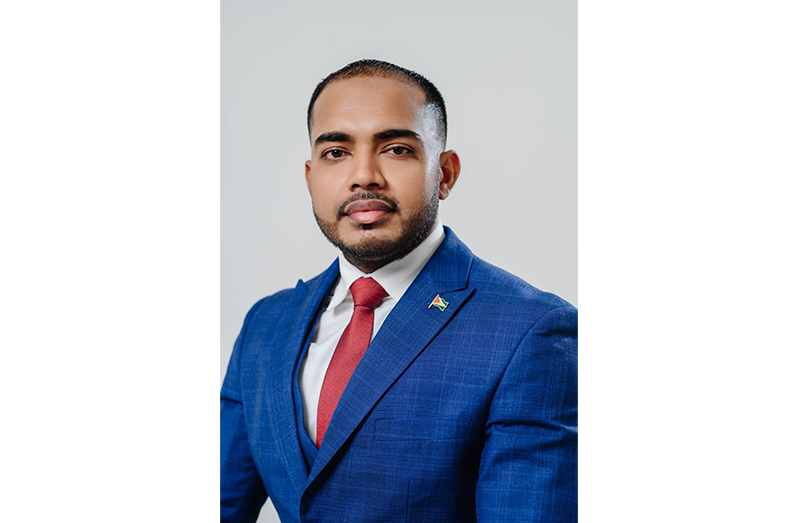
In an interview with the Guyana Chronicle, newly appointed National Coordinator, Daniel Seeram, outlined the unit’s core mandate which targets human trafficking; narcotics and arms trafficking; the illicit trade of natural resources and other illegal cross-border activities.
With the rollout slated to begin in communities across Region Nine, Seeram said the unit will work in collaboration with the Guyana Defence Force, other law-enforcement agencies, and local communities to strengthen the security capacity protecting Guyana’s borders.
Sharing insight into the development of the unit, Seeram explained that the bill for the Border Patrol Unit has already been prepared and is ready to be taken to the National Assembly for passage.
The core mandate, he added, is to detect, deter, and dismantle all transnational smuggling networks.
“This includes human trafficking; narcotics trafficking; arms and ammunition trafficking; trafficking of our natural resources and all illicit trade [sic] on our borders. This is on land and in riverain areas. Those are our core mandates. That is what we are starting to do as our main objectives,” he said.
As previously highlighted by the Head of State, the rollout of the unit will begin in Region Nine. Expanding on this, Seeram said the region was selected because it is home to a large number of border communities.
The groundwork has already begun in Region Nine with site visits to Rukumutu, Yurong Paru and Tipuru. Moreover, the aim, Seeram said, is to collaborate with communities through established Community Policing Groups (CPGs).
“The Border Patrol Unit will operate nationally across all regions with borders, both land and riverain. For Region Nine and the areas that His Excellency has identified, we have been mandated to use the CPGs within those areas, and we will be transitioning them from CPGs to border-patrol agents. That is a process that is currently ongoing,” he explained.
While noting that the unit will function as an independent body, Seeram emphasised that it will not operate in isolation. The plan moving forward is a collaborative one, with the unit tasked with physically patrolling the borders and collecting intelligence.
In the months ahead, he added, the unit is expected to acquire monitoring and intelligence technology to strengthen its operational capacity.
“As the months go by, we will be acquiring the necessary technology to further monitor and supervise activities along the borders. This will support intelligence gathering, which will form part of the national intelligence framework for security policymaking,” he said.
He added that all information gathered will be integrated into a system to support more informed decision-making by the government and the joint services.
“Regarding other services and the joint services, it is about mutual support, working in joint operations and sharing intelligence to achieve the objectives,” he said.
While personnel numbers have not yet been finalised, the unit aims to establish offices and monitoring mechanisms across all border regions, with strong community involvement.
Reinforcing that a more robust approach is being adopted, Seeram said: “We have not been given a limit on personnel. However, once there is an established CPG within bordering areas, we will be engaging them. We will be engaging members of the communities.”
He noted that plans include establishing a main office in each border region, along with district-level outposts and monitoring systems within communities.
Highlighting the role of the Head of State in advancing the initiative, Seeram said the overarching vision is to execute the mandate with diligence and integrity.
“We look forward to meeting with the people and groups from border communities and forming the necessary relationships, building a network that can dismantle illicit operations, making these areas safer, and protecting all borders,” he said.
Looking ahead, Seeram noted that the focus will remain on building the agency by recruiting skilled personnel to ensure the unit becomes what he described as a “tremendous success” in combating transnational smuggling.