

IN Guyana, we look forward to many things, these include our national holidays, and for children and families, they anticipate spending time together, flying kites for Easter.
This year it is no different: people will plan, arrive at a location of their choice early, erect tents, bring their coolers with beverages and food, and spend the day outside just so the children can have a good time flying kites.
For children, kite flying happens long before the actual holiday, that is, Easter Monday, when Guyanese turn out in their numbers to parks, the seawall, beaches, and other places with wide open spaces for them to engage in safe kite flying.
As a people, we do not sleep through certain things such as the Easter weekend; this period is utilised to get together with family, friends and others to spend time outdoors and reconnect over good food, drinks and much-needed conversations.
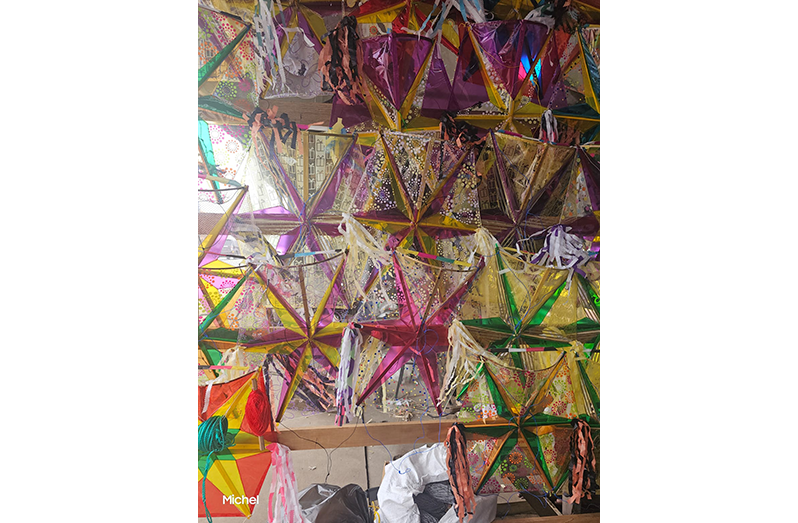
After the Lenten period, Good Friday is a day of no work for many, a national holiday, somewhat sombre in remembrance of the significance for Christians around the globe, but on Easter Saturday, Sunday, and Monday, these days are spent flying kites, especially for children.
Children would have their parents or guardians buy a kite or two of their choice, especially the pre-made ones, in both plastic and hand-made varieties, to take to the skies.
Mostly men would invest money and time to make specially designed kites in star-point and other colourful designs in different sizes, some are made to order, while others can be bought at roadside stalls at Buxton Public Road, where there is an annual kite camp set up for on-site kite making by local men of that village.
The children of today hardly make their own kites from scratch as we did when we were children. We used paper book pages to make our own ‘caddy ole punch’ kite, which was basic; all you needed were thread, tree paste, twine, and pointers from hand-made brooms used in the home.
After we spent some time making the simple kite, we would go to the nearest open space to raise that kite, and then when it was finally up in the air, it would swiftly come back down as fast as it went up, and usually it would fall right into a trench or pool of water.
When that happened, as often as it did, we would go back home, make more kites, and repeat the process as long as we wanted until curfew and our parents came looking for us.
The worst part of kite flying back then was when the kite was soaked; often, no one wanted to risk going into a trench for it, or we used to put razor blades on the tails of those simple handmade kites to cut others down just for fun.
When my grandfather was alive, as a child, he would spend days making a very colourful star-point kite for my brothers and me. It was about five feet, and we would take turns holding on to it once it was airborne.
It was usually tied to a tree or post for stability and left overnight to sing as loudly as it could, and that was the way Easter was celebrated back in my childhood days.
We would spend days running behind kites till we were tired, and the kite refused to go up or just didn’t come back; it was all considered part of kite flying then.
Today, it is very different; it is more of a social event than what Easter should be, where people consume alcohol publicly and loud music replaces quiet, turning it into a spectacular outing.
Easter Monday in Guyana is observed in many ways. Most people participate in kite flying for their children to have that experience and to spend time with loved ones at specific locations, be it parks, open fields, grounds, beaches, seawalls, and other places.