







THE High Court in Demerara has sentenced murder convict Osafi Johnson, formerly of East Ruimveldt, Georgetown, to 33 years imprisonment for the brutal killing of 24-year-old Nico Layne.
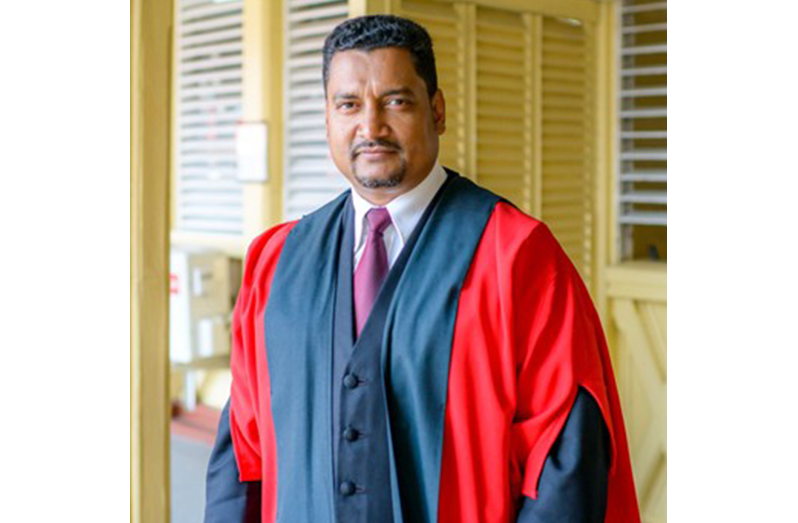
Chief Justice Navindra Singh described the attack as “gruesome” and underscored the need for deterrence in violent crimes. Johnson, who pleaded guilty to the murder, was handed a starting sentence of 36 years. The court then applied a series of adjustments, including a one-third reduction of 12 years for his guilty plea.
However, additional years were added for aggravating factors, including the impact on the victim’s family and the extreme cruelty of the act, resulting in a final sentence of 32 years. Time already spent on remand is to be deducted.
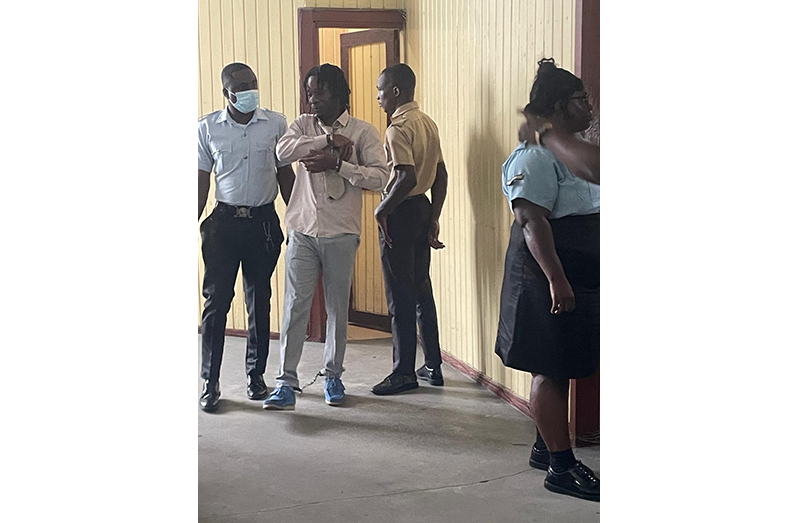
In delivering sentencing remarks, Chief Justice Singh painted a stark picture of the killing, noting that Layne, called “Daddy,” was chased for a prolonged period before being attacked.
“This killing was ‘gruesome,’” the court stated, adding that there was a sustained pursuit of the victim. Layne, the judge noted, “posed no threat, he was running away, he kept running away.”
The Chief Justice further condemned the nature of the attack, stating that the victim was “butchered to death,” and remarked that even animals being hunted do not get this level of cruelty. The judge added, “You had to know what you were doing,” making it clear that the actions demonstrated a high level of intent and brutality.
Emphasising the broader societal implications, the court declared: “This sentence must be focused on deterrence.”
Osafi Johnson was indicted along with others for the murder of Layne, which occurred on March 28, 2021. According to agreed facts, Layne was last seen around 01:15hrs riding a bicycle before stopping near a snackette at the junction of High and Hadfield Streets, where he joined a group of individuals playing cards.
About 30 minutes later, he realised his bicycle was missing and left the area heading north along High Street toward Brickdam.
Approximately one and a half hours later, between 03:10hrs. and 04:05hrs, Layne was seen running back towards the same group, this time being chased by three individuals. Among them was Johnson, armed with a knife, and Randy Tafari, who carried a cutlass.
A woman, Natasha Taitt, was also present and armed with a cutlass. At that time, Layne appeared injured, with a wound under his armpit and what appeared to be blood on his clothing.
Layne approached the group asking for a knife before continuing to flee south along High Street. He eventually turned onto Leopold Street, where he fell to the ground. Johnson and the others caught up with him, and Johnson proceeded to inflict multiple stab wounds.
After the attack, Layne was left lying face up on the road while Johnson stood over him. Johnson and his accomplices then walked away, attempting unsuccessfully to stop a passing vehicle before fleeing the scene. Johnson was later apprehended on Lyng Street, Charlestown, cautioned, and taken into police custody.
Layne was transported to the Georgetown Public Hospital, where he was pronounced dead. CCTV footage later retrieved by investigators captured parts of the pursuit and the fatal attack.
State prosecutor Christopher Belfield argued that the attack was particularly heinous, pointing to video evidence that captured the pursuit and parts of the fatal assault.
The prosecutor described the incident as one involving “two human hunters” who “mercilessly stabbed and chopped the deceased a total of 17 times,” before walking away.
He further contended that the killing was not spontaneous but deliberate, noting that at no point during the prolonged chase did Johnson abandon the pursuit.
Belfield also argued that Johnson had not fully accepted responsibility for his actions, suggesting that his guilty plea may have been one of convenience.
The court also considered the use of weapons in the attack, noting that Johnson was armed during the pursuit. The level of violence inflicted, the prosecutor argued, demonstrated a complete disregard for human life.
In mitigation, defence attorney Dexter Smartt told the court that Johnson had no previous convictions and had demonstrated good behaviour while in prison. He described his client as remorseful, noting that it was “unfortunate that someone died.”
Smartt further highlighted that Johnson had accepted responsibility for his actions by pleading guilty, thereby forfeiting his right to a trial.
Johnson himself addressed the court, expressing remorse for the killing. “I know a life was lost. I did something unbearable. I am begging you [Layne’s family]to find it in your heart to forgive me,” he said. He also told the court that if he had the power to reverse what had happened, he would do so, adding that he intends to assist the victim’s family upon his release from prison.
“I promised to help the deceased’s family in any way I can when I am released,” Johnson stated.
Despite these expressions of remorse, the court weighed heavily the aggravating factors, including the brutality of the attack and its impact on the victim’s relatives.
Victim-impact statements presented to the court detailed the profound grief experienced by Layne’s family. His sister described him as a loving individual who played a central role in keeping the family together.
She told the court that his death had left a lasting void, noting that even five years later, the pain remains deeply felt. “My brother brought life to our yard… it has been five years since he died, but his death is still felt daily,” she said, as she called for justice.
Another relative described Layne as “family oriented” and someone who was always willing to assist others. The court also heard that his death had a cascading effect on the family, contributing to further loss and emotional distress.
In a particularly emotional account, a sibling recounted the events leading up to Layne’s death, describing how he had spent the day in good spirit, laughing and socialising, before being lured away by someone he knew. The family member said the brutality of the killing has left them traumatised, especially after seeing how the attack unfolded.
“We are all traumatised by my brother’s murder and the way it happened,” the statement read, adding a call for the maximum penalty.
The court acknowledged the devastating impact on the family, which contributed to the upward adjustment of the sentence.
While noting Johnson’s participation in rehabilitation programmes and generally positive behaviour in recent years while incarcerated, the court ultimately determined that the severity of the crime required a strong punitive response.
Johnson had been on remand since 2021 following his arrest. Reports indicated that he participated in programmes such as anger management, drama, and human psychology while in prison and was generally described as respectful by prison officials.
However, the court balanced these factors against the nature of the offence, concluding that the need for deterrence and justice for the victim outweighed mitigating considerations.



