— ministers mobilised across regions; safety risks flagged
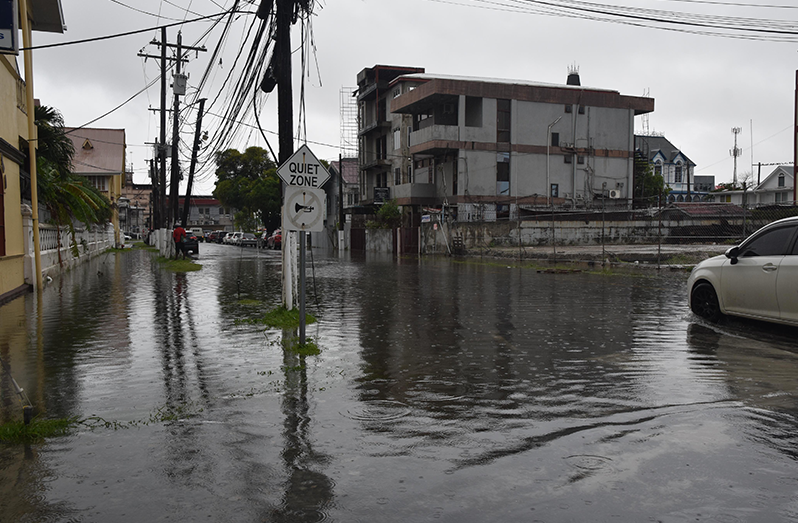
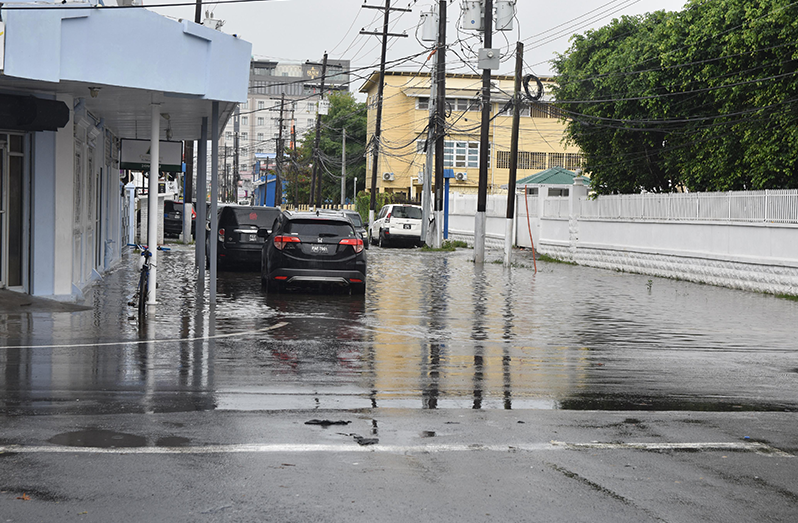
The government on Saturday activated a full-scale, nationwide flood response as persistent heavy rainfall continues to impact communities across Guyana, with ministers deployed across multiple regions to assess conditions, engage residents and ensure that critical drainage and emergency systems are fully operational.
The mobilisation comes as the Hydrometeorological Service warns that moderate to heavy rainfall will continue until Tuesday, significantly increasing the risk of flooding, particularly in low-lying and poorly drained areas.
The advisory points to unstable atmospheric conditions driving widespread rainfall, thunderstorms, rising water levels and saturated soils, with the potential for localised flooding, hazardous driving conditions and damage to infrastructure.
CABINET-LEVEL RESPONSE ON THE GROUND
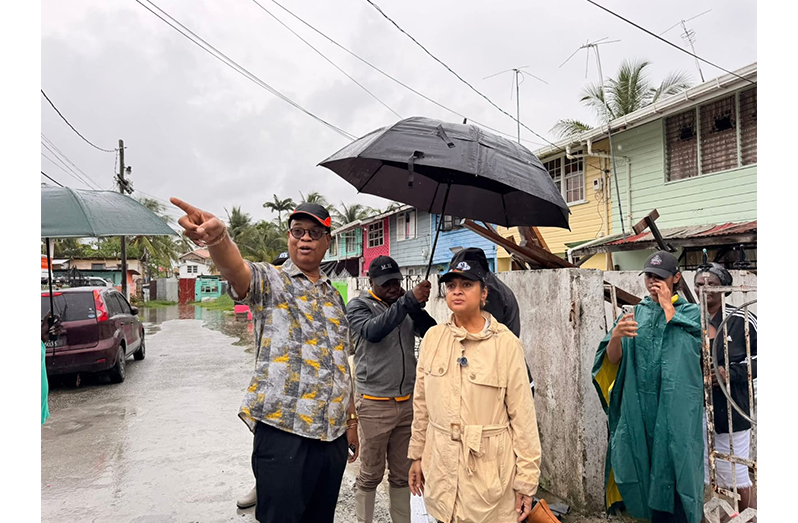
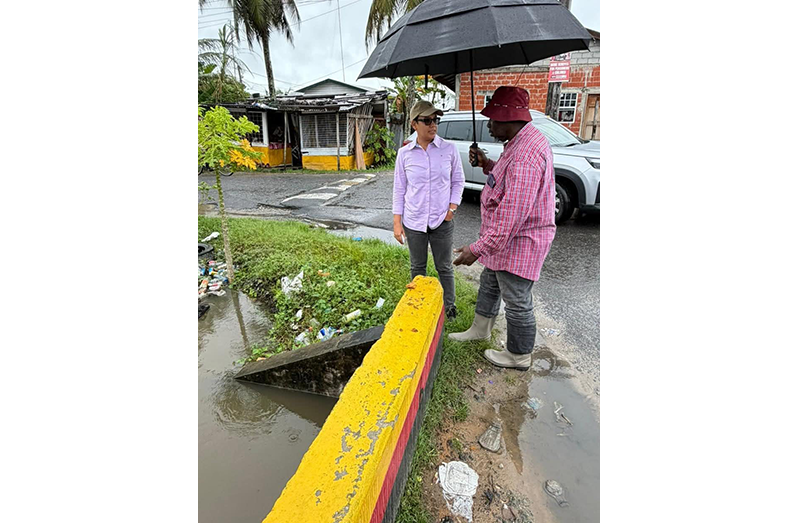
In Regions Three and Four, Minister of Local Government and Regional Development, Priya Manickchand, led field operations in communities including Bagotstown, South Ruimveldt and North Ruimveldt, where residents have been grappling with rising water levels.
She was joined by Minister of Public Works Bishop Juan Edghill, along with Regional Chairmen and technical teams, in what officials described as a coordinated, real-time response to the developing situation.
Ministers and regional officials were actively assessing drainage infrastructure, ensuring that kokers, canals, pumps and drainage channels were functioning effectively.
In areas where existing systems were under pressure, tractor-driven pumps were installed to boost capacity and accelerate the removal of water.
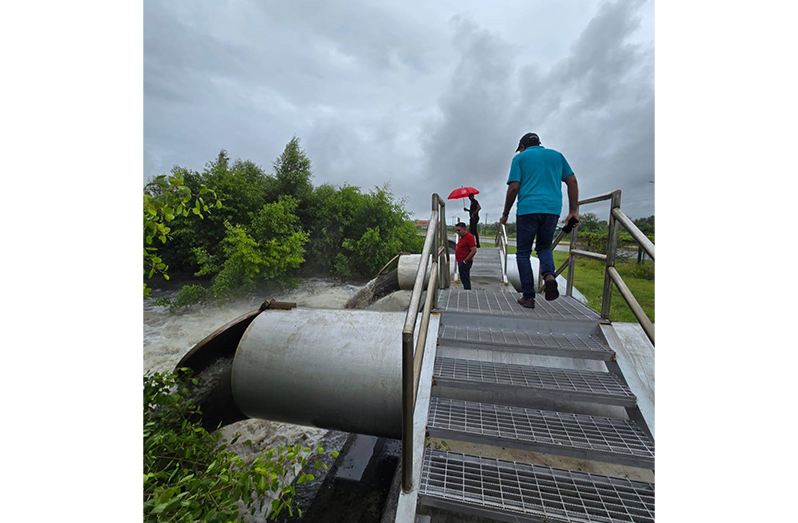
Edghill, during a walkthrough in South Georgetown, made it clear that while the volume of rainfall remains a challenge, recent infrastructural investments are already delivering measurable improvements.
“This street, if rain fell three weeks ago, it would be flooded today… I am happy that this intervention has held up. People could get in and out,” he said, pointing to upgraded drainage and roadway works.
He added: “It’s not 100 per cent, but the drainage is much improved,” while stressing that the system must be managed aggressively, particularly through the effective use of pumps and sluices.
Manickchand, in outlining the operational response, noted that teams from Neighbourhood Democratic Councils (NDCs) and Regional Democratic Councils (RDCs) have been mobilised and are maintaining active monitoring of drainage systems.
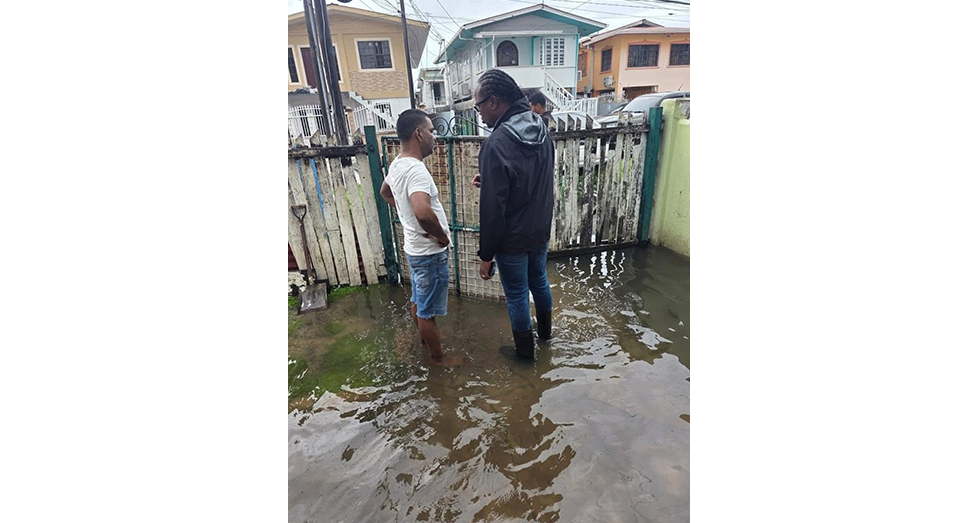
The minister emphasised that ensuring systems function in real time is critical as rainfall continues.
The national response extended beyond the coast, with ministers deployed across multiple regions.
Minister of Education Sonia Parag was on the ground in Region Five, while Minister of Public Utilities and Aviation Deodat Indar was in Region Three engaging residents and assessing flood-affected communities.
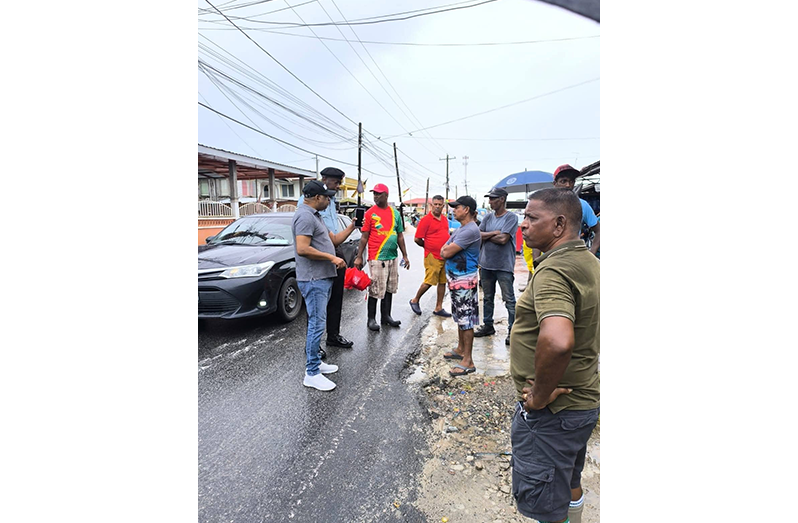
In Georgetown, Minister within the Ministry of Culture, Youth and Sport, Steven Jacobs, visited Kitty; Minister of Tourism, Industry and Commerce Susan Rodridges tackled the Sophia community while Minister of Labour and Manpower Planning, Keoma Griffith, was in East La Penitence and Ruimveldt, interacting with residents and monitoring conditions as part of the coordinated response.
The widespread deployment underscores what officials describe as a “whole-of-government” approach aimed at ensuring that no community is left unattended as conditions evolve.
RAINFALL INTENSITY TESTING NATIONAL SYSTEMS
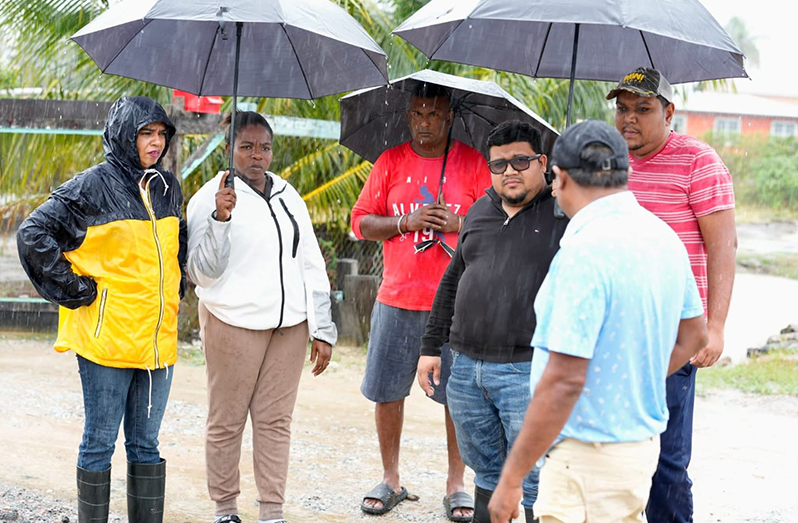
Minister of Agriculture Zulfikar Mustapha underscored the severity of the current weather system, revealing that Georgetown recorded more than 3.5 inches of rainfall within a 24-hour period, with some areas receiving approximately 145 millimetres.
During inspections at the Liliendaal Pump Station and other key drainage sites, Mustapha confirmed that engineers and technical personnel have been deployed nationwide to ensure that all drainage infrastructure remains operational.
“These teams are out there monitoring every system — pumps, sluices, canals — to make sure they are working as they should,” he said.
However, the minister did not shy away from highlighting deficiencies within the system, pointing to a lapse at the Cowan Street sluice.
“The sluice was closed, although the tide was very low. And that shows that there is a serious problem with the City Council, because they are not monitoring the situation,” Mustapha said.
He emphasised that sluices are critical components of the drainage system and, if properly utilised, can discharge water faster than pumps.
HUMAN BEHAVIOUR IDENTIFIED AS KEY CONTRIBUTOR
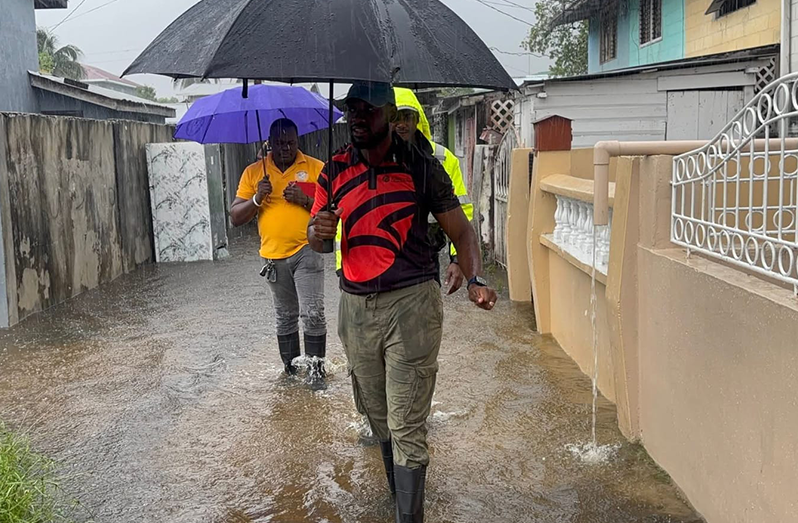
Attorney General and Minister of Legal Affairs Anil Nandlall added another dimension to the issue, pointing to human behaviour as a significant factor exacerbating flooding.
Following visits to flood-affected communities along the East Coast of Demerara, Nandlall said several contributing issues were identified.
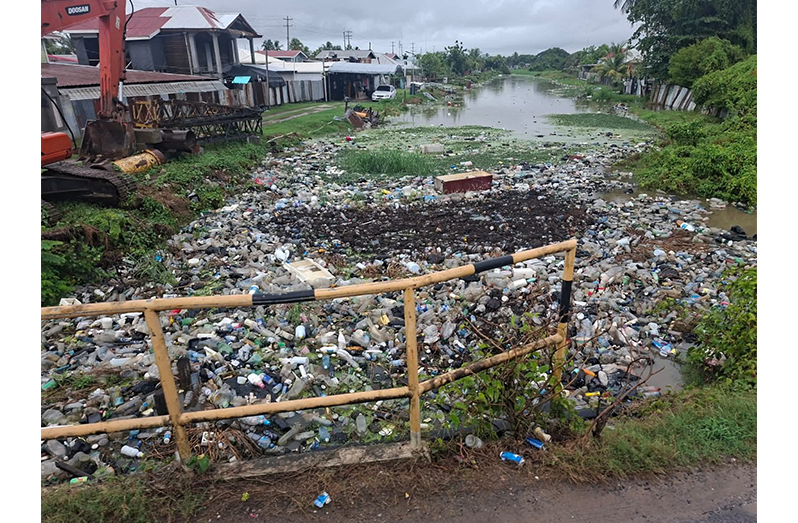
“These include permanent blockages to drains by residents themselves; the expansion of drains to take off the volume of water; the wanton dumping of garbage in drains and canals and in many cases, blockage of drainage kokers,” he said.
He warned that such practices are undermining drainage efforts and worsening conditions.
“The dumping of garbage in the drains and drainage canals by citizens is both callous and criminal. The blatant refusal to clean the small drains in front of their homes is reckless and irresponsible,” he added.
Nandlall acknowledged that government agencies must accept responsibility but stressed that meaningful improvement will require stronger public co-operation.
ELECTRICAL HAZARDS EMERGE AMID FLOODING
As floodwaters rise, utility companies have issued urgent advisories warning of increased electrical risks.
The Guyana Power and Light Inc. (GPL) has urged residents to avoid flooded areas near electrical installations and to treat fallen power lines as live at all times.
Residents are advised to turn off main breakers if flooding threatens their homes, once it is safe, and to avoid contact with electrical outlets, appliances and wiring in wet conditions.
Similarly, the Linden Electricity Company Inc. (LECI) has called for immediate reporting of hazards, including fallen poles, low-hanging lines, flooded substations and damaged transformers.
Both entities stressed that timely reporting is critical to ensuring rapid response and preventing loss of life.
MOTORISTS URGED TO SLOW DOWN
The Guyana Police Force has also issued a traffic advisory, warning motorists of hazardous conditions along the Soesdyke-Linden Highway and other major roadways.
Authorities said wet road surfaces are reducing traction and visibility, increasing stopping distances and elevating the risk of accidents.
Drivers are being urged to slow down, increase following distance and practise defensive driving.
Officials warned that failure to do so could result in serious incidents, noting recent accidents under similar conditions.
With rainfall expected to persist into the new week, authorities say a round-the-clock response remains in effect, with continuous monitoring of drainage infrastructure and emergency systems.
The immediate priority, officials say, is to maintain drainage capacity, address operational gaps and protect communities.