







–in killing of close friend
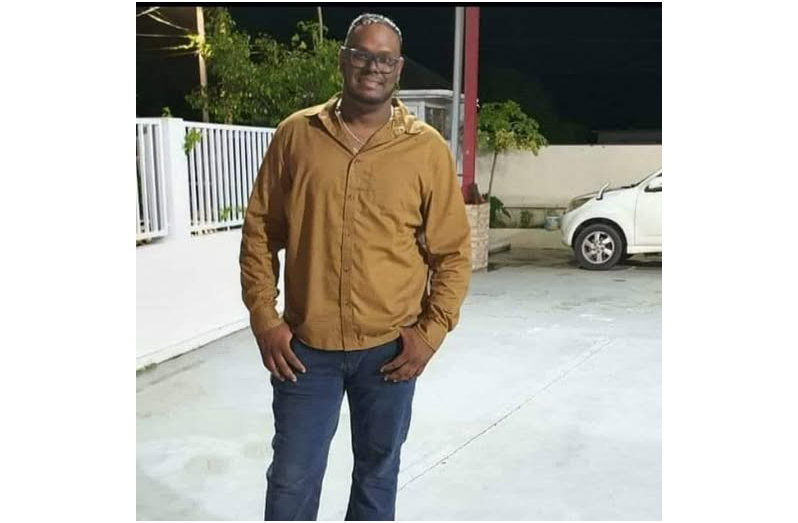
A 25-year-old university student, Afzal Deendial, who was once remanded to prison on a murder charge, has now been released after the court imposed a three-year sentence for manslaughter, and credited him for time already spent on remand—effectively allowing him to walk free.
Deendial’s release follows the conclusion of legal proceedings stemming from the August 12, 2022, fatal stabbing of his close friend, 24-year-old goldsmith Kareem Kayum, which occurred on August 12 at Woolford Avenue, Georgetown.
Initially charged with murder, Deendial was not required to plead when he first appeared before Chief Magistrate Ann McLennan at the Georgetown Magistrates Courts.
At the conclusion of the preliminary inquiry, the Magistrate determined that the prosecution had established a prima facie case against him, and accordingly committed him to stand trial at the Demerara Criminal Assizes.
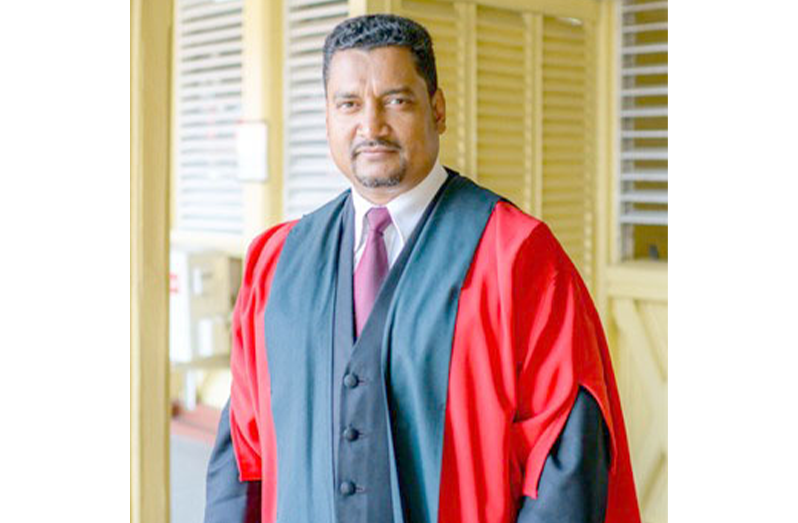
However, the matter later took a turn when Deendial opted to plead guilty to the lesser offence of manslaughter before Acting Chief Justice Navindra Singh.
Under Guyana’s sentencing framework, a guilty plea—particularly at an early stage—can significantly reduce a sentence. In this case, the court began with a starting point of 18 years, but applied a series of deductions, ultimately reducing the custodial term to three years.
With time already spent in pre-trial detention, Deendial was deemed to have served his sentence in full and was therefore released.
The court deducted one-third, or six years, for the early guilty plea. A further four years were subtracted based on what the judge described as “very favourable probation and prison conduct reports,” and an additional two years were deducted in consideration of Deendial’s youth and overall conduct.
Justice Singh also noted that prison authorities would apply credit for time spent on remand, bringing the effective sentence to time served.
In delivering remarks, the court acknowledged the complex circumstances surrounding the incident, including the role played by the deceased in escalating the confrontation.
The judge said that Kayum’s role in escalating the situation could not be overlooked, explaining that what began as a verbal exchange quickly developed into a physical confrontation.
According to the agreed facts presented in court, both men were among a group of friends playing cricket at the Muslim Youth Organization (MYO) ground when tensions arose.
It was reported that Deendial and Kayum were playing on opposing cricket teams when Kayum slapped him to the back of the head and then attempted to run away.
The court heard that Deendial, in response, armed himself with a knife, followed Kayum, and stabbed him once to the left side of the chest. Kayum collapsed and was rushed to the Georgetown Public Hospital Corporation, where he later died while receiving treatment.
A statement from the Guyana Police Force corroborated the sequence of events, noting that Kayum had earlier complained about being called “unsavoury names” by Deendial, and that an elder had intervened to caution the accused.
Despite this, a scuffle broke out, during which Deendial was seen with a knife. Moments later, what appeared to be blood was observed coming from Kayum’s chest.
In assessing the matter, the judge pointed out that Deendial had been struck from behind and reacted in what was described as a moment of agitation and fear.
“Any reasonable person cannot put all the blame on Deendial,” the court remarked, adding that the deceased was physically larger and had initiated the physical violence.
The judge further observed that Deendial could have opted to proceed to trial and potentially advanced a defence of self-defence.
“From the statement of agreed facts, while it could be said that Deendial’s actions resulted in the death of Kayum, Deendial could have easily gone to trial… on self-defence based on the incident,” the court said.
Nonetheless, the court credited Deendial for accepting responsibility.
ACCEPTED RESPONSIBILITY
“He has accepted responsibility,” the judge noted.
During sentencing, emotional victim impact statements were presented. Kayum’s mother, Michelle Kuyum, told the court that her son had been the youngest of her three children and the family’s breadwinner.
She said he had always promised to take care of her and was looking forward to major milestones in his life.
Michelle said that at the time of his death, he had been looking forward to his upcoming marriage and the birth of his first child, highlighting the profound loss suffered by the family.
Deendial’s fiancée also addressed the court, expressing deep sadness and highlighting the consequences of the incident on her life.
She said that Kayum’s actions had led to her becoming a single mother and noted that Deendial had been excited about the impending birth of their child.
In a plea in mitigation, defence attorney Latchmie Rahamat urged the court to temper justice with mercy, describing the incident as a “crime of passion.”
“My client has thrown himself at the mercy of the court,” Rahamat said, adding that Deendial was “extremely remorseful” and “never intended to kill anyone.”
“It is unfortunate that someone died as a result of his actions,” she continued, while also emphasising that her client had no prior history of criminal behaviour.
“He has never been a troublemaker. He has never been involved in criminal activities.”
According to counsel, her client has been actively participating in programmes offered by the Guyana Prison Service.
She said he is eagerly awaiting the opportunity to resume and complete his studies at the University of Guyana, which were interrupted due to the murder charge.
She said her client has offered Kayum’s family $1 million to assist with the care of his son.
State Counsel Christopher Belfield, in outlining the aggravating factors, stressed that the offence was both grave and wholly disproportionate to the circumstances in which it arose.
He told the court that the incident began as a verbal exchange during a recreational cricket match but rapidly escalated into a fatal confrontation, demonstrating a failure on the part of the convicted man to exercise restraint.
Belfield emphasised that the accused deliberately armed himself with a knife before entering the batting cage, describing this as a clear indication of premeditation and a readiness to resort to deadly force.
He submitted that the introduction of a weapon significantly heightened the risk of serious harm and ultimately resulted in the fatal stabbing of Kayum.
The prosecutor further highlighted the severity of the injury, noting that the stab wound perforated the heart, a wound which was inherently fatal. He urged the court to consider the devastating and irreversible impact of the act, particularly the loss of a young man who was about to start a family.
Deendial himself addressed the court, offering an apology to both the judge and the family of the deceased.
“I would like to apologise to Justice Singh and the deceased’s family. I am in no way trying to absolve myself from my actions. I acted in an agitated and in the heat of the moment. I express condolences. I am sorry. I would like the opportunity to reintegrate myself into society,” he said.
He also pleaded for leniency, asking the court for a chance to rebuild his life.
The judge, in weighing all factors, reiterated the importance of proportionality in sentencing, particularly in cases involving young offenders and circumstances where the victim contributed to the escalation.
The court also took into account documented aggravating and mitigating factors outlined in the probation and prison reports, which painted a largely positive picture of Deendial’s character and behaviour since the incident.




