By Vanessa Narine
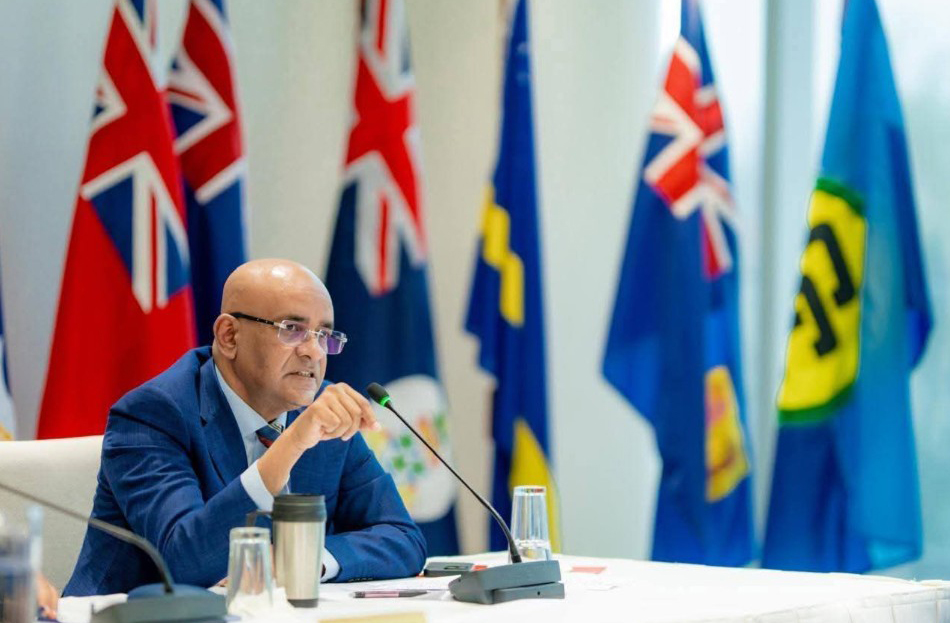
At a high-level regional gathering this week, Vice President, Dr. Bharrat Jagdeo delivered a blunt message to Caribbean policymakers – that climate strategy must shift from rhetoric to realism.
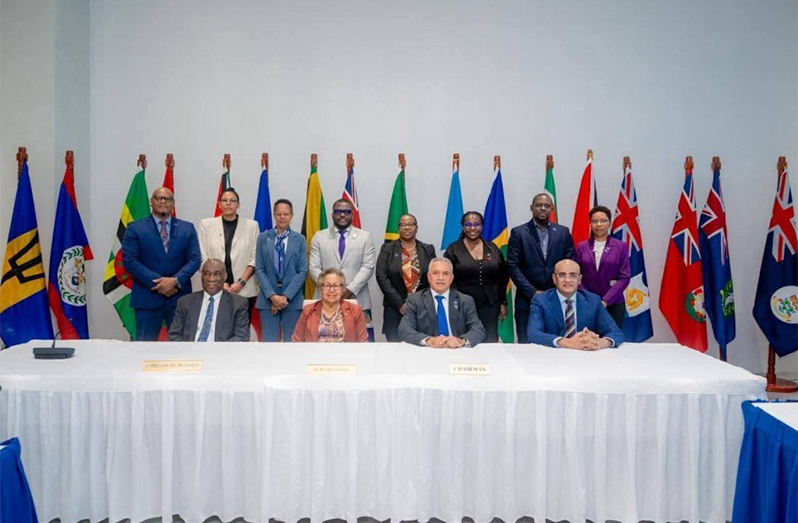
Addressing delegates at the 124th Special Meeting of the Council for Trade and Economic Development (COTED) on Thursday (March 26, 2026), Dr. Jagdeo challenged long-standing assumptions that have shaped global climate negotiations, warning that geopolitical conflict and energy instability have exposed deep vulnerabilities in the transition to renewable energy.
“We are far away off from weaning ourselves of fossil fuel,” he said, pointing to the cascading economic consequences of a new international conflict involving Iran, Israel and the United States.
In just weeks, he noted, the war had triggered fuel shortages, rising living costs, social unrest in some countries and a diversion of public funds away from development. The ripple effects, he warned, would soon reach tourism-dependent Caribbean economies, threatening jobs and growth.
A CALL TO RETHINK CLIMATE FRAMING
For decades, climate debates, particularly within CARICOM, have often been framed as a binary choice between fossil fuels and renewable energy. Dr. Jagdeo dismissed that framing as impractical. “The fact is that we will need fossil fuel,” he said.
Instead, he urged policymakers to adopt a “balance” approach to achieving net-zero emissions – one that includes renewable energy, energy efficiency, technological innovation and selective reductions in fossil fuel use.
His remarks also reflected a growing concern about the weakening of global climate cooperation. With the United States less engaged in international negotiations, Dr. Jagdeo warned that achieving emissions targets under frameworks like the Conference of the Parties (COP) would become “immensely harder.” “The reality is that the biggest country in the world is not part of the negotiations,” he said, adding that rising global energy demand is likely to outpace the deployment of renewable alternatives.
 SEEK SOLUTIONS
Dr. Jagdeo took aim at what he described as repetitive and ineffective climate diplomacy. “We have done this every single time we have gone to the Conference of Parties (COP)… we restate the problem over and over again, without exploring for solutions.”
He cautioned younger policymakers against relying on polished rhetoric, now increasingly aided by artificial intelligence, and instead emphasized the need for actionable strategies.
FOUR PRIORITIES FOR THE CARIBBEAN
Setting aside the broader climate crisis, Dr. Jagdeo outlined three immediate priorities for the region.
Focusing on energy independence, he noted that Caribbean nations spend an outsized share of their economies, often more than 10 percent of GDP, on fuel imports. “How could you really craft a development policy… with that leakage?” he asked. Investing in renewable energy, he argued, is not just an environmental necessity but an economic imperative.
Addressing the issue of disaster resilience, he citing data showing that 324 of 511 disasters affecting small developing states since 1950 occurred in the Caribbean. As such, Dr. Jagdeo stressed the urgency of climate-proofing infrastructure. A single storm, he noted, can erase decades of economic progress. “So whether there was a climate crisis or not, we need to foolproof our region against disasters.” He called for detailed national plans to strengthen schools, hospitals and power systems against extreme weather—down to estimating costs and securing financing.
Addressing biodiversity protection, he stated that even climate skeptics, particularly in the United States, may support environmental conservation efforts. Framing policies around biodiversity could therefore broaden political support.
Fourthly, he urged efforts to advance institutional reform. Dr. Jagdeo said, “Let’s reform the institutions to get the money flowing faster…you can pay attention and go through these fancy speeches and stuff, but be deliberate. The deliberate action on the part of countries ownership lead you to success…we’ve been waiting for climate funds, etc, forever. It seems as though, if we don’t break this cycle, then you going to get tired, as I am now, many years from now, because many of you are young people and tired going to these meetings and may and listening to the same thing over and over again.” Dr. Jagdeo also voiced sharp criticism of international funding mechanisms, particularly the Green Climate Fund (GCF). “You have to jump through hoops… to get a small sum of money,” he said, calling the process “an absolute waste of time.”
GUYANA AS A MODEL
Dr. Jagdeo highlighted Guyana as an example of what he described as “deliberate and practical” climate action.
Since launching its Low Carbon Development Strategy in 2009, the country has generated nearly US$1 billion by selling forest carbon credits, despite ongoing challenges within the United Nations Framework Convention on Climate Change (UNFCCC) to fully recognise such credits as offsets.
The funds have been used to:
• Support over 3,000 projects in 252 Indigenous villages
• Finance major drainage and irrigation infrastructure
• Build flood defenses and canals to protect coastal communities
The initiative is expected not only to reduce flood risk but also to open up roughly 90,000 acres of agricultural land. “That’s about the size of Barbados,” Dr. Jagdeo said.
A ROLE FOR ARTIFICIAL INTELLIGENCE
Looking ahead, Dr. Jagdeo pointed to artificial intelligence as a transformative tool in environmental management. “I look at the AI tools, where they map every tree in the forest… tell you every species,” he said, referencing recent observations from a trip to India.
While cautioning against overreliance, he described AI as “a powerful tool” for climate monitoring and sustainable development.
Dr. Jagdeo closed with a note of urgency, warning that without a shift in approach, a new generation of policymakers would inherit the same frustrations.
His message was clear – the Caribbean must move beyond speeches and toward practical, self-directed solutions in a rapidly changing—and increasingly unstable—global climate landscape.