






ONE hundred tonnes of steel components for ExxonMobil’s Hammerhead floating production, storage, and offloading (FPSO) vessel were successfully fabricated in Guyana, marking a significant milestone in the country’s evolving energy landscape.
This was disclosed by Rafael Fumis, country manager for MODEC Guyana, at a Wednesday steel-cutting ceremony for the Hammerhead project.
Fumis highlighted that the work, which includes structural safety elements and rails destined for installation on the topside modules of the Hammerhead FPSO, was executed by Guyanese fabricators employed at Asequith Guyana Inc. and Asian Sealand Offshore & Marine (ASOM).
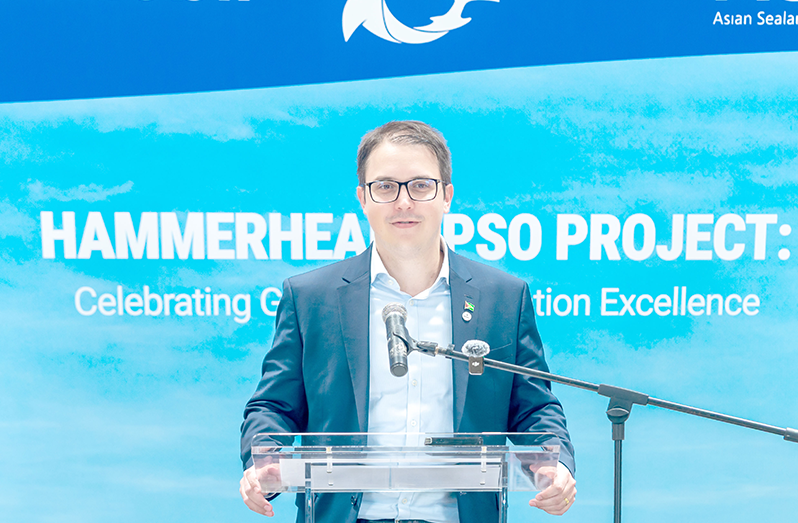
Country Manager
The components will be exported to Asia for integration into the FPSO, which is part of ExxonMobil Guyana’s seventh offshore development.
“Once operational, Hammerhead will have the capacity to produce 150,000 barrels of oil per day, along with associated gas and water, further embedding Guyana in the global energy supply chain. This achievement builds on our previous collaboration, and marks our second steel fabrication venture with local companies,” he said.
Beyond technical achievement, Fumis placed strong emphasis on the social and economic benefits arising from the project. According to him, these benefits extend well beyond the work sites, supporting households, uplifting communities, and contributing to broader economic resilience across the country.
The engagement of local fabricators has translated into job creation, skills development, and higher earning power for Guyanese workers.
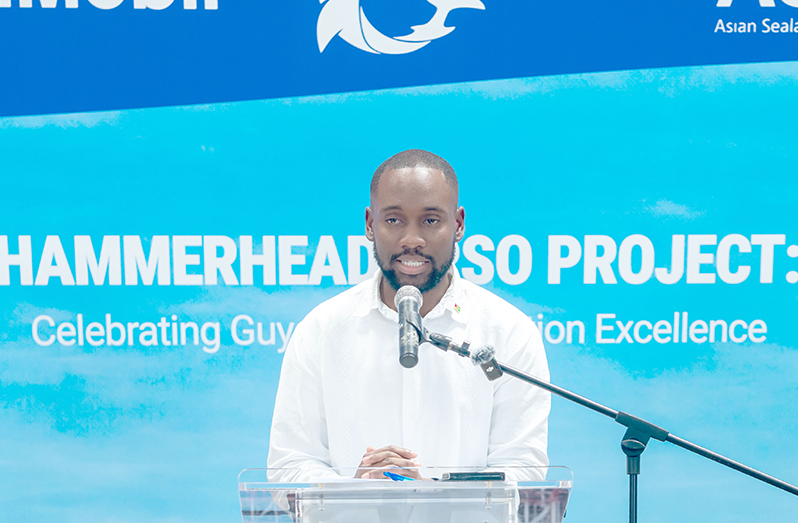
“What makes this milestone truly meaningful is the impact beyond prefabrication; the involvement of global fabricating has translated into real opportunity, jobs created, skills strengthened, and increased earning power for Guyanese workers,”Fumis said.
He added, “That income extends well beyond the workplace, supporting households, uplifting communities, and contributing to stronger economic resilience across the country.”
Fumis reiterated MODEC’s commitment to sustainable value creation through local content, stressing that Guyanese businesses and talent should be seen not merely as participants but as key contributors to the country’s energy success story.
Meanwhile, President of ExxonMobil Guyana Alistair Routledge underscored the pivotal role of local partnerships, workforce development, and sustainable supply chains in Guyana’s rapidly expanding energy sector.
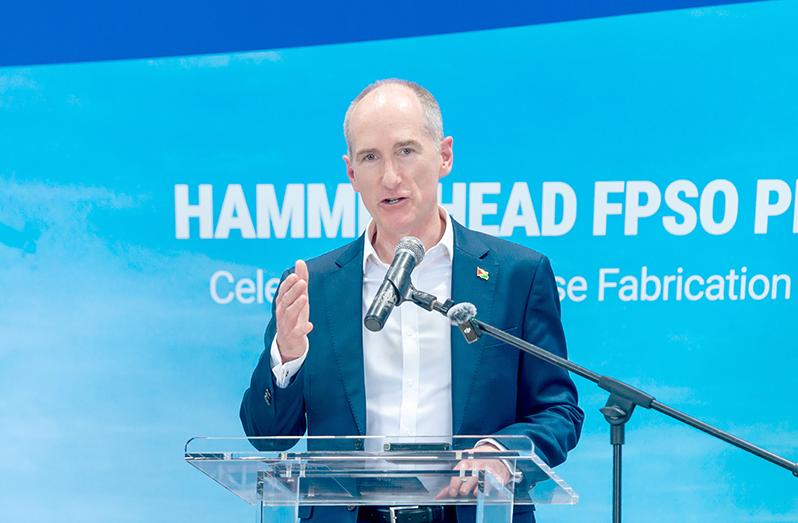
“We need these projects to deliver value to people in the form of jobs and business opportunities …and that’s what today is all about: to celebrate that progress, the continued progress in ensuring that local companies and local people are benefiting from these huge investments that are being made,” Routledge said.
Routledge highlighted the remarkable pace of Guyana’s production growth, pointing out that output has already exceeded 900,000 barrels per day, with 916,000 barrels per day recorded in January.
He said this achievement, just over a decade after the first discovery, reflects the effort of “teams of people” behind the first four major developments, and the continued momentum as the country moves into its seventh major development.
Looking ahead, Routledge reminded his audience that ExxonMobil and its partners have submitted a field development plan and applied for a production licence for the Longtail project, which will be the eighth major development offshore Guyana.
Describing the developments as “exciting days ahead”, Routledge said Guyana is securing a “bigger and more important position” in the world, especially in energy, and reiterated ExxonMobil’s commitment to ensuring that this growth translates into meaningful benefits for local people and businesses.
‘PROGRESS, PARTNERSHIP AND PURPOSE’
Also delivering remarks, Guyana’s Minister of Labour and Manpower Planning Keoma Griffith praised the country’s growing industrial capability and the expanding role of Guyanese workers and businesses in the energy sector.
“These components stand as a powerful symbol of a growing industrial capacity and capability. They demonstrated that Guyanese talent and enterprises are not only meeting international standards, but contributing meaningfully to global projects,” the Minister said, adding:
“Through initiatives like this, we are strengthening global capacity, expanding industrial capability, and ensuring that Guyanese businesses and workers are positioned to benefit. This is how we build resilience, reduce dependency and ensure that the ‘Made in Guyana’ becomes a standard of quality and pride.”
Griffith stressed that the event marked a turning point in Guyana’s industrial story, saying the steel‑cutting was “more than symbolic” and instead “represents progress, partnership and purpose”.
Development, he added is not just about investment flows, but about meaningful participation by local workers and businesses.




