






-President Ali says, highlights plan for integrated health infrastructure to position Guyana as a regional medical hub
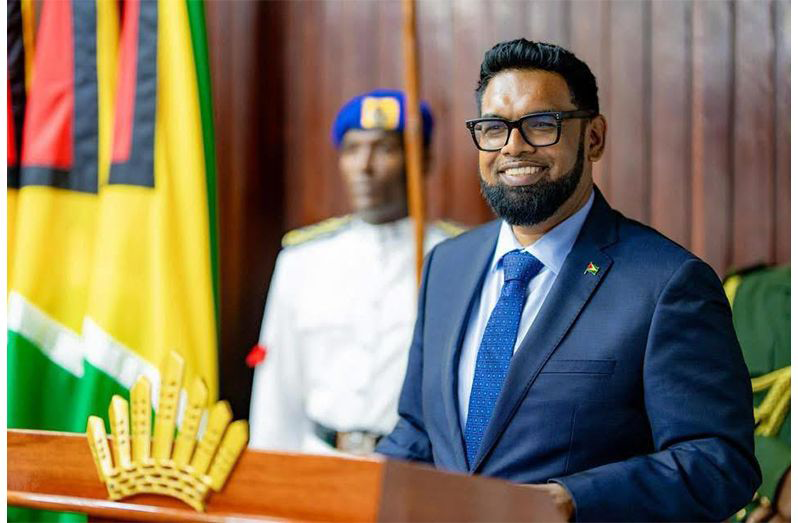
AS part of the broader push to position Guyana as a regional healthcare hub, President, Dr Irfaan Ali recently disclosed plans to expand cancer treatment and accelerate advanced medical services.
The President highlighted the ongoing discussions during the recent commissioning of the Dr Balwant Singh Hospital’s new six-storey outpatient pavilion.
“…Dr Madhu and this family have already approached government in finding a solution for cancer care and investing in that solution and those are ongoing discussions,” the President said.
Importantly, Guyana’s investments in cancer care are reshaping how patients are diagnosed and treated. The country is now expanding access with the incorporation of new technologies and improved screening capabilities.
From a single radiation unit to plans for a national oncology hospital, the advancements in cancer care not only reflect medical progress, but also a growing national will to ensure no one faces cancer without access to care.
Notably, Guyana’s Cancer Institute itself has gone through a number of phases and now offers CT scans, mammograms and X-rays. Soon, it will offer brachytherapy or internal-radiation therapy, to the Guyanese public.
Notably, approximately two years ago, mammography services were available only at the Georgetown Public Hospital Corporation (GPHC).
Breast-cancer screening has since expanded, with mammography machines now in place at Suddie Hospital in Region Two, New Amsterdam Hospital in Region Six, and the Linden Hospital Complex in Region 10.
Also, the government is working with Mount Sinai Hospital to establish an advanced oncology centre in Guyana, President Ali disclosed last year. This will bring cutting-edge cancer diagnostics, treatment and research to these shores, thereby reducing the need for patients to travel abroad for specialised care.
With this, the health transformation also includes the establishment of Guyana’s first stroke-rehabilitation centre, which is designed to support one of the country’s leading causes of death and disability.
Health services in Guyana have dramatically improved in recent years, with various health institutes receiving significant boosts to better serve cancer patients.
BUILDING AN INTEGRATED SYSTEM
The proposed cancer-care investment forms part of a wider transformation of the health sector, aimed at providing world-class treatment locally.
The President had also noted at the recent commissioning ceremony that the government’s international partnership with Northwell had integrated the local procurement system to focus on specialised stents, which will drastically enhance cardiac procedures.
“And because of that, we’ll be reducing the procurement costs substantially, because of the relationship they have. And we want that partnership to be extended to the private sector. So, we have to find ways in which we can get the private sector also benefitting from that partnership, the President said.
“We were able, in the last few weeks, to have a team come down at the Georgetown Hospital and perform 25 specialised cardiac surgeries,” he disclosed, before making it clear that his government is thinking at multi-layered levels to have an “integrated approach to national development.”
Alongside new infrastructure, the government is deploying technology to modernise the healthcare system.
Dr Ali listed Artificial Intelligence (AI) and robotics as key to the future of healthcare in Guyana and said that the government is working on acquiring the necessary technological tools to make this possible.
“We want to be the first country, maybe in the Western Hemisphere, to have a transatlantic surgery performed through robotics here in Guyana. And I’ve already set that challenge to the team. We are going full robotics — no turning back.”
He also touted plans to have an integrated platform for pharmaceutical procurement and distribution, potentially including manufacturing medical supplies in Guyana for the Caribbean Region.
“We’re going to play in every sphere of the ecosystem,” he said.




