Guyana’s only paediatric nephrologist is setting a new standard for treating kidney disease in children across Guyana
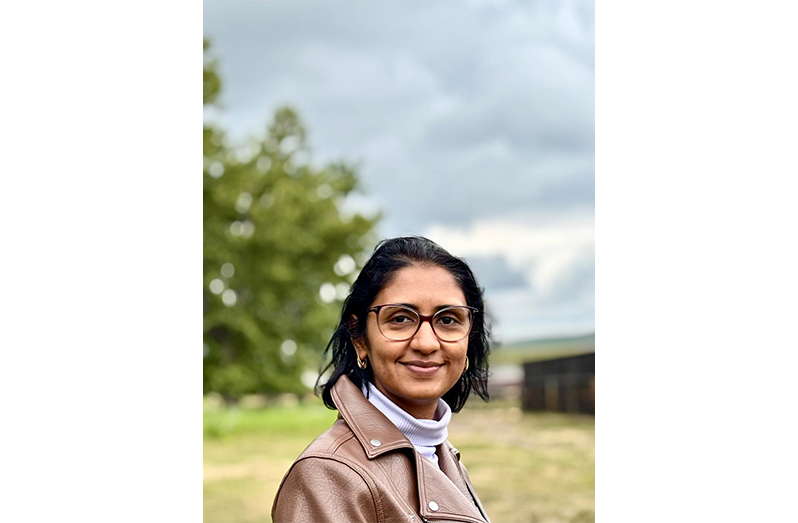
AS Guyana continues its celebration of International Women’s Day, the medical community is also observing World Kidney Day, which is celebrated on the second Thursday in March. At the crossroads of these events is Dr Areefa Alladin, Guyana’s only paediatric nephrologist and a pioneer in the field.
But beyond being the first in her field in Guyana, Dr Alladin is also paving the way for the speciality’s expansion. Through a recent grant from the International Society of Nephrology, a collaboration between the Georgetown Public Hospital Corporation (GPHC) and the University of Calgary, Dr Alladin aims to revolutionise paediatric kidney care in Guyana.
In an interview with the Pepperpot Magazine this week, Dr Alladin shared what drew her to this unique field, why the country needs more professionals like her, and what the plan is to develop kidney care for Guyana’s children.
Dr Areefa Alladin is a physician, medical educator, and researcher specialising in paediatric nephrology. She completed her pharmacy, medical, and paediatric residency training at the University of Guyana before pursuing advanced training in Canada at the University of Calgary, where she completed a paediatric nephrology fellowship, a clinical research fellowship, and a PhD in Epidemiology.
She has received numerous academic and professional honours, including the Prime Minister’s Medal for Valedictorian in Medicine and the International Women’s Leaders Award, along with multiple teaching awards from the University of Calgary.
While today she is known for treating children’s kidney diseases, Dr Alladin began her career as a practising paediatrician, treating a host of health issues. Her decision to specialise in nephrology came more than a decade ago when she joined the Kidney Foundation. There, she saw the need for targeted kidney care for children.
“I realised there was a need for kidney specialists in this country. There were no specialists for children. And also the burden of kidney disease in Guyana was enormous,” she added.
“Having those interactions with patients and seeing what they go through, I decided that was the area I was going to specialise in.”
Dr Alladin’s focus on kidney health reflects a growing international interest. As she explained, kidney care is not just a local issue, but one that leading organisations like the World Health Organization have cited as one of the leading causes of death.
In Guyana, while specialists exist in both paediatrics and nephrology, most people do not link the two. As Dr Alladin shared, the common misconception is that children do not suffer from kidney diseases, a narrative she is working to change.
“Children do have kidney disease. A lot of people, when you say children have kidney disease or kidney failure, do not really understand the true burden of it.”
As she further explained, a larger percentage of the children she treats are born with congenital abnormalities of the kidney, while others suffer from immune-mediated kidney disease caused by nephrotic syndrome.
The complexity of kidney-related illness, coupled with the social and emotional toll, means that for children, kidney diseases have far-reaching and long-lasting impacts on their quality of life.
“These kids require sometimes multiple courses of treatment that can become toxic. They gain a lot of weight. They are in the hospital a lot. They need quite a bit of monitoring. They miss school. So we have some kids who are really sick who need specialist services,” she added.
“I think with kidney disease, the sad part is that once you have kidney disease or kidney failure as a child, you will never live a normal life. We will aim for normalcy, or a somewhat better quality of life, but a child who develops kidney failure and requires dialysis or transplant will lose about 20 years of their life.”
But Dr Alladin hopes to change this with the monumental grant from the International Society for Nephrology (ISN).
While now in its initial stages, the grant will seek to build a nephrology ecosystem here in Guyana effectively. Done in partnership with the University of Calgary and the GPHC, the grant will see the GPHC working alongside the University of Calgary as a mentee university, receiving training and funding as the project moves forward and goals are met.
After weeks of work creating a suitable application, Dr Alladin and her collaborators at the University of Calgary envisioned a paediatric nephrology service in Guyana.
As she further explained:
“We submitted a proposal on how to build paediatric nephrology services in Guyana, including having a multidisciplinary team, building peritoneal dialysis and haemodialysis, having access to diagnostic and monitoring capacity, and medications,” she added.
“We had to have a good plan, identify the key people from each centre who are going to be involved. People are going to be held accountable, and you have to have a plan on how to get there, and you have to propose your budget and how you’re going to spend that each year.”
According to Dr Areefa Alladin, the grant from the International Society of Nephrology provides initial funding of about US$6,000 in the first year, with the possibility of annual renewals based on progress, up to a maximum of US$60,000 over time.
Once successfully implemented, this grant will have a profound impact on the sector, with Dr Alladin hoping to see its impact extend beyond Guyana.
“I think it’s a great time to have a grant like this. I’m excited about it because I feel that we need to build this service. It doesn’t exist yet, and so we’re building it,” she added.
“But what I see in the next six years is us moving towards becoming a centre of excellence…becoming that mentor centre for the rest of the Caribbean… and becoming that centre that will provide paediatric nephrology services to the rest of the Caribbean,” she said.
While a national win, it is also a proud moment for Dr Alladin. As a champion of paediatric kidney care for more than a decade, her work is now making a bigger impact than ever before.
For Dr Alladin, her work gaining recognition and being able to make this significant change is rewarding and inspirational.
“I think it is inspirational to see that my work is actually getting some recognition after a lot of years, a lot of writing, talking, and me advocating as part of the Kidney Foundation. We wanted to see this grow, and we wanted to see it happen.”
For Dr Alladin, being entrusted with a project of this scale means being trusted in her work and expertise.
“To get international recognition, to say, well, yes, we trust that you can do this. We know you’re qualified and capable of doing it, and we’ve awarded you that grant. That shows that that organisation has trust in me and in my colleagues in Canada to get this to happen. I think the best part of this for me is that it will help the people of this country. And that’s what matters.”
Dr Alladin is one of the many women driving change in her field. An advocate for the continued support of women in male-dominated fields, she believes that the world will continue to see more women taking charge and making change.
“I think for women out there who are planning on becoming changemakers and trendsetters, we could do it. We just need to be dedicated.”
She hopes to see women continue to push for research and development in maternal and paediatric care.
“As mothers, as sisters, as wives, and as daughters, we need to push for child and maternal health in the home, the community, and professional organisations as well.”
As Guyana marks both World Kidney Day and the achievements of women, Dr Areefa Alladin’s work stands as a reminder that dedication, vision, and collaboration can transform the future of healthcare.