– increased diagnostic capacity, residency training programme among plans
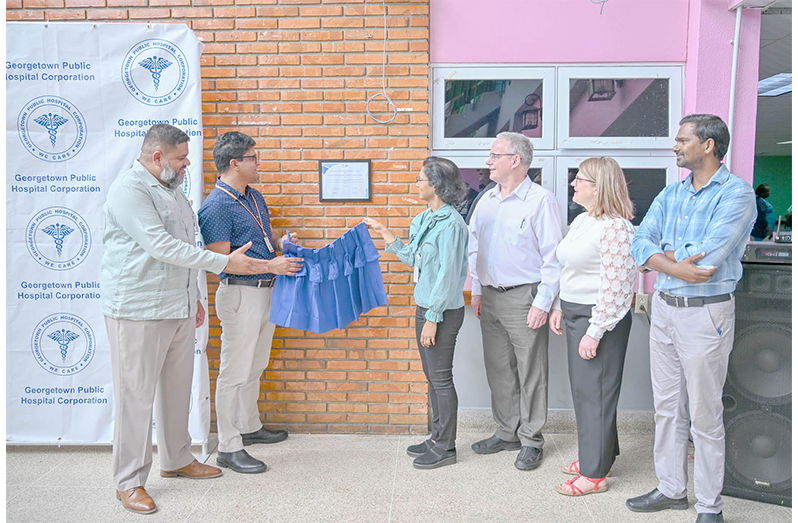
THE International Society of Nephrology (ISN) Sister Renal Centres Grant was launched on Thursday at the Georgetown Public Hospital Corporation (GPHC), by a mentor team from the University of Calgary (UofC), Canada, as part of an international collaboration to enhance paediatric nephrology services in Guyana.
The GPHC and the University of Calgary are sister renal centres under the ISN.
This partnership, according to the GPHC, was established through a competitive grant secured by Dr. Areefa Alladin, which was awarded in February 2026.
The grant supports the development and strengthening of paediatric nephrology services at the GPHC, with the University of Calgary serving as the mentor centre.
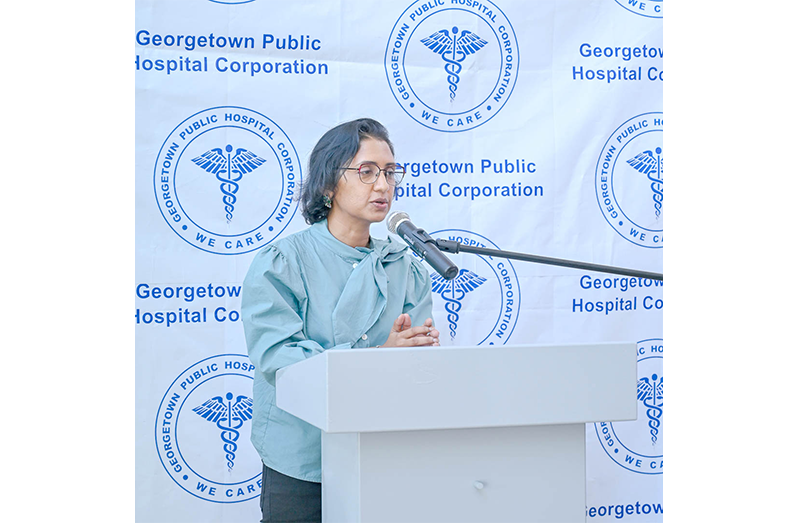
Bringing an overview of the grant and the partnership between GPHC and the university, Dr. Alladin, who is a Consultant Nephrologist at the GPHC, said the grant is a two-year grant that will be renewable for up to six years.
Their goal is to build diagnostic capacity, as well as a multidisciplinary paediatric team, and to have medications and access to treatment for patients battling kidney disease.
At the end of these two years, the aim is to have a registry of all children diagnosed with kidney disease in Guyana, have their kidney functions assessed, stratify their risk of progression to kidney disease, know what’s the cause of their kidney disease, and implement measures to slow, prevent, or stop their kidney disease progression.
She also announced plans to build out paediatric nephrology peritoneal dialysis services. While noting that there is currently dialysis service available for persons with diabetes, Dr. Alladin pointed out that this is not convenient for children. She opined that peritoneal dialysis will be the best option for them.
“We want to train nurses in Paediatric PD, and we want to have Automated Peritoneal Dialysis so that children can be plugged into a machine at night, have their dialysis while they’re asleep, and go to school and have play and live a normal life during the day,” she explained.
“We also plan to increase diagnostic capacity by building immunology studies, immunology testing that are timely and appropriate, and building a kidney pathology service where we train people to do kidney biopsies, testing for those conditions that we need to diagnose, having access to electron microscopy and immunofluorescence so that we can diagnose children with kidney disease, diagnose adults with kidney disease, and support our transplant programme,” Dr. Alladin said.
She noted that essential medication is being catered for as well, to treat kidney diseases, help with transplantation efforts, and to improve kidney patients’ survival rates.
“We not only need these medications, but we also need them on the ground, we need them all the time, and we need access to them. Some of these medications also need drug monitoring. We need to monitor their therapeutic levels and target them because we need the medications to be kept within a certain range,” she added.
It is expected that this partnership will last the planned six-year duration, during which there will be the establishment of a Paediatric Nephrology Consultancy with nephrologists and allied health professionals.
Further, Dr. Alladin said: “We want to build a paediatric neurology residency training programme, and we want to be an emerging centre that can move into a medical centre that would even be the leading centre in the Caribbean for paediatric nephrology services.”