






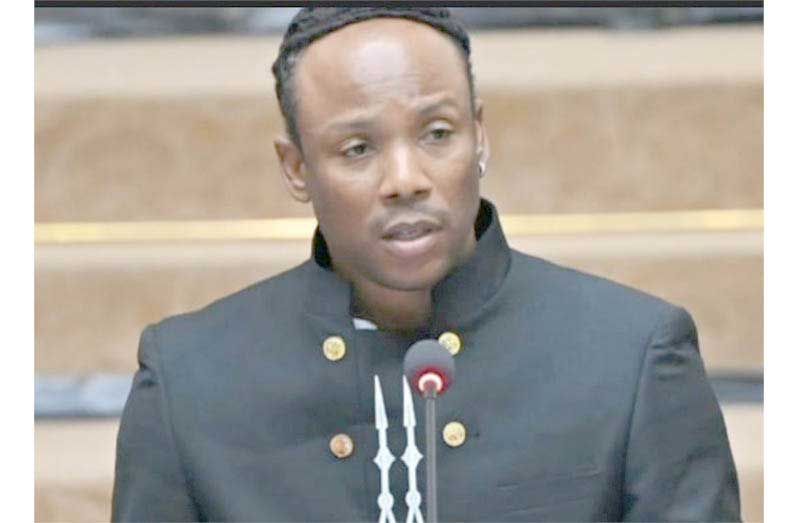
–Figueira defends President Ali’s statements on Cuba
–says he’s putting Guyana and its people first
PRESIDENT Dr. Irfaan Ali’s recent statement that the “status quo cannot remain” in Cuba was a necessary act of strategic diplomacy amid regional uncertainties, former Member of Parliament (MP) Jermaine Figueira has said.
In a letter, the former MP unequivocally defended the President, asserting: “…I assure you that President Dr. Irfaan Ali did the right thing and uttered the right words.”
He noted that Dr. Ali’s remarks must be placed in the broader context of shifting hemispheric politics, evolving security threats, and the strategic imperatives confronting Guyana.
Speaking on the sidelines of the “Shield of the Americas” summit with Fox News Live last Saturday, President Ali said that he supports the idea of empowering the people of Cuba and improving their lives.
According to Figueira, the criticisms from observers that the President’s statements could be seen as a departure from Guyana and Cuba’s historically cordial relationship, overlook the crucial nature of diplomacy.
The former MP highlighted Cuba as a valued friend and partner to the region for decades, including Guyana, in areas such as health and education but made it clear that international relations are not governed solely by historical gratitude but shaped by contemporary strategic realities.
“Today, Guyana finds itself at the centre of an evolving geopolitical landscape. The country is experiencing rapid economic transformation due to its emerging oil sector while simultaneously confronting persistent territorial claims from neighbouring Venezuela over the resource-rich Essequibo region,” the former MP wrote.
In this context, the support of major international partners, particularly the United States (US) has become critically important, Figueira said, reminding readers of Washington’s repeated signalling of forceful protest to any Venezuelan aggression against Guyana.
For a small state facing a larger and historically assertive neighbour, such security assurances are not “trivial diplomatic gestures”, he said, emphasising that this is significant.
Figueira then turned his attention to the fluid regional dynamics, and said that with Cuba finding itself in profound economic uncertainty, “Caribbean leaders must tread carefully, balancing moral sympathy with pragmatic diplomacy”, in such an environment.
In this regard, the former MP said that the comments from Guyana’s President should therefore be interpreted not as hostility toward Cuba, but as a “carefully calibrated expression of diplomatic realism.”
The President positioned Guyana within a framework that aligns with broader Caribbean Community (CARICOM) discussions while maintaining constructive engagement with the U.S., he said, noting that this approach reflects a recognition that Guyana’s prosperity and security depend on stable relationships with global powers.
He then asked of the critics: What would be gained if Guyana adopted a defiant posture toward the United States at a time when the country’s greatest external security threat Venezuela remains unresolved?
He then said: “Diplomacy is not theatre; it is the quiet art of advancing national interests without unnecessary confrontation. A small state must be especially adept at this art”.
He also acknowledged that while Cuba has historically supported many Caribbean nations, its response to the recent escalation of Venezuelan rhetoric against Guyana and its legal territory was “largely muted,” and signalled a broader truth about international relations: “every nation ultimately prioritizes its own survival and strategic interests.”
Figueira then stated that President Ali’s stance reflects this same logic that his responsibility is first and foremost to the people of Guyana.
In an era when geopolitical tensions, energy and regional security concerns intersect with unprecedented intensity, prudence becomes the highest form of patriotism, the former MP said.
He said that President Ali’s approach demonstrates an understanding that Guyana’s future depends not on ideological rigidity but on strategic engagement with all partners old and new alike.
“In this sense, the President is not abandoning friends, nor is he surrendering principles. Rather, he is practicing the timeless craft of diplomacy: speaking carefully, positioning strategically, and ensuring that Guyana navigates a turbulent geopolitical moment with wisdom and dignity,” Figueira wrote.




