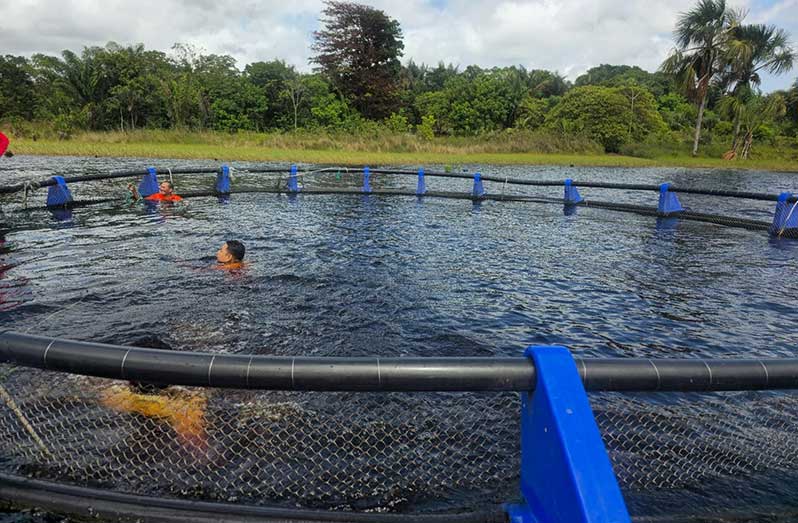
THE Mashabo Cage Culture Project on the Essequibo Coast has once again recorded a successful harvest of tambaqui, highlighting the continued progress of community-based aquaculture initiatives in Region Two.
The harvesting exercise was closely monitored by Agriculture Coordinator Tamesh Ramnauth, along with officers from the Fisheries Department, who were present on site to provide technical supervision and ensure that proper aquaculture management practices were adhered to throughout the process.
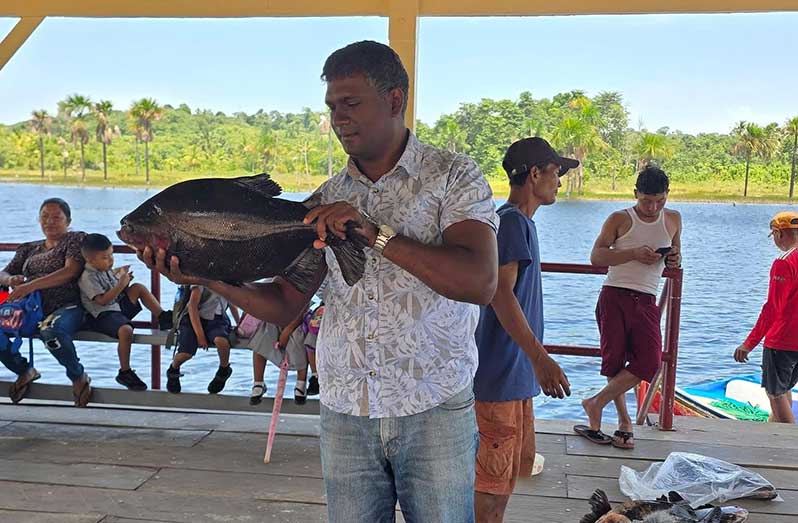
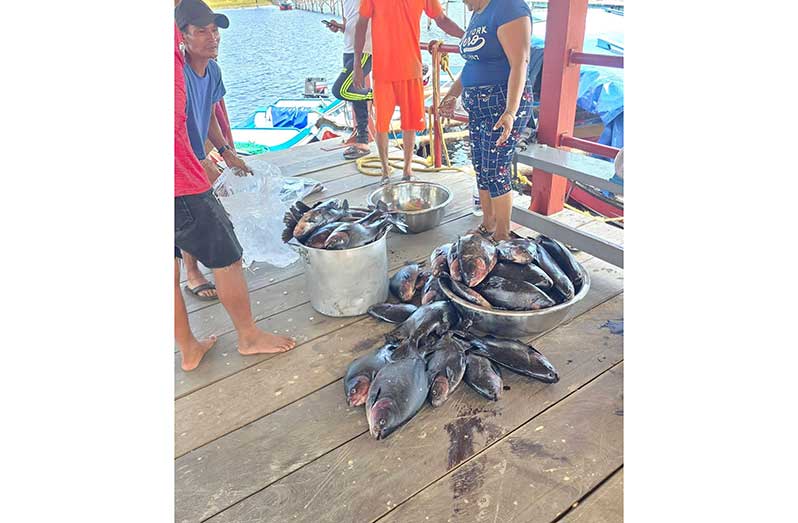
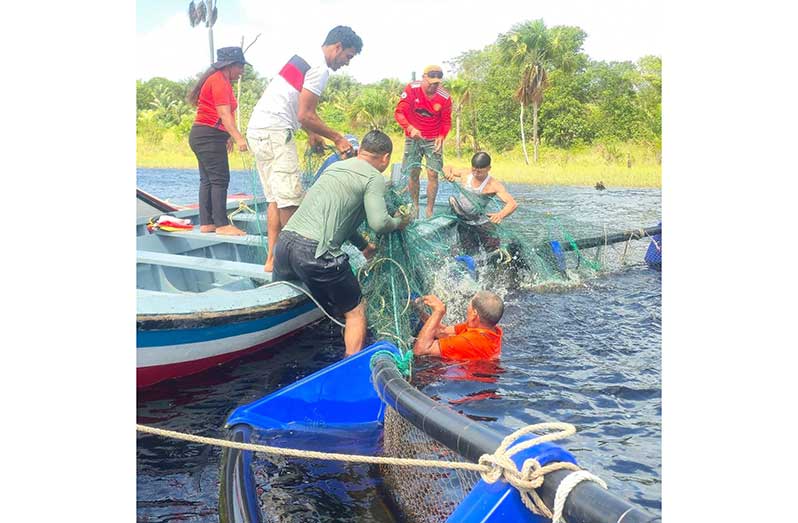
Their presence ensured that the harvesting was conducted efficiently while maintaining the health and quality standards of the fish stock.
The Cage Culture Project forms part of a broader initiative implemented by the Ministry of Agriculture under the Government of Guyana, aimed at expanding aquaculture production across the country while creating sustainable livelihood opportunities for rural and hinterland communities.
Through the use of cage farming techniques, communities are able to raise fish in a controlled environment within natural water bodies, making it a practical and sustainable approach to increasing local fish production.
Over the years, the Mashabo Cage Culture Project has grown into a significant initiative for the village, providing residents with practical skills and hands-on experience in aquaculture. The project not only contributes to improving food security but also provides an additional source of income for community members involved in the programme.
The initiative is particularly important for Amerindian communities along the Essequibo Coast, as it supports economic empowerment while encouraging sustainable use of local resources. By investing in projects such as these, the Government of Guyana continues to demonstrate its commitment to inclusive development, community participation, and the strengthening of rural economies in Region Two.
Toshao of Mashabo Village, Giddel Abrams, expressed sincere appreciation to the Ministry of Agriculture for implementing the project in the community. He noted that the initiative has brought meaningful opportunities for villagers, particularly in learning new skills and creating ways to generate income.
According to Abrams, the project has helped residents understand the importance of aquaculture as a viable economic activity and has encouraged greater participation among community members. He further stated that he is pleased to see the village actively engaged in such a beneficial initiative that contributes to both community development and long-term sustainability.