
…From New York to Corentyne
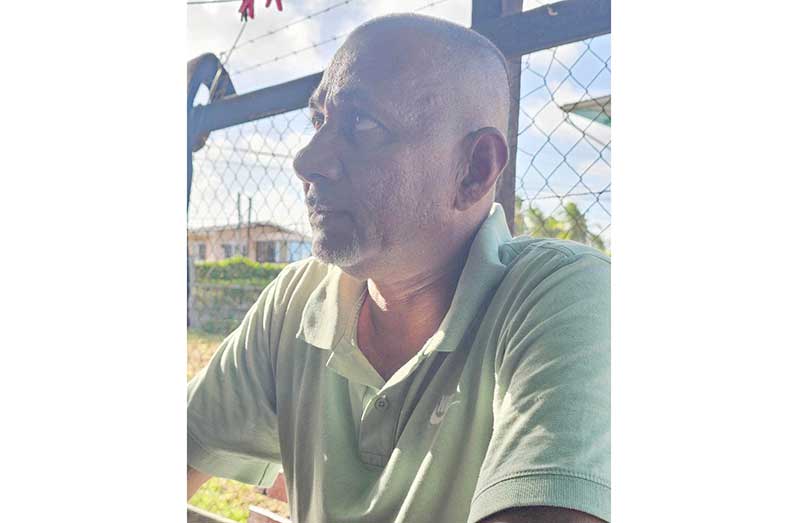
IN the verdant backlands of Manarabasi, Region Six, where cattle graze the open savannah and the horizon stretches unbroken, Dipchand and Andromeda Hansraj are quietly reshaping their lives and contributing to Guyana’s agricultural resurgence.
After more than three decades in the United States, this re migrant couple returned to Guyana, two years ago, to assume stewardship of a sizeable livestock inheritance, an unexpected transition from urban life to pastoral enterprise.
Despite minimal formal farming experience, they embraced this calling with determination, driven by deep respect for animals, a commitment to rural life, and optimism for the enabling agricultural policies and support services now available, particularly through the Guyana Livestock Development Authority (GLDA) and its Extension Services in Region Six.
BACK HOME
Their return was precipitated by familial duty. When Hansraj’s uncle, who had kept the farm, fell seriously ill and with no other relatives willing to relocate, the responsibility of managing the livestock operation was entrusted to him.
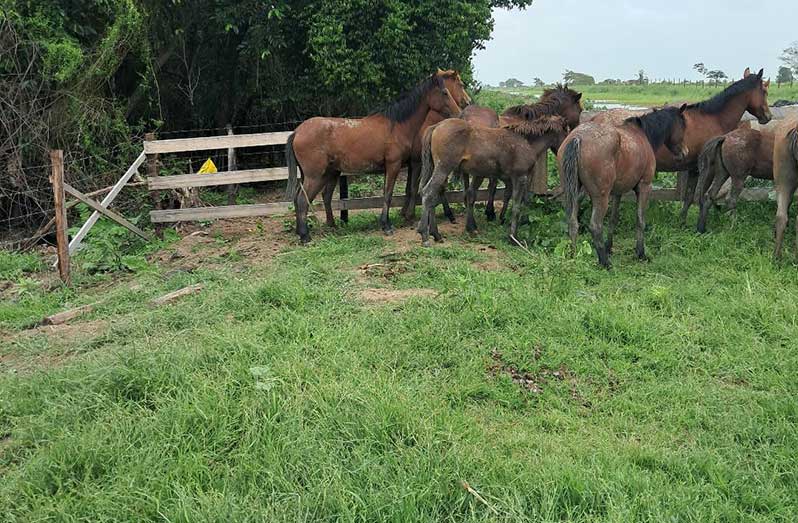
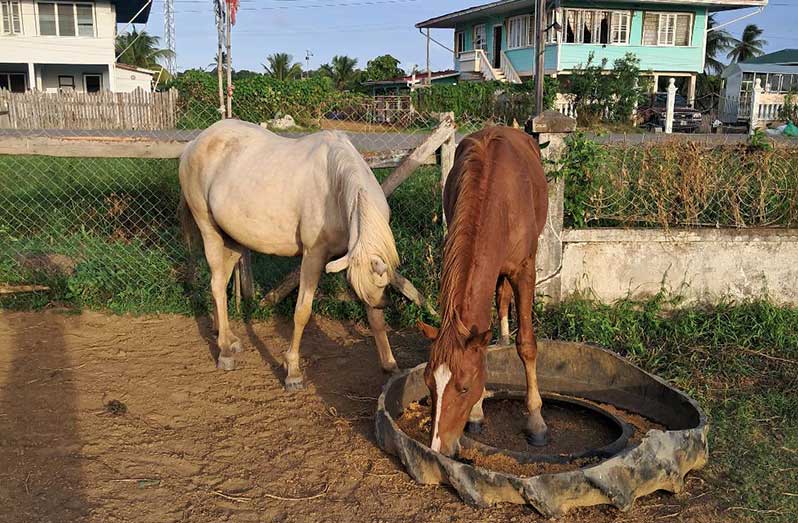
Thoughtful consideration of their prospects led the Hansrajs back to Guyana, where they now oversee more than 300 head of cattle and 25 horses, including ‘Royal’, a prized racehorse, all reared free range in the Manarabasi cattle pasture except Royal, who lives in a stable next to their home.
The Manarabasi Savannah is one of the communal grazing grounds assigned by the Government of Guyana for cattle production in Region Six. Hansraj’s personal journey to this point reflects a lifetime of adaptation and service.
Having left Guyana in 1984 at age 14 for the United States, he completed his schooling, served in the U.S. military, and subsequently worked for 33 years with the international shipping company UPS before retiring.
Yet, memories of his youth in Guyana, where livestock were an integral part of family life, kindled an enduring affection for animal husbandry that would later inform his agricultural aspirations.
The scale of their operation today presents both opportunity and challenge.
Their predominantly Creole cattle herd is raised for beef production and breeding, with an expanding number of calves from last year’s breeding season bolstering their outlook.
While their horses bring personal joy and future breeding ambitions, effective pasture management remains central to their enterprise.
Like all residents of Region 6, the Hansrajs’ face the effects of climate variability, particularly water management challenges during the rainy season.
Poor drainage and inadequate irrigation infrastructure have left sections of the savannah waterlogged, complicating livestock movement and grass growth.
In this context, the couple eagerly anticipates the completion of the Hope like canals—major drainage and irrigation structures planned for Region Six to alleviate flooding and improve water control across agricultural lands.
These canals are modelled on the Hope Canal on the East Coast of Demerara but tailored to the unique topography of the Corentyne coast.
When fully operational, they are expected to significantly reduce flooding risks by as much as 60–70 per cent and better regulate excess water during heavy rainfall, offering much needed relief to farmers like the Hansrajs’, whose livelihoods depend on climate resilient water management systems.
Recognising the value of institutional support, the Hansrajs are registered members of the No. 52–74 Cattle Co operative Society Ltd., which fosters collaboration among local livestock producers.
They are also moving to register their farm with the GLDA, a step they view as essential for responsible animal husbandry and access to specialised services.
Registration positions them to benefit from efficient service delivery, including disease control, traceability systems, and relief support and to participate in government facilitated programmes for essential for the growth of their farm.
GUIDANCE AND ASSISTANCE
Central to their integration into Guyana’s livestock sector has been the GLDA’s Extension Services in Region 6.
The couple speaks highly of the guidance and technical assistance provided, especially by GLDA Veterinarian Dr. Iressa, whose support has helped them navigate herd health, breeding practices and compliance with regulatory standards.


This professional partnership reinforces their confidence in pursuing best practices in animal care and pasture management.
Beyond institutional support, Hansraj has welcomed broader national initiatives that enhance farming viability.
He has specifically praised measures in the 2026 national budget aimed at making pickup trucks more affordable, an important development for livestock farmers who rely on these vehicles to transport feed, equipment, and personnel across dispersed grazing lands.
While their immediate focus remains on beef production and breeding, the Hansrajs are already looking toward future genetic improvement and pedigree development.
With a growing number of calves and quality horses on their farm, they envision structured breeding programmes that will elevate both cattle and equine genetics, contributing to a stronger, more diversified agricultural enterprise.
Integral to this journey is Andromeda, a retired certified schoolteacher with experience in finance, whose organisational acumen and steadfast support have been invaluable.
Their 34 year marriage, sparked by a family introduction in Brooklyn after Hansraj’s military service, has weathered international moves and vocational shifts, rooted in mutual respect and shared purpose.
Andromeda’s Guyanese heritage further enriches their story. Her father, a politically engaged thinker from Cromarty Village, chose to remain in Guyana during tumultuous times, advocating for change, while her Amerindian mother from Matthews Ridge raised her children amidst modest rural conditions where cassava and breadfruit were dietary staples long before flour became commonplace.
These narratives of resilience and simplicity echo into the couple’s present life as farmers. Having once navigated the pace of Brooklyn, the Hansrajs now embrace the quiet discipline of agricultural life.
Hansraj reflects, “We like the simple life as farmers. It is not rushed. It’s quiet, but it’s also a lot of hard labour and time”. Their animals, he notes, bring comfort and joy, underscoring the emotional as well as economic rewards of their work.