
– fleet expansion, AI diagnostics and digital-dispatch system to boost response times
IN an effort to revolutionise the healthcare system, the Government of Guyana is moving to establish a National Ambulance Authority aimed at strengthening and centralising emergency medical-response services across the country.
The initiative, first outlined during the 2026 Budget debate, will see the coordination of ambulance fleets, improved response times, enhanced training and the deployment of modern technology to ensure world-class emergency care nationwide.
Delivering the keynote address at the commissioning of the Balwant Singh Hospital Pavilion on Saturday, President, Dr Irfaan Ali said emergency response reform is a central pillar of the government’s broader healthcare transformation.
“We are also building out an emergency-care system that ensures every second counts. I think the first 15 minutes of an emergency medical call are the most important 15 minutes. If you lose those 15 minutes, the outcomes are far less superior,” he added. “So we are working on improving that first point of contact.”
This move, the President explained, will be facilitated through the development of a National Ambulance Authority.
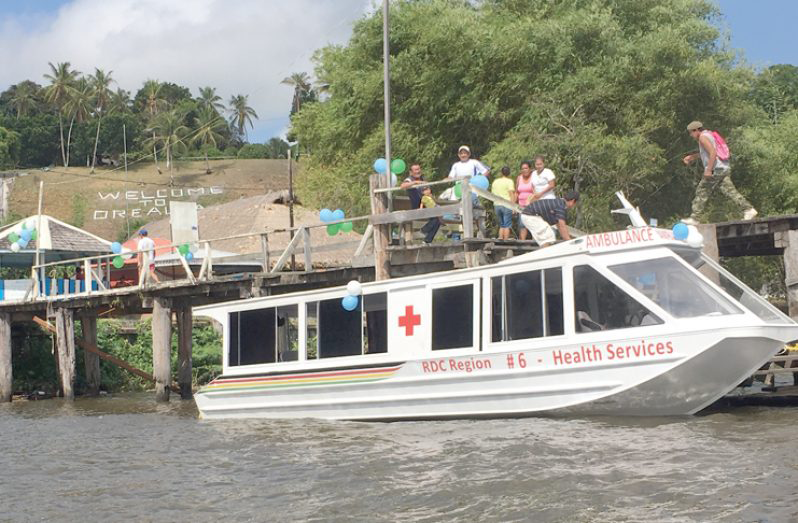
Outlining the structure and operational vision for the authority, which will be aided by expanded fleets with new land, air, and river ambulances, he explained that this allows for pre-deployed units in strategic areas to improve response time, professionalised EMS personnel and emergency call centres with GPS tracking and real-time response technology.
President Ali said emergency reform is part of a wider digital transformation of the healthcare system. The goal moving forward, he added, is to break the barrier of distance in healthcare, creating a nation-wide system that provides the same level of service in the hinterland as it does along the coast of Guyana.
“We are deploying technology to bridge distances and break barriers. We are committed to the nationwide rollout of electronic health records already launched at GPHC. The expansion of telemedicine service to 200 sites linking remote communities to specialists,” he said.
Highlighting current steps to further integrate technology into Guyana’s healthcare system, the Head of State shared that the government is now looking at diagnostics being done by artificial intelligence (AI), adding that the nation is close to signing on to an AI tool to aid in the reading of scans.
“The integration of AI in diagnostics from X-rays to CT scans. As a matter of fact, we are now going to sign on an AI tool that will bring down the cost for reading and interpreting CT scans and X-rays,” he said.
However, the government aims to leverage the technology not only locally but regionally. As President Ali explained, previous discussions with Minister of Health Dr Frank Anthony, saw the two examine procurement rights for South America and the wider region.
“But we are not only buying the technology for Guyana. I said to Dr Anthony, we must procure this technology and have the rights for it for the entire region of South America. So we become a brain hub for this technology across the region.”
The President also linked emergency efficiency to reforms in medicine procurement and supply management. Citing this as a vital part of holistically developing the healthcare system, President Ali said the government is looking to create an integrated platform for medical supplies.
“We recognise today that hospitals cannot function without medicines. That is why we want to move towards an integrated platform for medical supplies in our country. Not only buying and selling,” he added, “We want to create the framework here where we will manufacture for the rest of the Caribbean.”
While noting the government’s vital role in developing the sector, President Ali also maintained that emergency reform and broader healthcare improvements rely on integrated public–private collaboration.
“Let me say again what I said before. The public health care system is not in competition with private health care providers. We are not rivals,” he added. “We are partners. We are complementary forces working towards one national goal. Accessible, affordable, quality health care for every citizen.”
The establishment of the National Ambulance Authority forms part of the government’s long-term plan to modernise healthcare delivery, integrate technology and ensure equitable access to emergency services across Guyana’s coastland and hinterland regions.
The authority is expected to be rolled out within the fiscal year, with updates to be provided at the next budget presentation.