





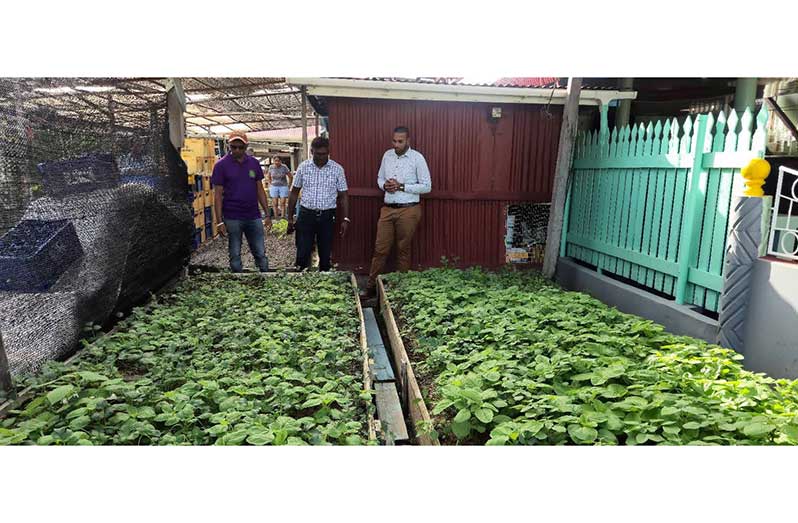
IN a continued effort to strengthen the agricultural sector at the community level, Regional Chairman Devin Mohan, Regional Agriculture Coordinator Tamesh Ramnauth, and Extension Officer Steve Deonarine of the National Agricultural Research and Extension Institute (NAREI) conducted a series of field visits with farmers in the farming communities of Affiance and Lima, Monday afternoon.
The outreach formed part of the administration’s ongoing commitment to ensuring that farmers receive direct support and technical guidance to enhance productivity and sustainability. Rather than relying solely on reports, the team met farmers in their fields, walking through crop beds, inspecting drainage systems, and discussing cultivation practices firsthand.
During the engagements, farmers openly shared both their achievements and the challenges affecting their operations. Issues raised ranged from drainage and irrigation concerns to pest management, crop diseases, access to inputs, and fluctuating market conditions. By interacting directly with the farmers in their working environment, the team was able to better assess the realities on the ground and provide immediate recommendations tailored to each situation.
Extension Officer Deonarine offered technical advice on best agricultural practices, including soil management, crop rotation, and integrated pest-management techniques.
Regional Agriculture Coordinator Ramnauth addressed concerns related to ongoing projects and assured farmers that outstanding matters would be escalated for prompt attention. Chairman Mohan reiterated the region’s commitment to supporting farmers, noting that agriculture remains a cornerstone of Region Two’s economy and a critical driver of food security.
In several instances, practical solutions were identified on the spot, and steps were initiated to address pressing concerns. Farmers were also encouraged to make full use of the technical support, training opportunities and services available through NAREI and the regional agriculture department. Emphasis was placed on strengthening collaboration between farmers and agricultural agencies to ensure long-term growth and resilience.
The visits were well received by farmers, who expressed appreciation for the hands-on approach and the willingness of regional officials to engage directly with them. Many noted that such interactions foster trust, improve communication, and ensure that policies and interventions are informed by real-time field conditions.
This people-centred approach underscores the administration’s dedication to advancing agriculture at the grassroots level, ensuring that farmers are not only heard but actively supported in their efforts to increase production, improve livelihoods and contribute to the region’s continued development.





